

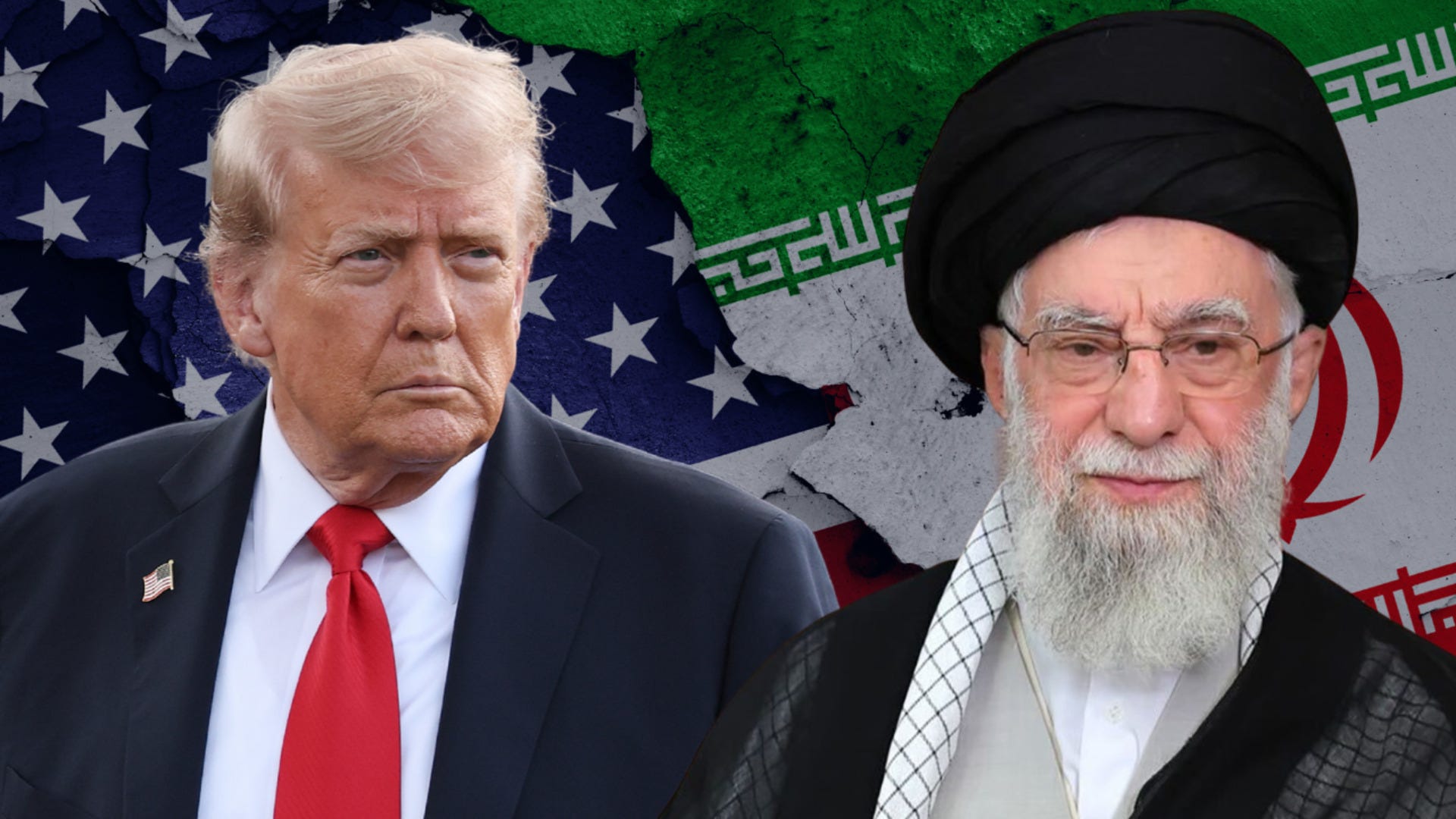
As tensions between the United States, Israel, and Iran escalate once again, the question being asked in policy circles and public debate is deceptively simple: if the U.S. strikes Iran, will the regime collapse?
Why a Strike Appears Increasingly Plausible
Several indicators suggest that Washington is moving beyond routine signalling and toward genuine operational readiness.
First, USS Abraham Lincoln, accompanied by multiple destroyers and warplanes, is deployed to the Middle East in the coming days, according to U.S. officials cited by Reuters. This deployment is reinforced by a broader surge of U.S. military assets across the region.
Second, the scale and pattern of these movements matter. With the carrier strike group entering the U.S. Central Command area of responsibility, reinforced airpower deployments in Jordan, and intensified logistical activity at Diego Garcia, Washington’s posture reflects more than deterrence or routine force rotation. The breadth of assets involved points to operational readiness across a wide spectrum of contingencies, many of which imply escalation.
Third, commercial indicators are responding. Major international airlines have suspended flights to Tel Aviv and several Middle Eastern destinations, reflecting elevated assessments of regional risk.
Fourth, signals are emerging from Israeli intelligence–linked social media circles. Accounts associated with figures such as Mohammad Ali al-Husseini, who previously anticipated events such as the assassinations of Hassan Nasrallah and Hashem Safieddine, as well as U.S. action against Iranian nuclear facilities, circulated a stark message: “The storm will break — prepare for it.”
Fifth, markets are reacting. Gold and oil prices briefly surged after President Donald Trump confirmed U.S. naval deployments toward Iran, driving demand for safe-haven assets.
Finally, Trump himself reinforced the message. “We have a big force going toward Iran,” he said. “We have an armada, we have a massive fleet heading in that direction, and maybe we won’t have to use it.” While framed as coercive diplomacy, such language is difficult to separate from preparation for use of force.
How Iran Is Likely to React
Tehran’s response suggests that its leadership is taking the possibility of a strike seriously—and interpreting it in existential terms.
Fars News Agency, closely linked to the Islamic Revolutionary Guard Corps, reported that Iran has warned regional capitals—including Baku and Ankara—that it will treat any territory used to attack Iran as a legitimate target. The message was explicit: making the war regional is not a slogan, but a declared strategy.
Senior Iranian figures have echoed this tone. Yahya Rahim Safavi, a former IRGC commander and adviser to Ali Khamenei, stated that Iran is preparing for a “fateful war” and possesses weapons “no one else has.” Another commander, Ali Abdollahi, warned that any attack would render U.S. bases and interests “legitimate and accessible targets.”
IRGC Commander Mohammad Pakpour summarised the position bluntly: Iran is prepared for all possibilities, “including an all-out war.”
Diplomatic language has been more restrained but no less warning. Foreign Minister Abbas Araghchi accused Washington of fomenting unrest inside Iran and warned that a full confrontation would be “messy, ferocious and far longer” than Israel or its allies anticipate.
Crucially, from Tehran’s perspective, restraint may no longer be an option. Amid domestic unrest, extensive intelligence penetration, and thousands of casualties linked to internal and external pressures, failure to retaliate decisively could be interpreted internally as weakness—inviting further strikes and accelerating internal erosion. For the regime, escalation has become intertwined with survival.
Possible Scenarios After a Strike
1. Immediate Collapse: Highly Unlikely
Whether Iran retaliates strongly or seeks to limit escalation, immediate regime collapse is improbable. The state still commands a vast and loyal security apparatus—including the IRGC, Basij, law enforcement forces, and intelligence services—numbering well over one million personnel. There are no visible fractures at the senior leadership level.
Moreover, Iran’s opposition remains fragmented, with competing visions, separatist currents, and external agendas. Many regional actors would prefer a weakened Iran rather than a unified post-regime successor—raising the risk that collapse would lead to fragmentation rather than transition. The Iraqi precedent looms large in much more catastrophic level.
2. Gradual Erosion and Prolonged Instability
A more plausible scenario is gradual weakening rather than sudden collapse. A U.S. strike, followed by sustained sanctions, pressure on oil exports, covert activity, and intermittent military action, could further degrade state capacity. This may generate renewed waves of unrest, increased foreign intelligence involvement, and the emergence of armed groups along border regions.
Over time, this could produce conditions for regime breakdown—but at the cost of prolonged chaos. Given Iran’s size, ethnic diversity, and regional entanglements, such a collapse would likely be far more destabilising than Iraq’s, with internal conflict and territorial fragmentation rather than a clean transition.
3. Deterrence, Realignment, and Negotiation
If Iran responds forcefully enough to establish deterrence—and if China and Russia perceive regime collapse as a strategic threat to their interests—another outcome becomes possible: renewed negotiations.
This would mark a return to coercive bargaining rather than regime change. However, the pattern of the past two years suggests scepticism is warranted. Whether Beijing and Moscow view Iran’s survival as essential—or expendable—will be decisive.
4. Coercive Pressure as Psychological Warfare
A fourth—and often overlooked—scenario is that the current military build-up is designed less to trigger a full-scale war than to force Iran into accepting a comprehensive deal under extreme pressure as Trump indicated that Iran is willing to talk and we might talk but other options are on the table as well. In this reading, the deployment of U.S. forces functions as psychological warfare: escalating fear, uncertainty, and internal strain to compel Tehran to concede on issues it has historically defined as existential.
Such a deal—widely discussed in policy circles—would likely go far beyond previous agreements. It would include a full termination of Iran’s nuclear program, severe and verifiable limits on its missile capabilities, and a complete end to support for resistance and proxy groups across the region. For Washington, and particularly for Donald Trump, this would represent a decisive geopolitical victory.
For the Iranian regime, however, accepting such terms would not ensure survival—it would create a new existential threat. The regime’s legitimacy rests not only on coercive power, but on an ideological narrative of resistance, sovereignty, and regional influence. Surrendering these pillars would collapse its domestic social base, fracture elite cohesion, and strip the state of its remaining strategic leverage abroad. Internally, it would expose the regime to intensified popular anger; externally, it would leave Iran defenceless against renewed pressure once its deterrent tools were dismantled.
In this sense, a deal imposed under maximum coercion may be designed not to stabilise the regime, but to hollow it out. By forcing Tehran to give up all its strategic cards at once, such an agreement would leave the state vulnerable to both internal unrest and external demands, accelerating erosion rather than preventing it. The result would not be reconciliation, but a slow-burn collapse—engineered through diplomacy backed by overwhelming pressure rather than direct war.
in conclusion, A U.S. strike on Iran would not automatically topple the regime. It would more likely redefine the conflict as existential, consolidate hardline power structures, and regionalise the confrontation. History offers little evidence that external military force produces stable political transformation in deeply securitised states. The real question is not whether bombs can weaken Iran—they can—but whether they can produce a controlled outcome. All available evidence suggests that collapse, if it comes, would be slow, violent, and profoundly destabilising, with consequences extending far beyond Iran’s borders.
