

Trump’s visit to Beijing comes at a difficult moment for Washington. The trip had originally been postponed as the White House sought to end the war with Iran from a position of strength and arrive in China holding strategic leverage. Instead, the opposite appears to have happened. The war failed to produce a decisive outcome, Trump’s popularity has suffered significant decline domestically due to the political and economic costs of the conflict, and Iran — one of China’s key regional partners — emerged from the confrontation with a new and powerful pressure card: the Strait of Hormuz.
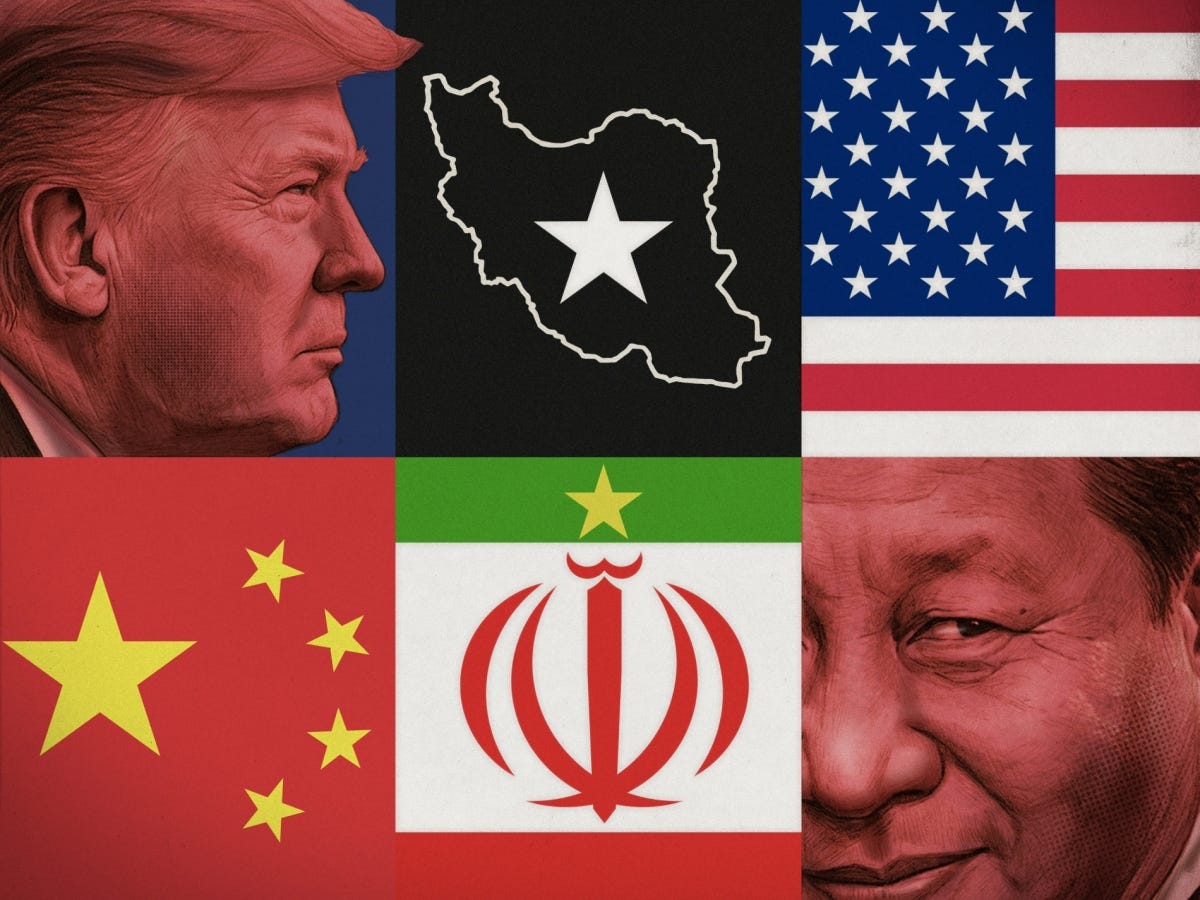
At the same time, Washington is once again reportedly seeking Chinese cooperation on Iran and the Hormuz crisis. But Trump himself said he doesn’t need Xi’s help on Iran. Beijing has consistently avoided directly aligning itself with the American pressure campaign against Tehran, limiting its role instead to calls for de-escalation and mediation between the two sides.
This raises a broader strategic question: could Beijing ultimately trade Tehran for a larger understanding with Washington?
The answer is likely more complicated than many assume. China may pressure Iran tactically in order to preserve regional stability and avoid uncontrolled escalation, but strategically it is unlikely to sacrifice Tehran. Iran is no longer merely a regional partner for Beijing; it has become part of China’s long-term geopolitical architecture stretching across energy security, Belt and Road connectivity, and the broader transition toward a multipolar international order. And the key question here is that does Trump at this stage really have anything in hand to offer to China in return of Iran?
What Could Trump Offer China?
At least theoretically, Washington still possesses a range of incentives it could place on the table in exchange for Chinese cooperation on Iran. These include tariff relief, easing technology restrictions, loosening semiconductor controls, and expanding trade and investment opportunities. In previous years, such offers may have carried significant weight in Beijing.
But the situation today looks very different.
Many of these incentives were already discussed or partially offered during Trump’s meeting with Xi Jinping in Busan last October. More importantly, Trump no longer appears to be negotiating from a position of clear strength. His tariff confrontation with China failed to produce the strategic concessions Washington had hoped for, and the US economy is in no position to sustain another prolonged economic confrontation with Beijing while simultaneously absorbing the costs of the Iran war.
In reality, Trump now needs economic stability from China more than China needs concessions from Trump.
The contrast with Trump’s previous visits to Beijing is striking. During earlier phases of US–China engagement, Beijing went out of its way to flatter Trump politically while announcing massive purchases of American goods. Today, however, the balance appears less favorable to Washington. Stung by the political and economic consequences of the Iran conflict, Trump is seeking quick economic and diplomatic wins at a moment when China has gained additional leverage.
The same applies to strategic incentives. Washington could theoretically offer reduced pressure in the Indo-Pacific, de-escalation over Taiwan, or a broader stabilization framework before the US elections. But ironically, much of this strategic relief has already been delivered to China by the Iran war itself. During the conflict, the United States was forced to redeploy significant military assets from the Indo-Pacific toward the Middle East, easing pressure on Beijing and giving China greater room for maneuver in its immediate sphere of influence.
Even the Taiwan dynamic appears to be gradually shifting in China’s favor. Recent visits by key Taiwanese opposition figures to Beijing suggest growing political currents inside Taiwan advocating reduced confrontation and greater engagement with China, particularly as American overstretch become more visible unsustanble across the Indo-Pacific.
Diplomatically, Trump may also hope to offer Xi Jinping international prestige by recognizing China as a global mediator and involving Beijing in a broader framework on Iran and Hormuz. But China already enjoys many of these benefits without directly aligning itself with Washington. Beijing has successfully positioned itself as a responsible global actor calling for stability and negotiations, while avoiding the costs and risks of direct military involvement.
This is the core problem facing Washington: Trump may believe Iran is negotiable within a broader US–China bargain, but Beijing may increasingly see the current geopolitical environment as one in which time and strategic momentum are already moving in China’s favor.
China Has Benefited From the Iran War
Despite the risks and instability created by the conflict, the Iran war has also generated significant strategic advantages for China. While Beijing publicly calls for de-escalation and stability, the broader geopolitical consequences of the war have largely worked in its favor.
The first and perhaps most important advantage is American strategic overstretch. The war forced Washington to redirect major military, intelligence, and diplomatic resources away from Asia and toward the Middle East. Assets originally positioned to contain China in the Indo-Pacific were suddenly needed in the Gulf and surrounding waters. This created breathing space for Beijing at a critical moment in its long-term competition with the United States.
For China, every aircraft carrier moved toward the Middle East is one less focused on Taiwan and the Pacific.
The conflict has also reinforced a broader perception of American overextension. The United States now appears increasingly trapped in simultaneous crises across multiple regions, raising questions among allies and rivals alike about Washington’s ability to sustain long-term strategic focus. China, by contrast, has benefited from appearing patient, stable, and economically focused while avoiding direct military entanglement.
Economically, the war has also opened opportunities for Beijing. Instability in global energy markets increases China’s leverage as the world’s largest energy importer and a central trading hub. The crisis has accelerated discussions around yuan-based energy trade and alternative financial mechanisms outside the US dollar system. Gulf states, already deepening economic ties with China, are increasingly viewing Beijing not merely as a customer but as a long-term strategic economic partner.
At the same time, China has strengthened its diplomatic position. Unlike Washington, Beijing has maintained working relations with virtually all major actors in the region — Iran, Saudi Arabia, the UAE, Qatar, and even Israel. This allows China to position itself as a credible mediator rather than a partisan actor. The 2023 Saudi-Iran normalization agreement already established Beijing as a rising diplomatic force in the Middle East, and the current conflict is likely to deepen that trend rather than reverse it.
As US military involvement expands and Washington becomes increasingly identified with the conflict itself, China gains by appearing as the actor advocating negotiations, stability, and regional dialogue.
The broader strategic reality is difficult to ignore: every month Washington is consumed by Middle Eastern conflict is a month Beijing gains strategic space elsewhere.
At the diplomatic level, the war has provided China with great oppurtunity to move further with institutionalizing its growing role in the region through a broader security vision. During his April meeting with the UAE Crown Prince, President Xi Jinping proposed a four-point framework for Middle East stability centered on peaceful coexistence, respect for sovereignty, adherence to international law, and balancing security with development. The proposal reflects Beijing’s long-term strategy of presenting itself not as a military hegemon, but as a stabilizing power advocating regional dialogue and cooperative security arrangements. Importantly, Iran responded positively to this approach. In conversations with Chinese Foreign Minister Wang Yi, Iranian Foreign Minister Abbas Araghchi welcomed China’s efforts to de-escalate tensions and expressed hope that Beijing would continue playing an active role in promoting peace and protecting regional stability. China’s coordination with Pakistan and Gulf states around ceasefire efforts and negotiations further demonstrates that Beijing is gradually positioning itself at the center of an emerging diplomatic architecture in the Middle East—one increasingly shaped less by direct military dominance and more by mediation, economic integration, and strategic balance.
Why China Is Unlikely to Abandon Iran
Despite growing speculation about a possible US–China understanding over Iran, there are strong structural reasons why Beijing is unlikely to sacrifice Tehran in exchange for short-term tactical gains with Washington. For China, Iran is not simply another regional partner that can be traded away during negotiations. It occupies a much deeper place within Beijing’s long-term geopolitical thinking.
The first reason is geography. Iran sits at the heart of several strategic corridors connected to China’s Belt and Road Initiative. It links the Gulf to Central Asia, the Caucasus, and wider West Asia, while also providing overland access routes that reduce dependence on vulnerable maritime chokepoints controlled or influenced by the United States. From Beijing’s perspective, Iran is one of the key land bridges in the broader Eurasian architecture China has been attempting to build over the last decade.
Energy security is another major factor. Although China imports energy from multiple Gulf states, Iran remains an important long-term supplier with vast untapped potential. More importantly, Beijing’s strategy is based on diversification. China does not want its energy security dependent on a single bloc of countries or on routes vulnerable to American pressure. Maintaining strong ties with Iran gives Beijing additional flexibility and leverage in global energy politics.
There is also a broader strategic dimension. China fundamentally opposes the American model of regime change and coercive geopolitical restructuring. Beijing sees the collapse or isolation of Iran not simply as a regional issue, but as part of a wider US-led order that seeks to weaken independent regional powers and maintain unipolar dominance. Preserving Iran therefore aligns with China’s larger vision of a multipolar international system in which regional powers maintain strategic autonomy rather than operate under direct Western influence.
Perhaps most importantly, there is the question of strategic trust. China has spent years presenting itself to the Global South as a reliable alternative to the West — a partner focused on stability, development, and non-interference rather than abandonment and pressure. If Beijing were seen as “selling out” Iran under American pressure, other states across Asia, Africa, and the Middle East could begin questioning the reliability of Chinese partnerships more broadly.
For China, Iran is not merely an ally — it is a geopolitical node in a larger Eurasian strategy. Sacrificing Tehran may buy Beijing temporary tactical advantages with Washington, but it would risk undermining the very architecture of influence China has spent years constructing.
Bottom Line
Trump arrived in Beijing with far fewer cards than he had initially hoped. Much of what Washington could theoretically offer China — economic concessions, reduced pressure, strategic breathing space, and diplomatic recognition — had already been effectively handed to Beijing as a consequence of the Iran war itself. The conflict diverted American attention and military resources away from Asia, weakened Trump politically at home, increased global economic uncertainty, and strengthened China’s relative geopolitical position.
In this context, China is likely to continue pursuing a cautious balancing strategy. Beijing will probably pressure Iran privately to avoid uncontrolled escalation, encourage reasonable compromise with Washington, and avoid direct confrontation with the United States. Stability remains important for China’s economic and strategic interests.
But there are also clear limits to how far Beijing is willing to go.
More importantly, it is increasingly unclear what meaningful victory Trump can realistically achieve at this stage. Anything short of Iran’s full surrender would eventually bring negotiations back to options that were already available before the war — whether through the 2015 nuclear agreement, the 2025 negotiations, or the 2026 Islamabad talks. All of these pathways were previously rejected by Trump himself. Returning to any version of them now would be difficult to present as a strategic victory for Washington after the political, military, and economic costs of the war.
China is unlikely to abandon Tehran, support efforts to dismantle the Iranian state, or leave Iran isolated diplomatically inside the UN Security Council. Nor is Beijing likely to leave Iran strategically defenseless ahead of any potential future confrontation. Even if China avoids openly militarizing its support, it has strong incentives to ensure that Iran remains stable, functional, and capable of resisting complete American dominance in the region.
This means Trump is unlikely to return from Beijing with meaningful Chinese concessions on Iran. If anything, China may walk away from the negotiations having secured additional economic or strategic advantages without fundamentally changing its position toward Tehran.
For Iran, this creates the conditions for a long-term attritional contest rather than a decisive confrontation. Time increasingly appears to favor Tehran. Trump, meanwhile, faces mounting pressure at home and abroad as the midterm elections approach, while Iran continues adapting to the conflict environment rather than collapsing under it.
The practical outcome is likely to be the continuation of China’s indirect but significant support for Iran — including intelligence cooperation, the supply of components relevant to Iran’s missile and drone programs, and continued purchases of Iranian oil. Together, these channels provide Tehran with important economic and strategic backing against any potential third round of war.
