

The Iranian diaspora opposition has often struggled to generate broad international empathy, particularly within Western progressive movements. One explanation frequently offered is what some observers describe as “conditional solidarity,” suggesting that ideological loyalties within activist spaces can lead to selective forms of solidarity. In this view, opposition to Western hegemony may make some activists hesitant to support movements challenging states positioned against it. However, this article argues that the empathy gap is rooted in dynamics within diaspora opposition politics themselves. Issues such as messaging, internal divisions, and political framing have at times complicated the opposition’s ability to mobilise wider international support and build credibility among global audiences.
The Moral Credibility Problem
Many diaspora opposition groups present their struggle as a moral fight for freedom, democracy, and human rights. Yet several dynamics have weakened this narrative in the eyes of international audiences.
First, misinformation and exaggerated claims have contributed to growing scepticism among observers in the West. During the protests in Iran, for example, some activists circulated claims that as many as 30,000 protesters had been killed, with figures later escalating even further in online discussions up to 90,000. However, data compiled by the Washington-based Iranian human rights organisation HRA (Harana) records 7,007 deaths during the unrest, including 207 members of the security forces. Iranian government has recorded 3117 death. While this number still reflects a significant level of violence and repression, the gap between verified figures and widely circulated claims has made parts of the international public more cautious, even toward legitimate criticisms of the regime.
Another example illustrating the problem of misinformation appeared in public commentary during the protests. Eli Lowen, presented in some media as a prominent figure among diaspora protesters in Australia, told SBS that 23,000 protesters had been killed during the recent unrest. He compared this number to what he claimed were 16,000 deaths during the eight-year Iran–Iraq war, concluding that the recent crackdown amounted to genocide and was the second worst massacre after Hiroshima, which killed around 140,000 people. Historical records, however, place the death toll of the Iran–Iraq war at around 220,000 Iranian casualties alone, making the comparison deeply misleading. Such statements contribute to a broader pattern in which exaggerated or inaccurate claims circulate in public debate, creating the perception of organised disinformation that risks misleading audiences and distorting discussions about Iran.
Second, racist, Islamophobic, and misogynistic rhetoric has at times been visible within protest spaces and diaspora activism. Such language contradicts the universal values of equality and human dignity that the movement seeks to promote, weakening its moral appeal to global audiences.
Third, selective empathy has also raised questions about credibility. While diaspora activism often expresses strong grief and solidarity for protesters killed by the Iranian state, there is often far less public attention given to civilians killed in conflicts involving other actors, including U.S. or Israeli military actions. This perceived inconsistency can create the impression that moral concern is politically selective rather than universal.
Finally, some narratives reflect selective patriotism—expressing loyalty to a particular vision of Iran or to specific social groups rather than to the country’s diverse society as a whole.
Taken together, these dynamics complicate the moral framing of the opposition’s struggle and weaken the legitimacy it needs to mobilise broader international support.
Misreading the International Audience
Diaspora activists often misjudge the political landscape of the audiences they are trying to persuade.
In many Western countries, left-leaning audiences tend to be the strongest supporters of humanitarian causes, human rights movements, and struggles against repression. These groups often form the backbone of international solidarity campaigns. However, some strands of Iranian diaspora activism present messages that unintentionally alienate these potential allies.
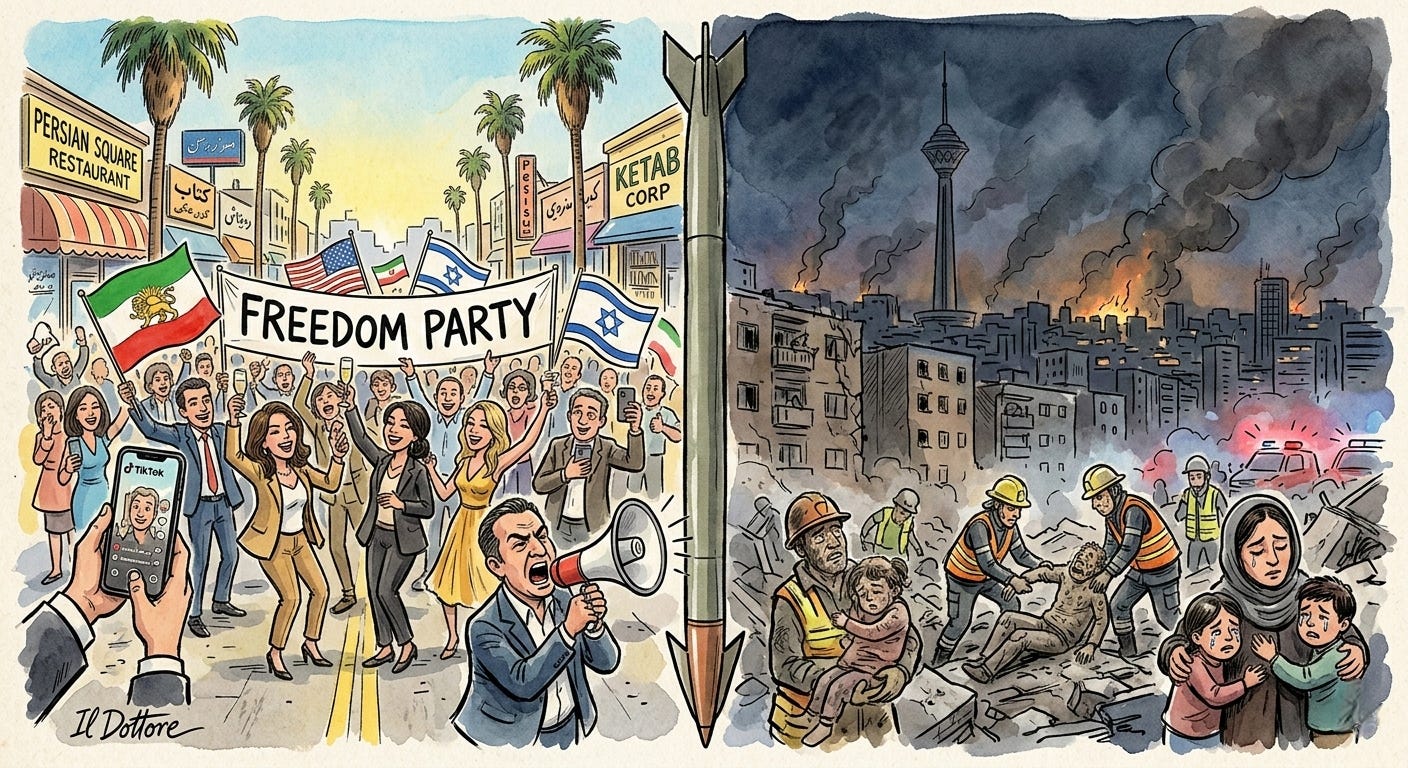
For example, the prominent display of U.S. or Israeli flags at some demonstrations creates a symbolic contradiction. In the political imagination of many progressive circles in the West, these flags are often associated with military power, interventionism, or imperial influence. When activists simultaneously appeal for solidarity from these audiences while embracing symbols that many of them view critically, the message can become confusing or counterproductive.
Another factor that further complicates the opposition’s appeal to Western audiences is open calls for military confrontation with Iran. Some diaspora activists have publicly supported sanctions, military strikes, or even full-scale war as a pathway to regime change. However, large segments of Western public opinion—particularly within progressive and humanitarian circles—remain deeply sceptical of war as a tool for promoting democracy. The experiences of Iraq, Libya, and Afghanistan have left many audiences wary of claims that military intervention can bring freedom or stability. When opposition voices appear to welcome external military pressure despite the likely human and economic cost for ordinary Iranians, it creates a moral contradiction that distances potential supporters and reinforces fears that regime change is being prioritised over the well-being of the population.
A similar issue emerges with the tone of some protest rhetoric. Racist, Islamophobic, or misogynistic slogans—occasionally visible in segments of diaspora protests—repel many progressive groups that prioritise anti-racism, gender equality, and religious tolerance. Even when such rhetoric represents only a portion of the movement, it can shape external perceptions and raise doubts about the broader moral framework of the cause.
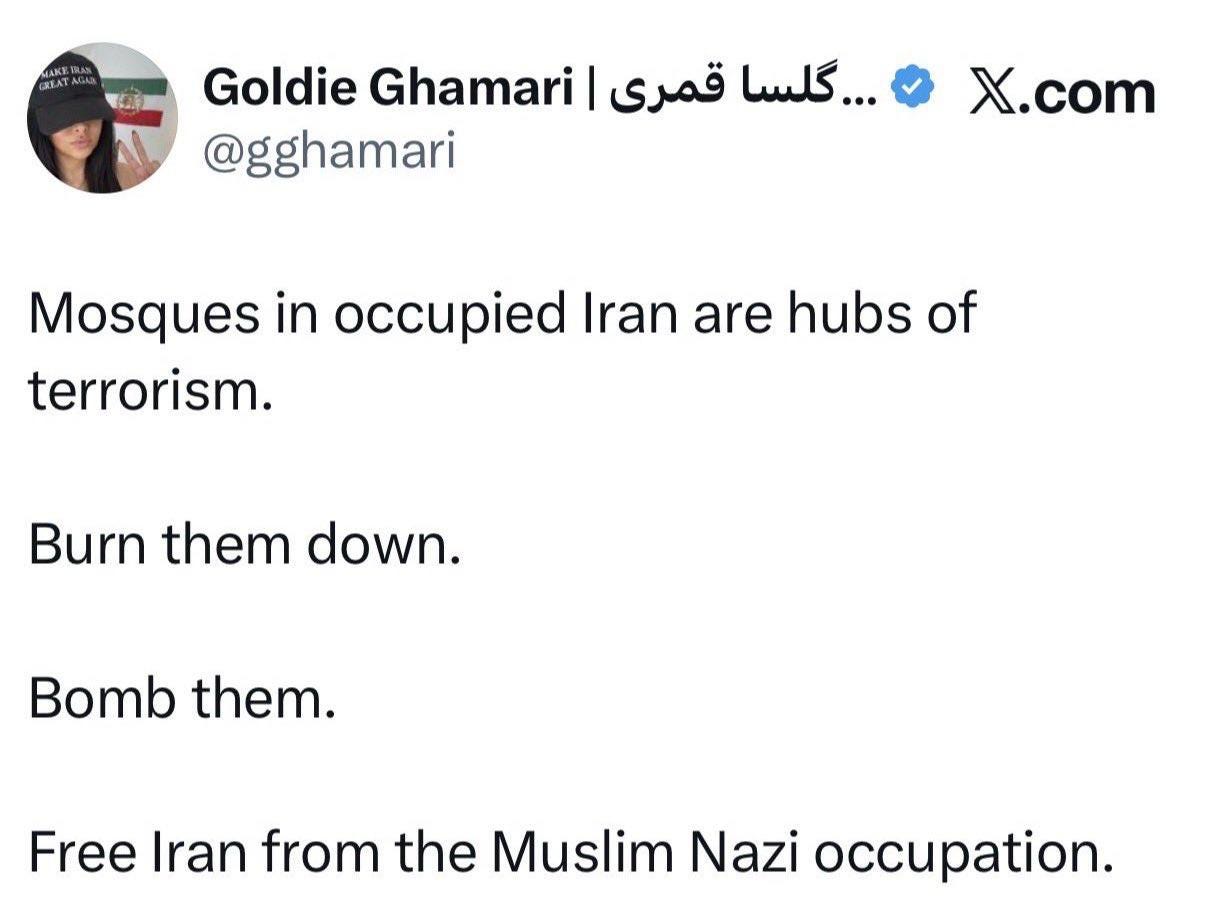
As a result, messaging that may resonate strongly within certain diaspora communities can inadvertently distance or alienate the very international audiences whose support is often most influential in shaping global public opinion.
Weak Democratic Culture and Structure
Another challenge lies in the limited democratic practice within segments of the diaspora opposition itself.
The opposition abroad remains highly fragmented and poorly organised, with numerous groups competing for influence but rarely coordinating around a shared political strategy. Many organisations lack clear democratic structures, leadership accountability, or a coherent political program that could convincingly outline how a future political system in Iran might function.
Internal divisions—often driven by personal rivalries, ideological disputes, and competing visions of Iran’s future—frequently overshadow efforts to build a credible and unified alternative. Instead of presenting a clear roadmap for democratic governance, opposition debates sometimes revolve around leadership personalities or symbolic political identities.
In some cases, the tone of diaspora activism and protest slogans has also raised concerns. Rhetoric that excludes other political views, delegitimises those with even minor differences, or shows a tendency toward aggressive language, can sometimes reach the level of fascism and create the impression of intolerance rather than pluralism. For international observers accustomed to democratic political culture, this raises doubts about whether the opposition movement itself fully embraces democratic norms.
For outside audiences, the question therefore becomes unavoidable: if democratic values are not consistently practiced within the opposition, can it realistically present itself as a credible democratic alternative to the current system?

Plenty of discussion points here. Good to read the work of someone who is keen to open a discussion rather than insist on a position.