

Iranian diaspora activism has achieved something undeniable: visibility. Large rallies in Western capitals—from Berlin to Toronto—have filled city squares. Media coverage has amplified their message across television networks and digital platforms. Online engagement has been intense, with hashtags trending and videos circulating widely. Symbolically, the opposition appears present, energetic, and globally connected.
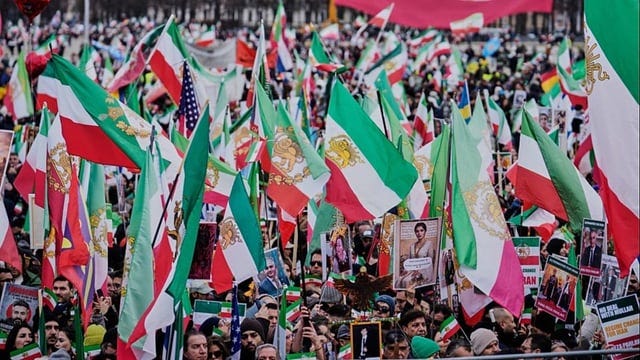
Yet visibility is not the same as power.
Despite strong media amplification and sustained online momentum, diaspora activism has not translated into meaningful influence over policy decisions in Washington, Brussels, or regional capitals. Governments have not recalibrated their strategy in response to diaspora mobilisation. Major diplomatic decisions—on sanctions, negotiations, or military posture—continue to be made primarily through state interests, not protest optics.
This reveals a deeper structural dilemma. Exile politics often operates without institutional organisation, strategic planning, functional lobbying networks, a comprehensive and inclusive political vision, or sustained organisational links inside the country it seeks to transform. Without these foundations, it cannot enforce outcomes, broker elite defections, shape bargaining processes, or mobilise durable constituencies on the ground. It speaks loudly—but from outside the arena where power is structured, negotiated, and exercised.
Visibility cannot substitute for structure. Anger cannot substitute for architecture.
The Political Deficit: Slogans Without Structure
A central weakness of the diaspora opposition lies in its political messaging. Much of the discourse revolves around a symbolic figure or a general call for regime change, rather than a structured and detailed political platform. Symbolism can inspire, but it cannot substitute for programmatic clarity. Governments and institutions do not engage with chants; they engage with policy.
The absence of concrete, actionable demands creates a vacuum. There is little sustained articulation of specific priorities such as:
• The immediate release of political detainees
• A verifiable halt to executions
• A clear national position on foreign military intervention
• A principled stance on broad sanctions that disproportionately harm ordinary citizens
These are not marginal issues—they are the types of demands that can unify diverse constituencies and provide entry points for international advocacy. Without defined policy priorities, it becomes difficult to build broad coalitions across ideological lines, to reassure sceptical actors, or to influence foreign governments that operate through structured agendas and measurable commitments.
Lack of Democratic Organisation
Beyond messaging, the diaspora opposition faces a deeper structural limitation: the absence of a durable organisation. There are no functioning councils with recognised authority, no representative bodies that credibly reflect Iran’s ideological, ethnic, and social diversity, and no institutional mechanisms for internal decision-making.
This lack of structure is not merely symbolic—it has practical consequences. There is no shadow cabinet capable of presenting itself as a government-in-waiting. No transitional roadmap outlining how security forces would be managed, how institutions would be preserved, or how rival factions would be prevented from descending into conflict. No detailed constitutional or economic blueprint that signals preparedness for governance rather than protest.
Political mobilisation can generate moments of energy. But without institutional design, it cannot convert momentum into sustainable political power. Movements that aspire to lead a country must demonstrate not only what they oppose, but how they would govern.
Strategic Planning Gap
Beyond organisational weakness lies a more consequential problem: the absence of strategic planning. There is no coherent framework addressing how rival opposition groups would be managed after a regime change, how fragmentation would be avoided, or how a transitional government would function in practice.
The most critical questions remain unanswered.
If opposition factions struggle to coordinate while operating in relatively safe exile, how will they govern together under the pressure of state collapse? What mechanisms would prevent immediate power competition among ideological, ethnic, or armed actors? What institutional safeguards would stop a transition from descending into militia fragmentation?
Equally important: what happens if foreign intervention fails to produce regime collapse? Is there a contingency plan for prolonged instability? For partial breakdown? For a scenario in which the state weakens but does not fall?
Without credible answers to these questions, calls for rapid transformation risk overlooking the very dynamics that have destabilised other societies in moments of abrupt political rupture. Strategy cannot begin the day after collapse. It must precede it.
The Legitimacy Gap in Western Public Opinion
Another structural constraint lies in the realm of public persuasion. Unlike other transnational movements that have successfully shaped Western public opinion—most notably pro-Palestinian activism in recent years—the Iranian diaspora opposition has struggled to build sustained moral resonance within Western societies.
The reason is not simply organisational weakness. It is discursive misalignment.
Large segments of Western public opinion, particularly after two years of devastating war in Gaza and widespread accusations of genocide against the Israeli government, have become deeply critical of Israeli state policy. Yet parts of the Iranian diaspora opposition have linked their movement with the Israeli government in highly visible ways. Whether strategically intended or emotionally driven, this alignment places them at odds with the prevailing moral climate in many Western societies.
Similarly, the use of Islamophobic rhetoric, ethnic hostility, or exclusionary language further distances the movement from liberal constituencies in Europe and North America. Western civil society is highly sensitive to xenophobic or sectarian discourse; movements that appear intolerant struggle to gain broad legitimacy, regardless of their grievances.
Calls for foreign military intervention compound the problem. After the experiences of Iraq, Syria, and Libya, Western publics are deeply sceptical of regime-change wars. Advocacy that openly welcomes external military action against one’s own country does not easily translate into solidarity among societies still reckoning with the costs of past interventions.
As a result, the emotional tone of diaspora activism—often marked by anger, maximalism, and hostility—does not consistently align with the dominant sensibilities of Western audiences. It generates visibility, but not durable empathy.
Public opinion in democratic societies responds not only to moral outrage, but to credibility, coherence, and alignment with shared values. Without that alignment, mobilisation remains loud but limited—visible in squares and online, yet marginal in shaping public opinion discourse and therefore the policy-making process.
Absence of Lobbying Network
Diaspora mobilisation has been emotionally powerful but strategically thin. Large demonstrations, viral campaigns, and symbolic gestures have created moments of attention—but not durable policy influence. Emotional mobilisation has often replaced structured advocacy.
In Washington, Brussels, and other key capitals, there is limited professional lobbying infrastructure tied to a coherent political platform. There are no well-funded policy teams consistently engaging congressional offices, parliamentary committees, foreign ministries, or multilateral institutions. There is little evidence of systematic briefing papers, legislative drafting input, coalition-building with established advocacy networks, or sustained presence inside think tanks and policy forums where long-term strategy is shaped.
Foreign policy is rarely moved by spectacle alone. It is shaped through relationships, persistence, expertise, and credibility developed over time. Governments respond to actors who demonstrate organisational continuity, strategic clarity, and an ability to translate political goals into policy language.
Influence requires long-term institutional presence—not episodic rallies.
The External Recognition Problem
The lobbying gap feeds directly into a deeper limitation: the absence of formal external recognition.
No major government has recognised any diaspora formation as a legitimate alternative authority for Iran. There is no provisional government-in-exile acknowledged by Western capitals, no formal consultative status in multilateral institutions, and no structured diplomatic channel through which diaspora leadership participates in high-level negotiations. At most, there are symbolic meetings and photo opportunities—gestures of visibility rather than markers of authority.
Foreign capitals engage institutional organisations, not general social movements. They negotiate with actors who have legitimacy, obtain institutions, and bureaucracies. Even when governments are deeply critical of Tehran, they continue to deal with it because it holds sovereign authority within Iran’s borders. Symbolic opposition, however visible, cannot substitute for institutional control.
International actors ultimately prioritise stability, predictability, and structured alternatives. Emotional alignment or moral sympathy alone is insufficient. Recognition follows organisation and capacity—not rhetoric.
No Ground Game Inside Iran
The most decisive structural limitation lies inside Iran itself.
Diaspora activism has only limited organisational presence within the country. There is no visible nationwide network operating under a unified leadership connected to exile figures. Protests erupt, but they are locally driven, episodic, and disconnected from an external command structure. Visibility abroad does not translate into coordinated infrastructure at home.
It is, of course, understandable why this gap exists. Publicly expressing support for diaspora opposition leadership inside Iran carries immense personal risk—arrest, imprisonment, professional exclusion, or worse. Open affiliation is costly. Yet this reality, while real, cannot become a structural excuse. Leadership does not require public declarations; it requires communication channels, trusted intermediaries, quiet coalition-building, and the gradual construction of functional networks. The absence of visible endorsement does not absolve external leadership from the responsibility of building internal organisational bridges.
Equally important, there have been no meaningful elite defections aligned with diaspora leadership. No senior military commanders, high-ranking bureaucrats, provincial governors, or institutional blocs have publicly tied their political future to an exile-based alternative. In political transitions, elite splits are often decisive. Their absence signals that diaspora leadership has not penetrated the internal power structure.
Ties to labour unions, civil society organisations, student movements, professional associations, and segments of the bureaucracy remain weak, fragmented or absent. These domestic actors may express dissent, but they do not appear institutionally aligned with any diaspora political architecture. Without these bridges, external advocacy floats above the realities of domestic power.
Without internal leverage—no elite defections tied to diaspora leadership, no organised constituencies on the ground, no administrative blueprint—the diaspora lacks bargaining power in geopolitical negotiations. It cannot credibly promise stability, manage transition risks, or guarantee outcomes. External visibility, absent internal alignment, remains structurally detached from the mechanics of change.
The Bottom Line
The limits facing Iran’s diaspora opposition are structural—not merely tactical. The problem is not energy, nor visibility, nor even passion. It is architecture.
Rallies, hashtags, and media appearances create presence. They do not create power. Influence in international politics is built on organisation, representation, institutional design, and credible links to domestic actors. Without those foundations, visibility remains symbolic.
An opposition that cannot demonstrate internal networks, elite engagement, policy clarity, and transitional planning will struggle to be treated as a serious alternative by foreign governments or domestic stakeholders alike. Emotional mobilisation alone cannot substitute for strategic structure.
Sustainable political change requires alignment between internal actors and external advocacy. It requires negotiation, organisation, and legitimacy—not performance politics alone. Until those structural elements are built, the diaspora opposition might remain visible—but politically marginal.
