

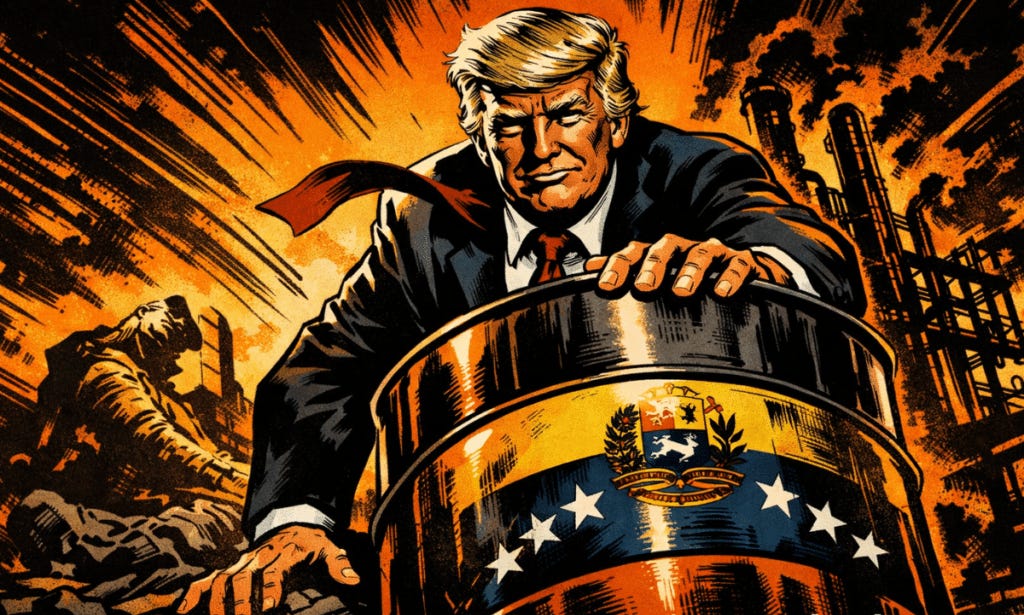
The reported arrest of Venezuelan President Nicolás Maduro by U.S. forces marks a watershed moment in international politics. Regardless of how one views Maduro’s record, the act itself signals something far more consequential than a single leader’s fate: the accelerating collapse of the post–World War II international legal order and its replacement by a system governed increasingly by power, expediency, and selective enforcement.
For decades, the global system was held together—imperfectly—by shared norms: state sovereignty, due process, and multilateral conflict resolution. These principles were often violated, but they still functioned as constraints. What we are witnessing now is different. The Maduro case suggests that those constraints are no longer binding, even rhetorically, for the world’s most powerful actors.
This shift carries profound consequences not only for Latin America, but for global stability—especially in the Middle East and North Africa (MENA), where faith in international law has already been deeply eroded.
A Dangerous Precedent for the International System
The arrest of a sitting head of state outside any internationally recognized legal framework undermines the very concept of sovereign equality. It reinforces the perception that international law is no longer universal, but conditional—applied to adversaries and ignored when inconvenient.
This precedent is especially alarming because it invites imitation. Russia may justify further unilateral actions in Ukraine or Eastern Europe. China could cite similar logic in Taiwan or the South China Sea. When enforcement becomes selective, restraint disappears.
Rather than strengthening accountability, such actions risk accelerating a global drift toward unilateralism, where might determines right and legal norms become optional tools of political convenience.
Why the United States Is Not Seeking Regime Collapse in Venezuela
Despite the dramatic optics, Washington does not appear to be pursuing a full regime change in Venezuela. The absence of clear U.S. backing for opposition figure María Corina Machado suggests a more cautious strategy: managing instability rather than dismantling the state.
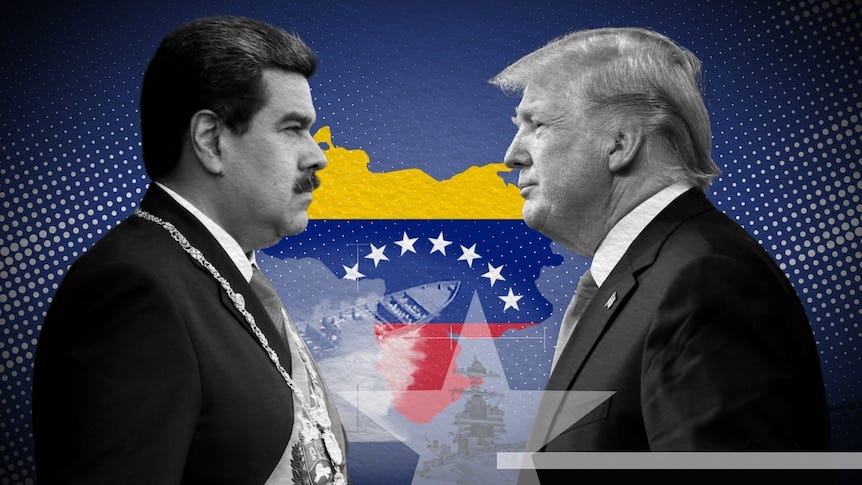
The reasoning is pragmatic. Venezuela holds one of the world’s largest proven oil reserves, vast mineral wealth, and occupies a strategically sensitive position in the Western Hemisphere. A chaotic collapse could trigger regional instability, mass migration, energy shocks, and geopolitical openings for rivals.
In this sense, Maduro’s arrest looks less like a democratic intervention and more like coercive leverage—an attempt to discipline, not dismantle, a regime deemed strategically too important to fail outright.
The MENA Lens: Law for Some, Impunity for Others
Nowhere are the contradictions of the current international order more glaring than in the Middle East.
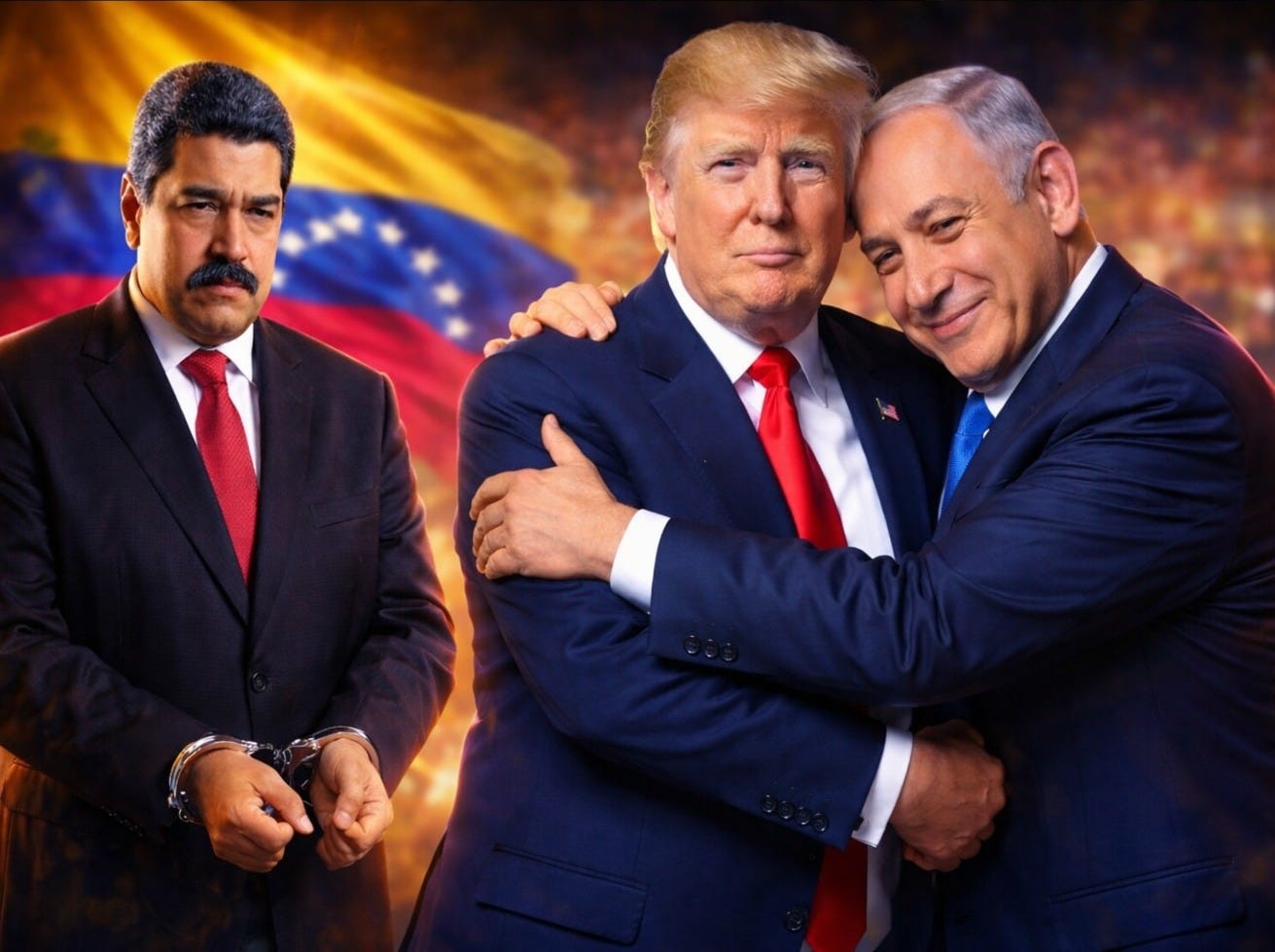
For nearly two years, Gaza has endured a catastrophic war that has killed tens of thousands of civilians, devastated infrastructure, and produced a humanitarian disaster widely described by international organizations as unprecedented. The International Court of Justice has issued arrest warrants against Israeli Prime Minister Benjamin Netanyahu on charges related to war crimes and genocide.
Yet nothing has happened.
No arrest.
No sanctions.
No enforcement.
Instead, the same international actors that champion “rules-based order” have continued to provide Israel with military, diplomatic, and political cover. In stark contrast, the U.S. moved decisively and unilaterally against Venezuela’s president.
The message to the region could not be clearer: international law is not about justice—it is about alignment.
How This Reshapes Political Calculations in the Middle East
This double standard is reshaping how MENA leaders think about governance, legitimacy, and survival.
Democracy, human rights, and accountability—already fragile concepts in the region—are becoming increasingly irrelevant to regime calculations. What matters instead is proximity to Western power, strategic usefulness, and the ability to avoid becoming expendable.
If genocide allegations can be ignored in Gaza, while a Latin American president can be arrested without multilateral process, then the lesson for Middle Eastern rulers is simple:
Do not reform—align. Do not democratize—secure patronage.
This reality discourages political openness, empowers security states, and entrenches authoritarian governance. Leaders are learning that domestic repression carries fewer costs than geopolitical misalignment.
From Norms to Transactions
What is emerging is a transactional world order. States are not judged by law or morality, but by utility. Allies receive protection regardless of conduct; adversaries face punishment regardless of legal consistency.
This is not merely hypocrisy—it is systemic transformation.
In such an environment, international institutions lose credibility, global governance fragments, and conflict becomes harder to prevent. For regions like the Middle East—already burdened by war, sectarianism, and foreign intervention—the consequences are particularly severe.
A Signal to Tehran: Iran Could Be Next
Beyond Latin America, the arrest of Venezuela’s president also sends a clear and deliberate message to Iran. The implication is unmistakable: continued defiance of U.S. strategic priorities—whether through resistance networks, sanctions evasion, or regional power projection—may carry personal consequences for state leaders themselves.
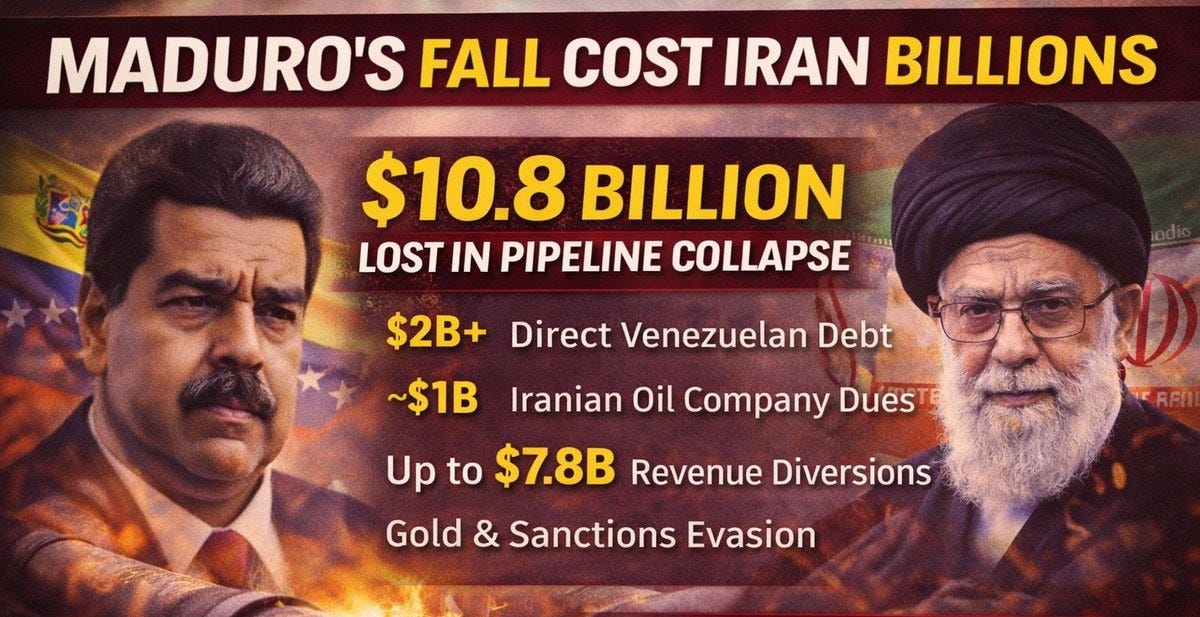
Iran has long been framed by Washington as a “systemic challenger,” not only because of its nuclear program, but due to its broader resistance posture across the Middle East. By acting unilaterally against Maduro, the United States is demonstrating that it is willing to bypass multilateral institutions and established legal mechanisms when dealing with governments it considers hostile. For Iranian decision-makers, this reinforces a long-held belief that international law offers no real protection when strategic confrontation intensifies.
The message is twofold. First, leadership status and sovereignty no longer guarantee immunity if a state is positioned outside the U.S.-led order. Second, diplomatic engagement and compliance are no longer sufficient shields if resistance behavior continues. In Tehran, this will likely deepen mistrust toward Western negotiations and strengthen hardline arguments that deterrence—not accommodation—is the only viable survival strategy.
Rather than discouraging resistance, such signaling risks producing the opposite effect. Iranian leaders may conclude that restraint only increases vulnerability, while power—military, regional, and strategic—is the sole reliable insurance against coercion. In this sense, the Maduro episode does not de-escalate global tensions; it accelerates a security-driven mindset that pushes states like Iran further away from diplomacy and deeper into confrontation.
Seen from this perspective, the arrest is not an isolated enforcement action, but part of a broader pattern: the normalization of coercive power as a tool of international governance. For Iran, the warning is implicit but loud—align, submit, or prepare for escalation.
Conclusion: A World Moving Backward
The arrest of Nicolás Maduro is not about Venezuela alone. It is a symptom of a broader collapse in the idea that law can restrain power.
For the Middle East, the lesson is devastating but unmistakable: justice is selective, accountability is negotiable, and survival depends less on legitimacy than on geopolitical alignment.
As this reality sinks in, we should expect fewer democratic openings, more securitized states, and a regional order increasingly shaped by fear, force, and transactional loyalty—not law.
If this trajectory continues, the world may soon look back on the era of international norms not as a flawed system worth reforming, but as a brief historical exception—one that has now decisively ended.
