

The sudden death of Iran’s Supreme Leader Ayatollah Ali Khamenei during the ongoing war with the United States and Israel has opened a new and uncertain chapter in Iranian politics. Within days, the country’s powerful political and religious establishment moved to appoint his son, Mojtaba Khamenei, as the new supreme leader, an unprecedented development in the history of the Islamic Republic. The transition comes at a moment of intense military confrontation, raising critical questions about the future direction of Iran’s leadership, the trajectory of the war, and the broader balance of power in the Middle East. Who is Mojtaba Khamenei, how did the war help bring him to power, and what might his leadership mean for Iran and the region?
Many claims about Mojtaba, especially those portraying him in mythical or highly personalised terms, are often based on rumours rather than verifiable accounts. Much of the account in this article draws on my first-hand experience serving as a Strategic Communications Advisor to the Iraqi Prime Minister, where I ran the Iran desk, as well as direct contacts and reliable sources from that period. I avoided relying on rumours and speculation.
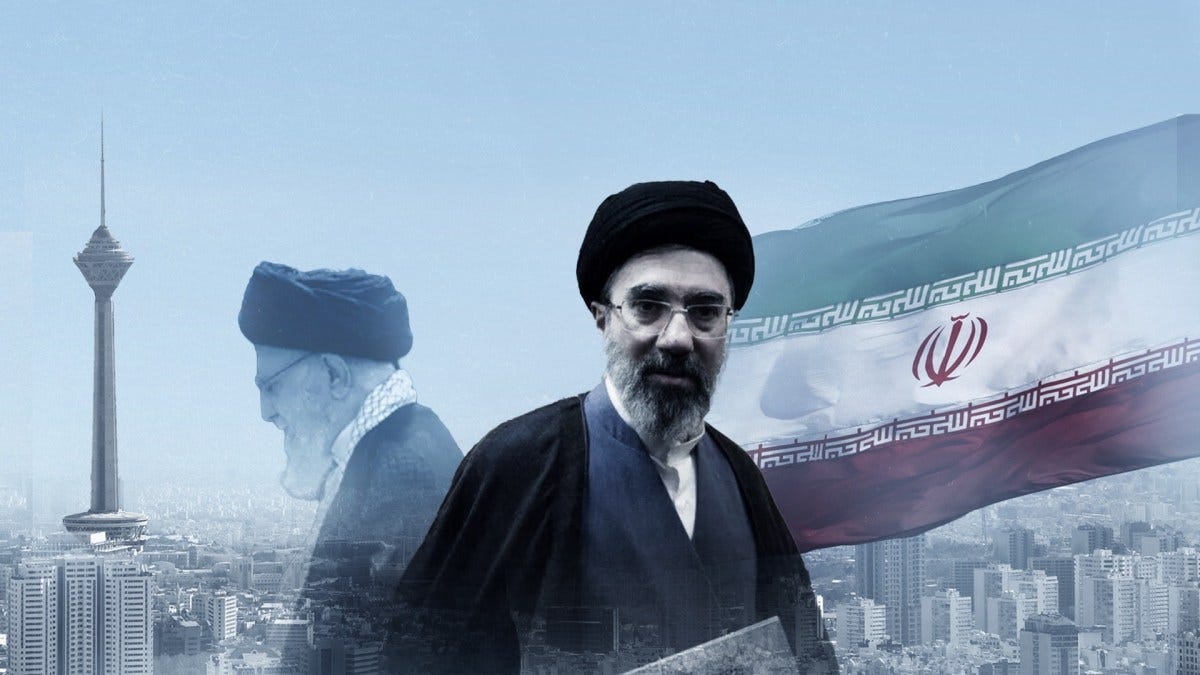
Who Is Mojtaba Khamenei?
Mojtaba Khamenei, the second son of Iran’s former Supreme Leader Ayatollah Ali Khamenei, was born on 8 September 1969 in Mashhad into one of the most influential clerical families in the Islamic Republic. As a member of the Khamenei family—a prominent political-religious dynasty that has shaped Iran’s leadership for decades—he grew up at the center of the country’s revolutionary establishment. His personal and political networks were further strengthened through marriage into the Haddad Adel family, another powerful conservative political family closely connected to Iran’s ruling elite.
Like many figures within Iran’s clerical leadership, Mojtaba Khamenei pursued a traditional religious education. He studied in the religious seminaries of Tehran and Qom, the two most important centers of Shiite scholarship in Iran. Among his instructors were influential clerics such as Mahmoud Shahroudi and Mohammad-Taqi Mesbah Yazdi, both known for their role in developing the ideological and political theology underpinning the Islamic Republic. Over the years he rose through the ranks of the seminary system and reportedly reached one of the highest teaching levels in the Hawza, where he taught advanced religious courses until suspending his classes last year due to security concerns.
Mojtaba also shares the revolutionary generation’s formative experience of the Iran–Iraq War (1980–1988), in which he reportedly served as a young volunteer. During this period he built long-lasting relationships with members of the Islamic Revolutionary Guard Corps (IRGC) and other revolutionary institutions. These networks later became an important foundation for his political influence.
Although he rarely held formal government office, Mojtaba Khamenei gradually became one of the most powerful behind-the-scenes figures in Iranian politics. For years he operated within the Office of the Supreme Leader, where he managed access to his father and cultivated extensive political and security networks. Many observers described him as his father’s “gatekeeper” or shadow adviser, exercising influence far beyond his public profile.
His power base rests on a combination of conservative clerical support in Qom, strong relationships with the IRGC, and influence among Basij paramilitary networks. He is also associated with the Front of Islamic Revolution Stability, a hardline political current within the Iranian establishment. Within the regime he is often described as a hardliner, particularly in matters of military deterrence and regional strategy, with some analysts suggesting he may support more assertive strategic policies than his father did.
His prominence also attracted international attention. In 2019 the United States placed Mojtaba Khamenei under sanctions, citing his role in advancing the policies of the Iranian leadership and supporting the structures of the Islamic Republic.
Following the assassination of Ali Khamenei during the ongoing war involving Iran, the United States, and Israel, the Assembly of Experts selected Mojtaba Khamenei as Iran’s new Supreme Leader in March 2026. His rise to the position reflects the consolidation of power among hardline political forces and the growing influence of security institutions within Iran’s political system. Ideologically, he is widely seen as strongly committed to the principles of the Islamic Revolution, supporting a firm stance against Western influence and continuing Iran’s regional “resistance” strategy.
How the War Helped Him Rise to Power
The assassination of Iran’s Supreme Leader Ali Khamenei in a U.S.–Israeli strike created an immediate succession crisis at one of the most sensitive moments in the history of the Islamic Republic. With the country already engaged in a major regional war, the leadership faced urgent pressure to ensure rapid political continuity and prevent instability at the top of the system.
Under normal circumstances, Mojtaba Khamenei’s potential succession had long been controversial within Iran’s political and clerical circles. Many senior officials and religious authorities had expressed reservations about the idea for two main reasons. First, it appeared to contradict the republican foundations of the Islamic Republic, which was established in 1979 through a revolution that overthrew a hereditary monarchy. Elevating the son of a supreme leader risked creating the impression of a dynastic transfer of power, something the revolution had originally rejected. Second, from a theological perspective, the idea also challenged traditional Shiite norms, since there is no historical precedent of a Shiite marja or supreme religious authority being succeeded directly by his son.
However, the outbreak of war and the atmosphere of national survival that followed dramatically altered the political calculus. In times of existential crisis, political systems often prioritize stability and continuity over institutional debates or ideological objections. The urgent need to maintain command over the state, the military, and the security apparatus made a swift and decisive succession more important than the unresolved controversies surrounding it.
In this environment, the Islamic Revolutionary Guard Corps (IRGC) and hardline political networks quickly rallied behind Mojtaba Khamenei as a figure capable of preserving the system and maintaining unity within the ruling establishment. The external pressure created by the war with the United States and Israel further reinforced this consolidation, strengthening the argument that the country needed a leader deeply embedded within the existing power structure.
Rather than weakening the Islamic Republic, the war appears to have accelerated the consolidation of power within the hardline establishment, smoothing the path for Mojtaba Khamenei’s rise to the leadership.
For Trump and Netanyahu: From One Khamenei to Another
The appointment of Mojtaba Khamenei as Iran’s new Supreme Leader also carries a clear political message for Washington and Tel Aviv. Early in the war, U.S. President Donald Trump suggested that the worst possible outcome would be if Ali Khamenei’s successor turned out to be “as bad as the previous person.” He also publicly indicated that the United States should have a role in shaping Iran’s political future, reportedly expressing a desire for direct involvement in determining who would succeed the Iranian leader after his death.
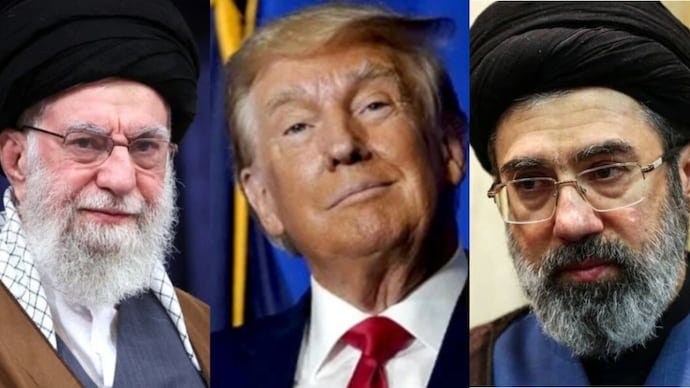
Against this backdrop, Mojtaba Khamenei’s rapid elevation appears to have been interpreted within Iran’s political establishment as a statement of defiance. Reports suggest that Trump later expressed dissatisfaction with the outcome, saying he was “not happy” with the choice of the new Supreme Leader.
From Tehran’s perspective, however, the message behind the decision seems clear. By selecting the son of the late leader—someone deeply embedded in the existing political and security networks—the system signaled that the continuity of the Islamic Republic remains intact, even under intense external pressure. It also served as a rejection of any notion that foreign powers could influence Iran’s internal leadership decisions.
In effect, the leadership transition communicates a blunt message to Washington and Tel Aviv: the system will determine its own future, and external pressure—even the assassination of its highest authority—will not dictate Iran’s political trajectory. In symbolic terms, the outcome can be read as a declaration that removing one Khamenei has simply produced another one to deal with.
At the same time, Mojtaba Khamenei has long been known as a highly secretive figure operating largely behind the scenes, which adds another layer to this dynamic. His limited public profile and opaque political style make him less predictable for Iran’s adversaries, contributing to the psychological dimension of the ongoing confrontation.
What His Leadership Means for Iran’s Domestic Politics
The domestic implications of Mojtaba Khamenei’s leadership may be understood through a comparison once made by Faezeh Hashemi, the daughter of the late Iranian political heavyweight Akbar Hashemi Rafsanjani. Several years ago she compared Mojtaba Khamenei to Saudi Arabia’s Crown Prince Mohammed bin Salman, suggesting that his style of governance could combine social flexibility with political centralisation.
In some respects, this comparison may prove insightful. On the social front, Mojtaba Khamenei is believed to be more pragmatic and less rigid on certain cultural and religious regulations that have triggered widespread public frustration in recent years. Issues such as the strict enforcement of hijab laws and other aspects of religious policing, which fueled repeated protest waves, may see a degree of relaxation. Public demands for greater personal freedoms have grown significantly over the past decade, and easing these pressures could help the state reduce social tensions.
However, this potential social flexibility may not extend to the political sphere. In contrast, political opposition and organised dissent are likely to face a more securitised environment. Mojtaba Khamenei’s close ties to the Islamic Revolutionary Guard Corps (IRGC) suggest that security institutions may gain even greater influence within the political system. The result could be a strengthening of the security state, with tighter monitoring of political activism and organised opposition.
Such a shift may also lead to a further decline in the already limited space available to reformist currents, reducing the prospects for meaningful political pluralism within the system. At the same time, Mojtba Khamenei represents a generational transition within the leadership of the Islamic Republic—a move from the revolutionary generation that founded the state in 1979 to a younger cohort shaped by the post-revolutionary political order.
Taken together, these developments suggest that the Islamic Republic may gradually evolve into a system that is less defined by traditional clerical authority and ideological debates, and more characterised by centralised power and strong security institutions.
What It Means for the Ongoing War
Mojtaba Khamenei’s rise to power comes at a moment when Iran is already engaged in an intense and expanding confrontation with the United States and Israel. His leadership is therefore likely to shape the strategic trajectory of the war itself.
One important factor is his long-standing relationship with the Islamic Revolutionary Guard Corps (IRGC) and other security institutions. These networks suggest that Iran’s strategic posture may become more militarised and security-driven, giving the IRGC an even greater role in shaping wartime decision-making while sidelining political and diplomatic institutions.
At the same time, the circumstances surrounding his appointment—following the assassination of his father and during a period of external attack—reinforce the state’s narrative of national survival and resistance. In such an environment, compromise is often politically costly. As a result, diplomatic openings with the United States or Israel are likely to remain limited in the short term, as the leadership prioritises unity and deterrence over negotiation.
Strategically, Iran may respond by strengthening its deterrence capabilities across several fronts. This could include further expansion of its missile program, increased reliance on regional allies and proxy networks, and the use of strategic pressure points in the region. One such pressure point is the Strait of Hormuz, a critical global energy route through which Iran can exert economic and geopolitical leverage.
In this context, the leadership transition does not necessarily create an opportunity for de-escalation. On the contrary, changes in leadership during wartime often reinforce hardline positions, as new leaders seek to demonstrate strength and maintain internal cohesion.
The key dynamic, therefore, is that leadership change in the middle of a war may reduce incentives for immediate de-escalation and narrow the space for compromise.
Regional Implications
Mojtaba Khamenei’s appointment also carries important consequences for the broader Middle East. One immediate effect has been the reinforcement of the “Axis of Resistance” narrative across the region. Leaders of allied movements and groups in Iraq, Lebanon, and Yemen quickly pledged allegiance to him, signalling continuity in the network of political and military alliances that Iran has cultivated over the past decades.
At the same time, regional governments are likely to reassess their strategic calculations. Countries such as Iraq, Lebanon, Yemen, and the Gulf states will closely watch how the new leadership defines its regional priorities and how the ongoing confrontation with the United States and Israel evolves. In the short term, Mojtaba Khamenei’s rise could contribute to a deepening geopolitical polarisation in the Middle East, particularly if the war continues and alliances harden along opposing blocs.
However, if the current conflict eventually subsides, Iran under his leadership may also seek to improve and stabilise relations with neighbouring countries. Mojtaba Khamenei is believed to hold the view that Iran must reassure its regional neighbours and work toward building stronger political and economic partnerships in order to reduce isolation and strengthen Iran’s long-term strategic position.
Beyond the region, his leadership will also have broader global implications. These may include continued confrontation with Israel and the United States, persistent tensions affecting energy markets, and increased risks to maritime security in strategic waterways such as the Strait of Hormuz and Bab al-Mandab. The situation also feeds into wider great-power competition, as global actors become increasingly involved in shaping the future balance of power in the Middle East.
Nuclear and Missile Policy: Toward Expanded Deterrence
One of the most consequential questions following the leadership transition concerns Iran’s nuclear and missile policies. For years, the late Ayatollah Ali Khamenei maintained a religious decree—often referred to as a fatwa against the development of nuclear weapons—which he presented as both a theological and political barrier to weaponisation. While the interpretation and practical implications of that fatwa were frequently debated internationally, within Iran it functioned as an important reference point shaping the country’s official nuclear doctrine.
With the emergence of a new supreme leader, however, the authority of that decree is no longer necessarily binding. In the Shiite religious tradition, religious rulings are tied to the authority of the scholar who issues them, and a new leader is free to adopt a different interpretation. Mojtaba Khamenei has never publicly reaffirmed his father’s position on the matter, and he has been reportedly known to be against it. Furthermore, the debate over nuclear deterrence within Iran’s political and security circles has intensified in recent years, pushing toward changing the policy and developing a nuclear weapon as a new deterrent.
In particular, voices within the Islamic Revolutionary Guard Corps (IRGC) and other security institutions have increasingly argued that Iran must strengthen its deterrence capabilities following repeated attacks and external pressure. From their perspective, the vulnerabilities exposed during the current war have reinforced the argument that conventional deterrence alone may not be sufficient.
A similar debate surrounds Iran’s missile doctrine. Under Ali Khamenei, the country’s ballistic missile program was reportedly guided by an informal strategic ceiling of around 2,000 kilometres, a range sufficient to cover regional adversaries while avoiding a shift toward intercontinental capability. Mojtaba Khamenei, however, has long been associated with figures who viewed this limitation as strategically restrictive.
In the aftermath of the war—and given the perception that Iran’s territory itself has become directly vulnerable—the argument for expanding missile ranges and capabilities is likely to gain greater traction. Extending the reach of Iran’s missile program could allow the country to project deterrence beyond the regional theatre and potentially reach more distant targets, including those associated with the United States.
Taken together, the leadership transition may open the door to a more expansive doctrine of strategic deterrence, combining accelerated nuclear capability debates with a broader missile program. Whether this shift materialises will depend on internal power dynamics within Iran’s leadership, but the pressure to rebuild and strengthen deterrence after the war is already becoming a central theme in the country’s strategic discussions.
The Bigger Question: Continuity or a Security-Driven Transformation?
The rise of Mojtaba Khamenei ultimately raises a deeper question about the future of the Islamic Republic: is this transition a continuation of the regime’s ideological foundations, or the beginning of a more security-driven political system?
On one hand, his appointment reflects a strong element of continuity. The core pillars of the Islamic Republic—the clerical establishment, the Revolutionary Guard, and the broader security apparatus—moved quickly to preserve the existing political structure. Despite the assassination of its supreme leader and the pressures of war, the system demonstrated its capacity to reproduce itself and maintain internal cohesion. In this sense, Mojtaba Khamenei represents the continuation of the revolutionary order built after 1979.
On the other hand, the context of his rise and the networks supporting him suggest the possibility of gradual transformation. Mojtaba belongs to a generation shaped less by the ideological fervour of the revolution and more by decades of geopolitical confrontation, sanctions, and security challenges. His close ties to the Islamic Revolutionary Guard Corps (IRGC) and the increasing influence of security institutions may signal a shift toward a system where strategic survival and military deterrence play a more central role than ideological debates within the clerical establishment.
This does not necessarily mean the ideological framework of the Islamic Republic will disappear. Rather, it may evolve into a model where state security institutions and strategic deterrence become the dominant organising principles of governance, while revolutionary ideology continues to provide its political justification.
Whether Mojtaba Khamenei’s leadership ultimately reinforces the existing ideological structure or accelerates the emergence of a more security-driven state will shape Iran’s political trajectory in the years ahead—and, by extension, the strategic balance of the Middle East.

Seconding the comments of Benedict Moleta: this presentation is the best I've read to date on the the rationale underlying election of the new Supreme Leader.
Not one of those I've read, not even this quite the best one, has commented at all on how might this Leader be affected by the sudden violent loss by assassination and murder of his father, his mother, his wife, their child, his sister, her own spouse, and their own children. All that suggests a powerful source of motivation.
Thank you for presenting these biographical, clerical and succession details so clearly and concisely, and for providing this ongoing variety of informative, imaginative and insightful writing.