

What Actually Happened?
When the United States and Israel launched military operations against Iran in late February 2026, the stated objectives were twofold: to degrade Iran’s nuclear and missile capabilities, and to either force regime change or compel Tehran to come to the negotiating table from a position of weakness.
The operation achieved part of its goal. Strikes on Iranian leadership, nuclear and missile facilities, and industrial and civil infrastructure inflicted real damage — setbacks that Iran will take years to fully recover from. But the campaign produced an unintended consequence that now sits at the center of the crisis: it handed Iran a third card, arguably as powerful as the other two that survived the strikes despite the damage they sustained.
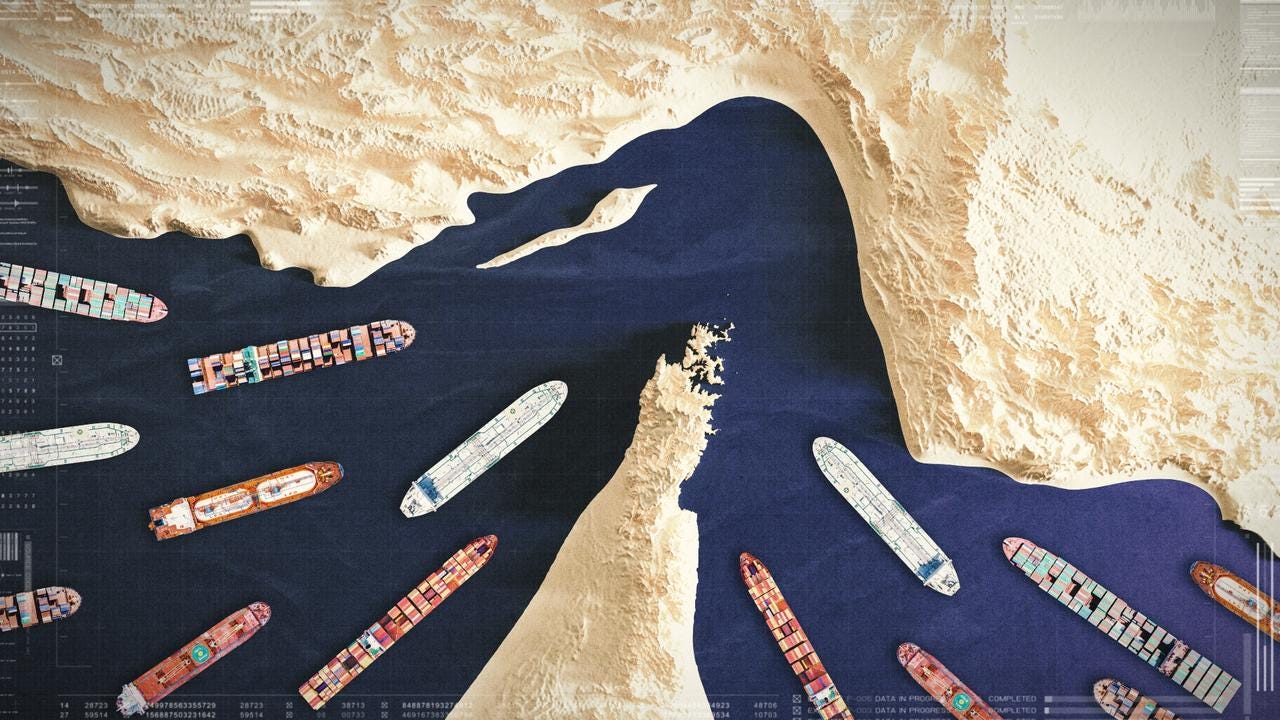
Iran’s ability to close — or threaten to close — the narrow waterway through which roughly 20% of the world’s seaborne oil passes had always existed on paper. What changed after the strikes was the political and strategic logic of actually using it. With its nuclear program damaged and its missile arsenal degraded, Tehran had every incentive to activate the one form of leverage that military airstrikes cannot destroy: geography.
Trump’s response was the blockade — a naval cordon announced on April 13 targeting all ships entering or leaving Iranian ports. The logic was straightforward: if Iran was going to weaponize the strait, the US would weaponize Iran’s access to global trade. The goal was to pressure Tehran into abandoning its grip on Hormuz and returning to negotiations from a weakened position.
Whether that logic holds is the central question of the crisis unfolding right now.
Iran’s Response and Counter-Moves
Tehran’s answer was swift and unambiguous. Iran refused to treat the blockade as pressure to be absorbed — it treated it as a red line. Iranian parliamentary speaker and chief negotiator Mohammad Bagher Qalibaf put it plainly on state television: negotiations under coercion were off the table, and a second round of talks in Islamabad would not happen as long as the US naval blockade of Iranian ports remained in place.
Iran then did what it had threatened. It closed the strait again.
After a brief and fragile reopening, Iranian forces fired on ships attempting to transit the waterway, forcing vessels to turn back. Two Indian-flagged tankers came under fire from IRGC gunboats. A container ship reported damage from a rocket attack off Oman. Major shipping firms — Maersk, CMA CGM, Hapag-Lloyd — suspended transits entirely. The message from Tehran was consistent and deliberate: the strait does not open while Iran remains blockaded.
The standoff now has a logic of its own. Both sides have stated positions they cannot easily walk back from without appearing to capitulate. Washington refuses to lift the blockade until a deal is signed. Tehran refuses to negotiate until the blockade is lifted.
The real question is not who is right, but who blinks first — and how long each side can sustain the cost of not blinking. A frozen conflict is possible, but it is not free. Every day the strait remains effectively closed, the pressure mounts — not just on Iran, but on global energy markets, on Asian importers, on Gulf states, and on Washington’s own allies. That accumulated pressure has a way of forcing outcomes that neither side explicitly chose.
Are Iranians Ships passing through the Blockade
The blockade is real, but its reach remains contested. The US has intercepted a number of vessels bound for or departing Iranian ports, and in one significant escalation, the USS Spruance fired on and seized the Iranian-flagged cargo ship Touska in the Gulf of Oman, with US Marines taking custody of the vessel and its crew. Iranian army in return did the same thing with two ships trying to pass Hormuz.
Yet at the same time, other ships have continued to move. Whether this reflects the practical limitations of controlling vast stretches of open water in the Arabian Sea, or whether Washington is deliberately applying pressure on a graduated scale — tightening incrementally rather than all at once — remains an open question.
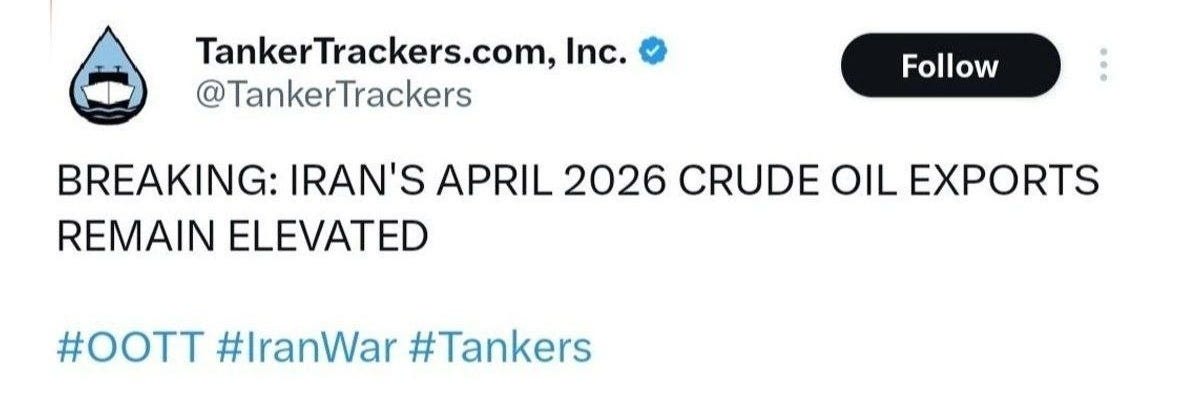
According to the vessel-tracking platform Vortexa, at least 34 oil tankers carrying Iranian oil have bypassed the U.S. blockade since 13 April 2026.
During this period, at least 19 Iran-linked tankers have exited the Gulf, while at least 15 others have entered the Gulf from the Arabian Sea heading toward Iran. It has been confirmed that at least six of the departing vessels were carrying Iranian crude oil, amounting to approximately 10.7 million barrels.
Iranian oil, which is typically under sanctions, is sold at a discount to Brent crude. Assuming a $10 discount, this volume would represent revenues of approximately $910 million.
There are currently 21 U.S. warships in the region, with seven more en route, and more than a dozen are involved in the U.S. naval blockade of Iranian ports.
Iran’s Alternatives: How Tehran Is Working Around the Blockade
What is clear is that Iran has been here before. Sanctions on shipping companies, efforts to choke off oil exports, restrictions on importing sensitive materials from China — none of these are new. Over years of operating under maximum pressure, Iran has built a set of workarounds that are neither elegant nor foolproof, but have proven resilient enough to keep the economy functioning at a diminished but sustainable level. Here is what those alternatives look like today.
1- The Shadow Fleet
Iran has developed an extensive network of tankers that operate outside normal tracking and regulatory systems. These vessels disable AIS transponders, conduct ship-to-ship oil transfers in open water to disguise origin, and operate under shell companies registered in jurisdictions with minimal oversight. The US has made repeated efforts to identify and sanction these networks, but enforcement has been imperfect. Iran is not Venezuela — the scale, the geography, and the depth of its logistics networks make a complete interdiction unlikely. Exports may decline under sustained pressure, but a full halt is a different challenge altogether.
2- Bureaucratic Circumvention and the Iraq Channel
Even during previous sanctions regimes, shipping firms found ways to continue operating — restructuring company ownership, changing documentation, rotating vessel flags. Iran has also long used Iraq as a transit buffer: goods purchased by Iraqi companies, delivered to Iraqi ports or borders, and then moved overland into Iran. This channel has been one of Tehran’s most reliable financial and commercial lifelines, partly sustained through Iran’s exports of electricity and natural gas to Iraq, which create a natural barter and offset mechanism. Washington appears aware of this. Just recently, Iraq’s central bank was suspended from dollar access pending a review of whether those flows were being used to benefit Iran — a targeted move aimed directly at closing this channel.
3- The Overland Alternative: Belt and Road and Beyond
Perhaps Iran’s most strategically significant preparation for exactly this kind of scenario is its investment in overland connectivity. Railway links developed under China’s Belt and Road Initiative now connect Iran to Chinese markets via Central Asia. The Caspian Sea shipping route provides access to Russia and onward to Chinese partners. A trucking transit corridor linking Iran to China via Afghanistan is reportedly in advanced planning stages, with a railway connection to follow. The gradual normalization of relations between both Iran and China and the Taliban government in Kabul has been a deliberate part of this architecture — building the political foundation for a logistics corridor that bypasses maritime chokepoints entirely.
Bottom Line: The Sustainability Question
The deeper issue may not be whether Iran can be fully blockaded, but whether the United States can sustain the attempt. Maintaining effective control over international waters at this scale carries enormous operational and financial costs. Washington’s regional basing capacity has weakened. Domestic political pressures are mounting, with the 250th anniversary of independence in July, midterm elections in November, and the broader debate over how long an undeclared maritime war can continue without congressional engagement. A potential Trump visit to China — if it proceeds — adds another layer of diplomatic complexity to a policy that depends on Beijing’s quiet non-cooperation. A blockade that cannot be made total, and cannot be sustained indefinitely, is ultimately a pressure tactic — not a strategy.

Thank you Ali for once again infusing your strategic analysis with commercial and logistical details - most informative.
As you say, Iran’s strategic frame may be neither elegant nor foolproof, but its adversary's options seem limited to the (Brent?) crude alternatives of strategic retreat and persistent non-strategy.
A couple of complementary angles from me.
3 reasons the war between the US, Israel and Iran is headed for a frozen conflict (cowritten with Jessica Genauer):
https://tinyurl.com/4akb9dmw
Non-frozen conflict: Hamas versus Hormuz
https://tinyurl.com/y89xzy7p