

During the recent war with Iran, President Donald Trump repeatedly employed contradictory statements, shifting narratives, strategic ambiguity, and public misinformation as instruments of statecraft. Whether discussing the objectives of the war, the status of negotiations, the prospects of regime change, the extent of military success, or the conditions for peace, the administration’s messaging often appeared designed less to inform than to shape perceptions among multiple audiences.
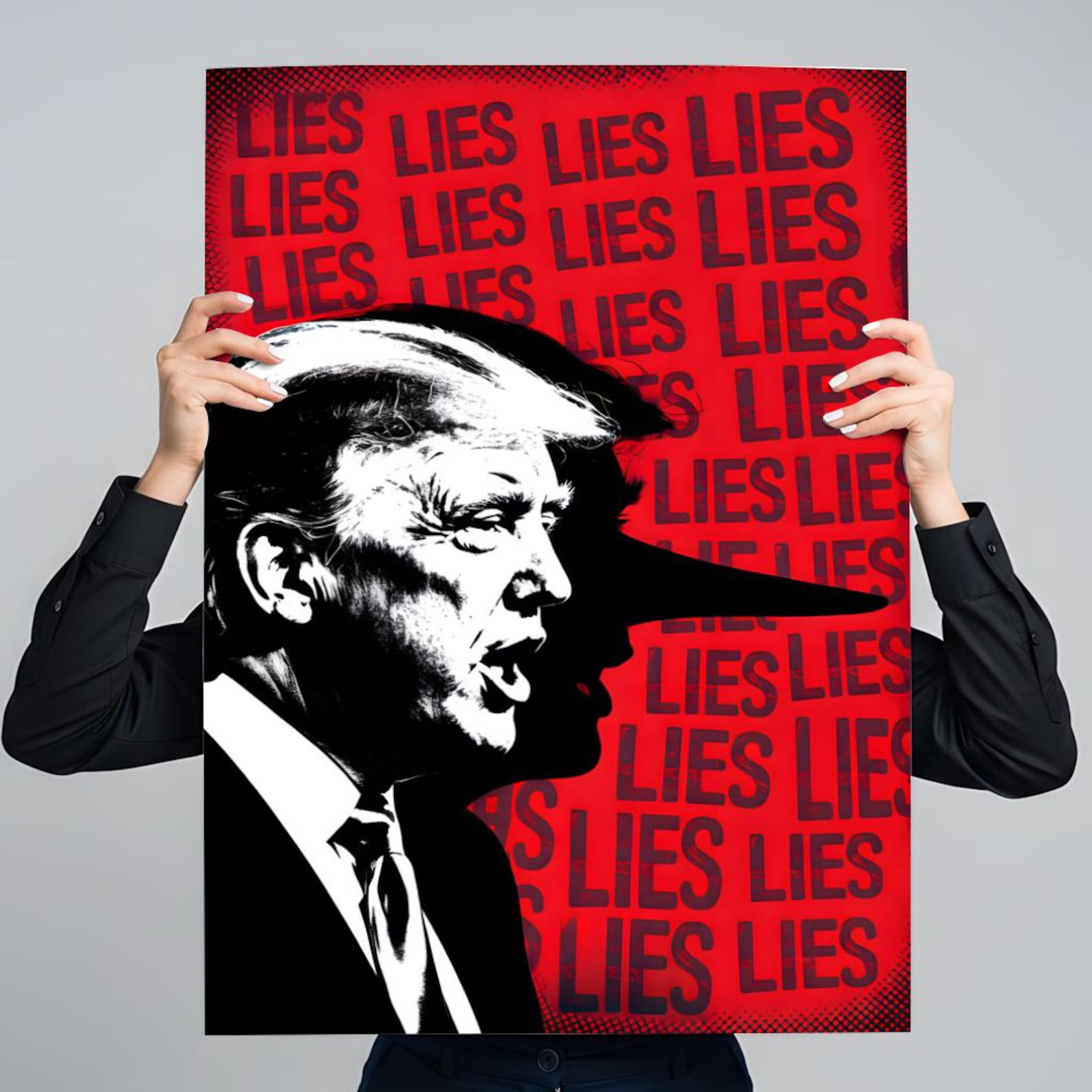
This was not simply a matter of political rhetoric. Rather, deception and secrecy seemed to form an integral part of Trump’s approach to both warfare and negotiation. Different messages were directed at different audiences: Iran, American voters, regional allies, financial markets, and the broader international community. Some statements sought to conceal intentions, others to increase pressure on Tehran, reassure domestic constituencies, maintain coalition support, or create uncertainty among adversaries. In this sense, misinformation functioned not as an accidental by-product of the conflict, but as a deliberate strategic tool.
Such practices are hardly unique in the history of war. Governments have long justified deception as a military necessity. Yet the Iran conflict offers a particularly revealing case study because deception was not confined to the battlefield. It became a central feature of diplomacy, public communication, and political management. The boundary between negotiation and propaganda, between strategic ambiguity and outright falsehood, became increasingly blurred.
CNN montage of all the times Trump announced deals with Iran, 39 times since the beginning of the conflict.
This article examines Trump’s politics of lies during the Iran war and the negotiations that accompanied it. It seeks to understand how deception was used as a method of war and diplomacy, what political and military objectives it was intended to achieve, and how it shaped the trajectory of the conflict itself. More importantly, it explores the consequences of governing through misinformation: whether such tactics strengthened America’s position, altered Iran’s calculations, or ultimately contributed to outcomes very different from those originally intended. In doing so, the article argues that understanding the politics of lies is essential not only for understanding this conflict, but also for understanding how modern wars are increasingly fought through the manipulation of information as much as through the use of military force.
Understanding the Politics of Lying: David Wise’s Framework for Analysis
David Wise’s seminal work, The Politics of Lying: Government Deception, Secrecy, and Power, offers a conceptual framework for understanding the relationship between political power, secrecy, and deception during wartime. Writing in the aftermath of the Vietnam War and the Watergate scandal, Wise challenged the assumption that government deception is merely the result of individual dishonesty or political misconduct. Instead, he argued that lying often becomes embedded within the machinery of state power itself, particularly during periods of conflict, national crisis, and geopolitical competition.
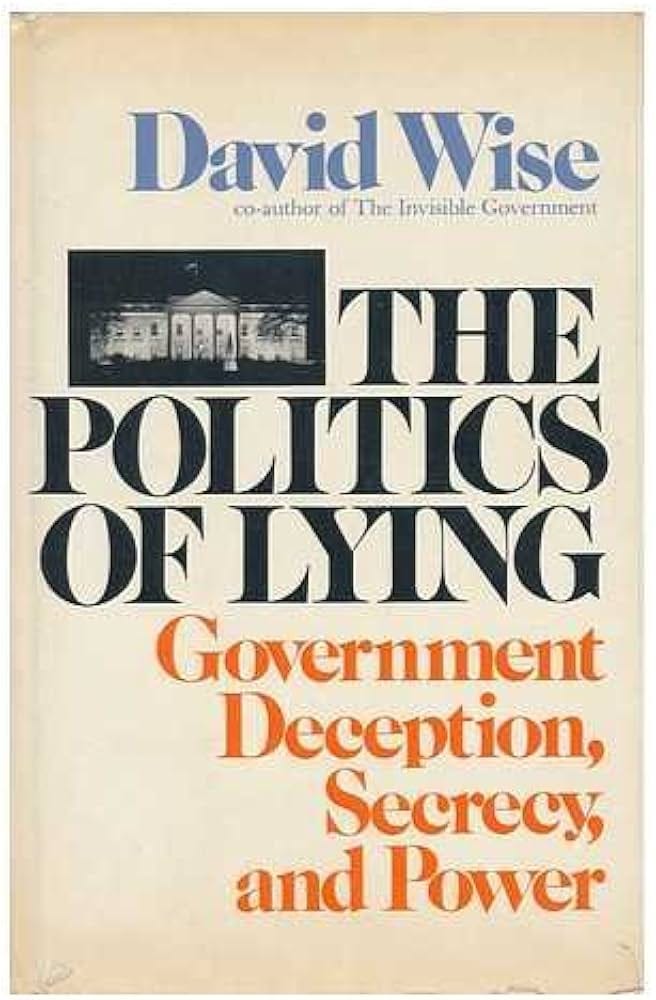
For Wise, government deception operates through a spectrum of practices ranging from secrecy and selective disclosure to outright falsehood. Political leaders rarely present lies as lies. Rather, information is carefully managed, facts are selectively released, inconvenient realities are concealed, and narratives are constructed to shape public understanding of events. In this sense, the objective is not simply to hide the truth but to manufacture a version of reality that advances political objectives.
A key insight in Wise’s analysis is that governments frequently justify deception as a necessity. Leaders may argue that secrecy is needed to protect military operations, preserve diplomatic flexibility, maintain public morale, reassure allies, avoid economic panic, or confuse adversaries. In many cases, these objectives are not entirely illegitimate. The problem emerges when temporary secrecy evolves into a systematic method of governance and when political leaders begin treating public perception as something to be managed rather than informed.
Wise further argues that deception often creates a self-reinforcing cycle. Initial distortions generate new distortions to protect earlier claims. Governments become increasingly invested in defending narratives that may no longer correspond to reality. As a result, policymakers can become trapped by their own propaganda, making decisions based on politically useful narratives rather than accurate assessments of facts on the ground. In such circumstances, deception ceases to be merely a communication strategy and becomes a governing strategy.
This framework provides a useful lens through which to examine Donald Trump’s conduct during the Iran war and the negotiations that accompanied it. The purpose here is not to determine whether every inaccurate statement was intentionally false or whether every act of secrecy was unjustified. Rather, the focus is on identifying broader patterns of information management: shifting war objectives, contradictory public messaging, selective presentation of facts, and the use of narrative as a tool for military and diplomatic leverage.
Viewed through Wise’s framework, the central question is not whether deception occurred—deception has accompanied virtually every major war in modern history. The more important question is how deception was used, whom it was intended to influence, what objectives it sought to achieve, and whether it ultimately strengthened or weakened the strategic position of the United States.
Lies, Deception, and the Strategy of Uncertainty
From the outset of the conflict, Donald Trump’s public messaging toward Iran was marked by contradiction, ambiguity, and constant shifts in tone. At various moments he spoke of peace, diplomacy, and negotiations, while simultaneously threatening regime change, military escalation, and devastating retaliation. To many observers, these inconsistencies appeared chaotic. Yet viewed through the framework of political deception, they may have served a strategic purpose.
1- Managing the Enemy through Deception: One of the primary functions of deception in warfare is to create uncertainty within the adversary’s decision-making process. An enemy that cannot accurately assess intentions, capabilities, or future actions is more likely to make mistakes, delay decisions, or offer concessions. In this sense, uncertainty becomes a weapon in itself.
Throughout the war, Trump appeared to pursue several objectives simultaneously. He sought to conceal American intentions, keep Iranian leaders uncertain about Washington’s next move, increase pressure on Tehran during negotiations, and potentially widen divisions among different factions within the Iranian political establishment. If Iranian leaders could not determine whether Washington was genuinely seeking an agreement, preparing for regime change, or planning another military strike, they would be forced to devote significant resources to managing uncertainty rather than pursuing a coherent response.
This strategy was visible in the administration’s mixed messaging. At times, negotiations were presented as progressing positively; at other moments, officials suggested that diplomacy was failing and military options were imminent. Similarly, Trump alternated between claiming that the United States was not seeking regime change and making statements that implied the opposite. Military signalling followed a similar pattern, with threats of escalation frequently accompanied by calls for talks and de-escalation.
Whether these contradictions reflected deliberate strategy or internal divisions within the administration is ultimately less important than their practical effect. They created an environment in which uncertainty itself became part of the American pressure campaign against Iran. In the logic of the politics of lying, confusion is not necessarily a failure of communication. It can be the intended outcome.
2- Keeping Allies in Line, Containing Rivals: Trump’s information strategy was not directed solely at Iran. Like all major wartime leaders, he was simultaneously communicating with multiple audiences whose interests often diverged from one another.
Israel wanted stronger American commitments and greater military involvement. Gulf states sought protection but feared the economic consequences of prolonged conflict. European governments generally preferred de-escalation and diplomacy. China and Russia watched closely for opportunities to exploit American missteps while protecting their own interests. Each audience required a different message.
This helps explain why Trump’s rhetoric often appeared inconsistent. Statements that were intended to reassure Israel could alarm European allies. Messages designed to pressure Iran could unsettle Gulf states. Signals directed at Beijing or Moscow could complicate negotiations elsewhere. As a result, the administration frequently balanced competing narratives rather than maintaining a single coherent one.
In this context, deception and strategic ambiguity served several functions. They helped maintain coalition support by allowing different actors to interpret American intentions in different ways. They prevented allies from acting independently when Washington wished to retain control over escalation. They also projected strength without necessarily committing the United States to a specific course of action.
The result was a parallel battlefield that existed alongside the military one. The struggle was not only over territory, military assets, or diplomatic concessions. It was also over perceptions, expectations, and strategic calculations. In many respects, the narrative battlefield became almost as important as the military battlefield itself.
3- Dealing with Domestic Politics: The most difficult audience Trump had to manage may have been the American public.
The Iran conflict exposed a fundamental contradiction within Trump’s political coalition. On one side stood supporters who favored a strong alignment with Israel and expected Washington to confront Iran aggressively. On the other stood many America First voters who had supported Trump precisely because he promised to avoid costly foreign wars and reduce American involvement in the Middle East.
Reconciling these positions required a delicate balancing act. Trump needed to appear strong without appearing reckless. He needed to support Israel without becoming trapped in another open-ended regional conflict. He needed to threaten military action while simultaneously presenting himself as a peacemaker.
These competing pressures generated a stream of contradictory messages. Trump repeatedly spoke about his desire for peace while authorizing military operations. He claimed that negotiations were making progress while warning of devastating consequences if talks failed. He celebrated military successes while insisting that he wanted to end the conflict as quickly as possible. At various points he portrayed the war as both unavoidable and unnecessary, both a demonstration of strength and a means of achieving peace.
Such contradictions are often interpreted as inconsistency. Yet from the perspective of domestic political management, they served an important purpose. Different messages resonated with different constituencies. Supporters of military pressure heard determination and strength. Opponents of another Middle Eastern war heard promises of diplomacy and restraint.
This does not necessarily mean that every statement was intentionally deceptive. However, it does suggest that many of Trump’s messages were designed less to provide strategic clarity than to satisfy multiple domestic audiences simultaneously. In doing so, political communication became an extension of political management, with narrative often taking precedence over coherence.
The consequence was a wartime information environment in which truth, perception, negotiation, and political survival became increasingly intertwined. As David Wise warned decades ago, the danger of such a system is that leaders may eventually find themselves governing not through reality, but through the narratives they create to manage it.
Trump’s Politics of Lies: Winning the Battle, Losing the War
Tactical Successes: A balanced assessment requires acknowledging that Trump’s strategy was not without achievements. Measured against short-term military, economic, and diplomatic objectives, the administration was able to secure a number of tactical successes.
First, the United States and Israel succeeded in inflicting substantial military damage on Iran through two surprise wars that caught Tehran at moments of relative vulnerability. Key military figures were eliminated, infrastructure was damaged, parts of the nuclear and missile programs suffered setbacks, and the Iranian state was forced to divert significant resources toward recovery and defence.
Second, the war reinforced existing economic pressure on Iran via a surprising sea blockade. Even before the conflict, Tehran was operating under extensive sanctions. The war increased uncertainty, disrupted trade, complicated foreign investment, and imposed additional costs on an already strained economy.
Third, the conflict generated diplomatic pressure. Iran found itself forced to engage simultaneously with multiple crises: military confrontation, economic disruption, international scrutiny, and concerns about the security of its regional allies. This created conditions under which Washington believed Tehran might eventually accept concessions it had previously rejected.
Finally, the combination of military action, sanctions, and diplomatic pressure provided Trump with short-term leverage at the negotiating table. The administration hoped that demonstrating a willingness to use force would strengthen America’s bargaining position and convince Iranian leaders that compromise was preferable to continued confrontation.
Viewed narrowly, these were real achievements. The problem is that tactical success and strategic success are not necessarily the same thing.
Strategic Failure: The more important question is whether the war achieved its larger strategic objectives. Here the picture becomes far less favorable for Washington.
The most obvious reality is that Iran survived. Despite the extensive damage inflicted by the war, the Iranian state remained intact. The political system survived, the security apparatus survived, and the leadership ultimately maintained control. If one of the underlying assumptions behind the pressure campaign was that military force could trigger internal collapse or regime change, that objective clearly failed.
More importantly, some of Iran’s most important sources of leverage not only survived but gained new strategic significance.
The missile program, despite suffering damage, remained operational and emerged from the war with renewed political legitimacy inside Iran. The conflict reinforced the argument among Iranian decision-makers that missile capabilities constitute an indispensable deterrent against future attacks. Rather than weakening political support for the program, the war strengthened it.
The nuclear program underwent a similar transformation. Before the conflict, Tehran had shown willingness to negotiate limits on enrichment and other aspects of the program. After the war, however, the nuclear issue became increasingly connected to questions of national survival and deterrence. Voices advocating greater nuclear capability gained influence, while confidence in diplomatic guarantees declined. The result was that the program acquired greater strategic value than it possessed before the war.
Perhaps the most significant development was the emergence of the Strait of Hormuz as a powerful new source of leverage. Before the conflict, the strait represented a theoretical threat. After the war, it became an active strategic instrument capable of influencing global energy markets, international trade, and diplomatic calculations. Ironically, a war intended to reduce Iran’s leverage helped create an additional lever that did not previously exist in practical terms.
The war also failed to fragment Iran’s regional alliance network. On the contrary, it appears to have accelerated coordination among Tehran and its allies. As argued earlier, Iran increasingly concluded that separate fronts create separate defeats. The result was a shift toward the doctrine of the unity of fronts, a strategic adaptation that may ultimately make the Axis of Resistance more integrated than before.
Beyond these developments lies an equally important consequence: the erosion of American credibility. From Tehran’s perspective, the war confirmed long-standing suspicions that negotiations can coexist with military pressure and that agreements may not provide meaningful security guarantees. This perception has complicated future diplomacy and made it less likely that Iran will accept terms it previously considered negotiable.
The irony is striking. Before the war, Iran was actively seeking to avoid military confrontation and appeared willing to make significant concessions in order to do so. After experiencing the war and surviving it, Iranian leaders appear less fearful of confrontation and less willing to compromise. The conflict demonstrated to Tehran that while war is costly, it is survivable. Moreover, Iran emerged from the experience with additional leverage while retaining much of the leverage it already possessed.
This creates a paradox at the heart of Trump’s strategy. The administration may have succeeded in weakening Iran materially while simultaneously strengthening it strategically. The pressure campaign was designed to force Tehran into accepting a better deal for Washington. Instead, it may have produced the opposite effect: a more resilient, more confident, and more stubborn Iran that is now less willing to make concessions and more capable of demanding terms closer to its own preferences.
In that sense, the ultimate measure of success may not be the damage inflicted during the war, but the diplomatic landscape that emerged afterward. By that standard, the conflict appears to have left Washington negotiating with an Iran that is materially weaker yet strategically stronger than before.
The Cost of Lying: Losing Credibility and Damaging Trust
One of the most significant consequences of political deception is the erosion of credibility. Throughout the Iran war, the Trump administration repeatedly shifted its public positions regarding negotiations, military objectives, ceasefire conditions, and the future relationship with Tehran. At various moments, Washington presented diplomacy as the preferred path forward, while simultaneously escalating military pressure or introducing new demands. Statements regarding regime change, the nuclear program, sanctions relief, and military intentions often appeared contradictory, not only to outside observers but also to the parties directly involved in negotiations.
From a short-term perspective, such ambiguity may create leverage. From a long-term perspective, however, it creates skepticism. Once an adversary concludes that public commitments may not reflect actual intentions, every proposal becomes suspect and every diplomatic initiative is viewed through the lens of strategic manipulation.
This appears to have been one of the most important consequences of the Iran conflict. Even if Washington genuinely sought a negotiated settlement at various stages, Iranian leaders increasingly had reason to question whether negotiations were being pursued as a path toward compromise or merely as another instrument of pressure. The result was a gradual collapse of confidence in the diplomatic process itself.
The problem is not unique to this conflict. Diplomacy depends on a minimum level of predictability. States do not need to trust one another completely, but they must believe that agreements, commitments, and understandings have some value. Without that foundation, negotiations become increasingly performative. Meetings continue, messages are exchanged, and proposals are circulated, but the underlying purpose shifts. Rather than seeking a mutually acceptable outcome, each side uses negotiations to gain time, improve its military position, influence public opinion, or manage international pressure.
At that point, diplomacy ceases to function as a mechanism for ending conflict. Instead, it becomes another arena of conflict.
This dynamic became increasingly visible during the Iran war. Negotiations were frequently accompanied by military escalation, new sanctions, public threats, and shifting demands. Rather than reducing tensions, diplomacy often appeared to mirror the logic of the battlefield. Each side sought advantage rather than resolution. Diplomatic initiatives became tactical manoeuvres rather than genuine efforts to build a sustainable settlement.
The irony is that deception, when used excessively, can undermine the very objectives it seeks to achieve. A leader may gain short-term leverage by keeping adversaries uncertain, but if uncertainty evolves into complete distrust, negotiations become vastly more difficult. The adversary stops asking what concessions are required and begins asking whether any agreement is worth trusting at all.
This is precisely where diplomacy risks becoming a continuation of war by other means. Instead of creating pathways out of conflict, negotiations become part of the conflict itself. Each side approaches the table not to resolve disputes but to score points, shape narratives, and position itself for the next round of confrontation.
In the case of the Iran war, the damage may extend far beyond the immediate conflict. By weakening mutual trust and reducing confidence in diplomatic commitments, the politics of lying may have made future agreements harder to reach and more difficult to sustain. The tragedy is that while deception can help governments manage a war, it can simultaneously destroy the trust required to bring that war to an end.
David Wise argued that government deception is often justified as a necessary instrument of power. Leaders conceal information, manipulate narratives, and selectively disclose facts in order to gain strategic advantages, protect state interests, and manage crises. Yet Wise also warned that deception carries its own dangers. The more governments rely on manufactured realities, the greater the risk that they become trapped by them. Political narratives may shape perceptions, but they cannot indefinitely alter underlying realities.
The Iran war offers a powerful illustration of this dilemma. Throughout the conflict, the Trump administration employed deception, ambiguity, and shifting narratives as tools of both warfare and negotiation. These tactics were designed to pressure Iran, reassure allies, manage domestic audiences, and maintain strategic flexibility. In many respects, they achieved their immediate objectives. They created uncertainty, generated leverage, and helped Washington navigate a highly complex conflict.
But tactical success does not automatically translate into strategic success.
