

Introduction: The Last American Soldiers Leave
On September 30, the last US-led coalition forces left Iraq, closing another chapter in a military presence that began with the 2003 invasion. American troops had already withdrawn once, in 2011, only to return three years later when ISIS captured large parts of Iraq. Twelve years after that return, the coalition mission has now formally ended.
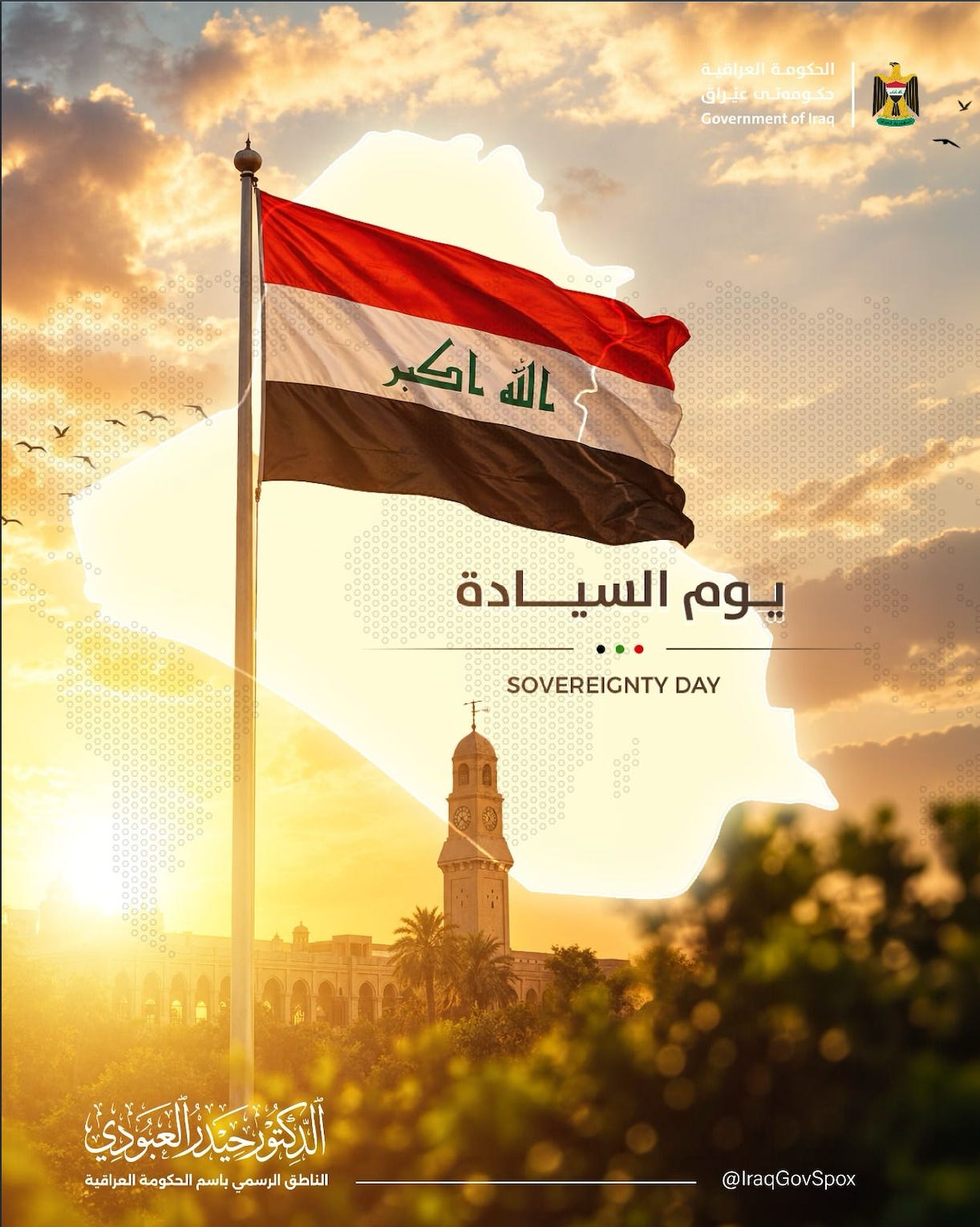
Baghdad marked the departure as a milestone in restoring full Iraqi sovereignty. Prime Minister Ali al-Zaidi declared October 1 “Sovereignty Day,” describing the withdrawal as the beginning of a new phase based on stronger Iraqi institutions and Iraqi control over national decisions. Trump celebrated it from a different angle, calling the US involvement a “very expensive excursion into Hell” and presenting the withdrawal as the end of a costly American entanglement.
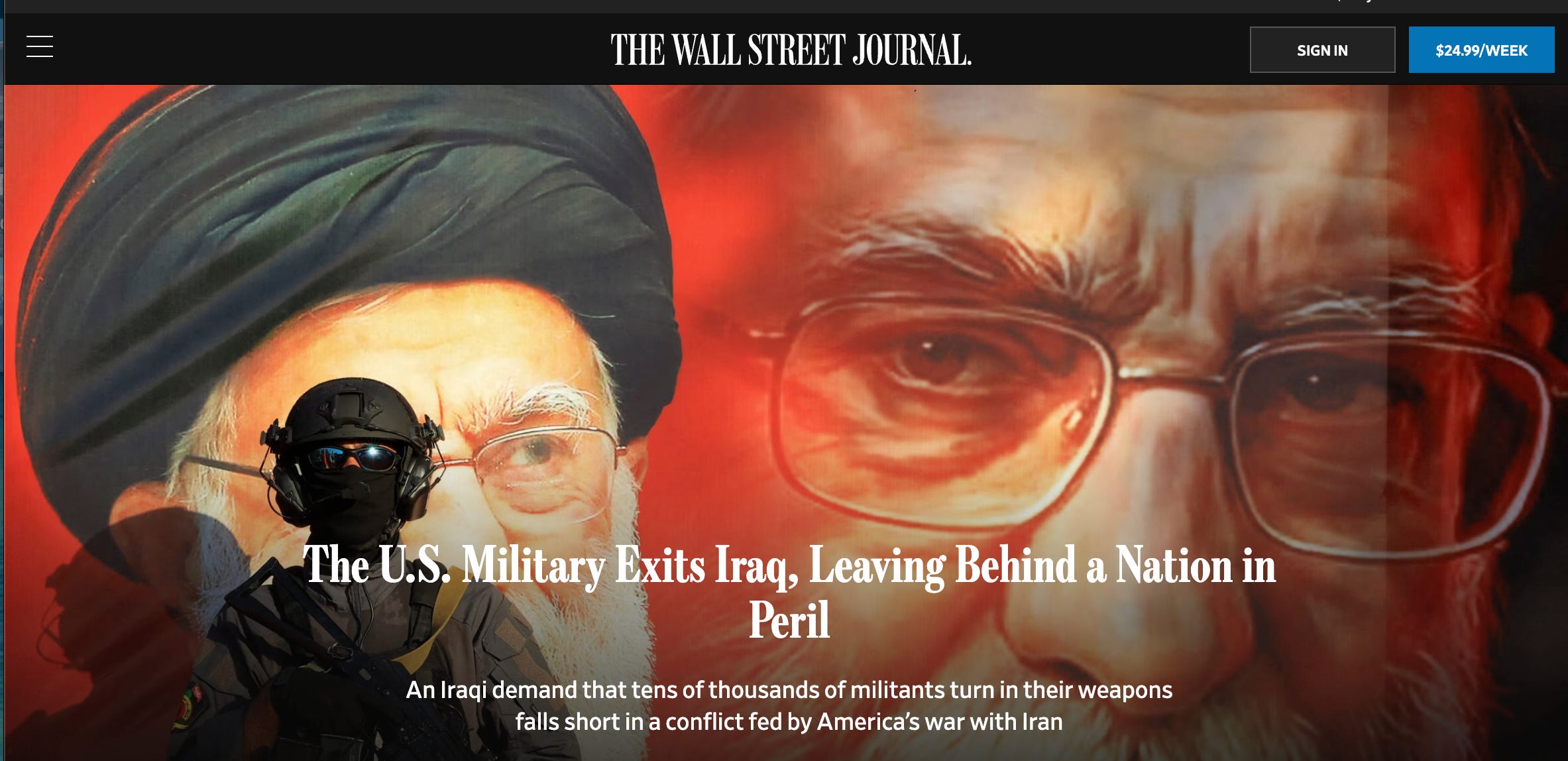
But there is another reading of what happened. With Iran still influential in Iraqi politics, powerful armed factions resisting disarmament and ISIS not entirely eliminated, some observers see the withdrawal as leaving Iraq dangerously exposed. The Wall Street Journal captured this argument starkly in its headline: “The U.S. Military Exits Iraq, Leaving Behind a Nation in Peril.”
This creates a comparison with Afghanistan: has Washington once again withdrawn before the country it leaves behind is ready to stand on its own?
1. Iraq Has to Stand on Its Own
An indefinite foreign military presence cannot be the foundation of Iraqi sovereignty. At some point, international assistance has to stop substituting for national responsibility.
Iraq today is very different from the state that emerged from the chaos of the 2003 invasion, or the country that watched ISIS capture Mosul and large parts of its territory in 2014. Over the past two decades, the Iraqi army, intelligence agencies and counterterrorism forces have accumulated substantial experience. ISIS has lost its territorial control and is now reduced largely to scattered cells, although it remains a security threat.
Even Washington presents the withdrawal in these terms. CENTCOM commander Admiral Brad Cooper said responsibility for Iraq’s security was now being handed back to the Iraqi government, while the Pentagon described the transition as the move from a wartime coalition mission to an Iraqi-led security effort. The US will still provide targeted intelligence and training support.
This does not mean Iraq is free of serious threats. ISIS remnants remain active, powerful armed factions still operate with considerable autonomy, and Kurdish leaders have raised concerns about security after the removal of US forces and air-defence systems.
But these challenges also make the case for Iraqi responsibility stronger. After more than two decades of foreign military involvement, there will never be a perfect moment for withdrawal. If Iraq is to function as a sovereign state, its own institutions must ultimately be responsible for defending its territory, controlling its borders and confronting armed actors that challenge state authority. At some point, Iraq has to stand on its own.
2. From Military Dependency to a More Mature US-Iraq Relationship
The withdrawal should not be understood as the end of the US-Iraq relationship. It is an opportunity to change its nature.
For more than two decades, the relationship has been dominated by war, military bases, ISIS and recurring security crises. That made sense at particular moments, but it should not define relations between the two countries indefinitely. A more mature partnership should increasingly focus on trade and investment, energy, technology, education and institutional development, alongside intelligence sharing, training and counterterrorism cooperation.
This transition was also not a sudden decision. It was the result of a process pursued by successive Iraqi governments. I witnessed part of that process firsthand while serving as a strategic communications adviser to the Iraqi prime minister. By 2021, the number of US troops had already been reduced from around 5,000 to 2,500, and the Kadhimi government negotiated the formal end of their combat mission, shifting their role towards training, advising and supporting Iraqi forces. The Washington Post The Sudani government continued the same trajectory. In 2024, Baghdad and Washington agreed on a phased end to the coalition mission and a transition towards bilateral security cooperation. State.gov Two years later, that process has reached its conclusion with the departure of the remaining US forces. Reuters Seen from Baghdad, therefore, this was less an abrupt American exit than the final stage of a long Iraqi effort to move the relationship from military dependency towards a more conventional partnership.
Military withdrawal does not mean the end of security cooperation either. Washington and Baghdad have already discussed moving from the coalition framework towards a conventional bilateral security relationship, including training, intelligence and other forms of cooperation.
This could ultimately make the relationship healthier. A normal relationship between two sovereign states should not require one country to maintain troops permanently on the territory of the other. Removing that issue also takes away one of the most politically sensitive points in US-Iraq relations.
Paradoxically, therefore, the departure of American soldiers could make the US-Iraq relationship broader rather than weaker. Baghdad can engage Washington less as a country hosting a foreign military force and more as a partner with which it shares economic, security and strategic interests. The success of the withdrawal should ultimately be measured not by how much American involvement disappears, but by whether military dependency can be replaced by a more balanced and mutually beneficial partnership.
3. Withdrawal Removes the Militias’ Most Powerful Argument
The US withdrawal also removes one of the strongest arguments used by armed factions to justify keeping their weapons outside full state control. For years, Iran-aligned groups have described their weapons as necessary for “resistance” against the American military presence. Some explicitly made the departure of US forces a condition for discussing disarmament.
The Iraqi government has deliberately linked the two issues. As the withdrawal approached, Baghdad argued that the end of the coalition mission should be followed by bringing weapons under state authority. Government spokesman Sabah al-Numan said the issue of armed factions would be addressed after coalition forces had left.
That moment has now arrived. If the foreign military presence was the justification for resistance, what is the justification for maintaining autonomous armed forces after those troops have gone? The withdrawal therefore shifts the debate from resisting foreign occupation to a more fundamental question: who has the right to carry weapons and make decisions about war and peace in Iraq?
This does not mean the militias will simply disarm. Some of the most powerful factions have rejected surrendering their weapons or attached additional conditions to doing so, and the government has already been forced to extend the process beyond its original September 30 deadline.
But this makes the withdrawal more, not less, important. It removes a central justification for armed groups operating independently of the state. From now on, the debate is harder to frame around American occupation. It is increasingly about whether these groups are ultimately prepared to accept the authority of the Iraqi state—or intend to preserve a parallel military power regardless of whether foreign troops are present.
4. Will Iran Fill the Vacuum?
The strongest argument against the withdrawal is that the United States is leaving a vacuum that Iran will fill. The concern is understandable. Tehran retains substantial political, economic and security influence in Iraq and longstanding relationships with powerful armed factions. The current US-Iran confrontation makes the question even more sensitive.
But this argument risks treating Iraq as if it were still the fragile state that emerged after 2003. Over the past two decades, Iraqi governments have accumulated considerable experience in managing competing relationships with Iran, the United States, Turkey, Saudi Arabia and other regional powers. Baghdad has increasingly tried to diversify these relationships rather than place Iraq exclusively in either the American or Iranian camp.
Iranian influence will not disappear with the American withdrawal. But keeping US troops in Iraq indefinitely would not eliminate it either. Much of Iran’s influence comes through geography, trade, religious and social connections, political relationships and Iraqi armed groups. The answer to excessive Iranian influence cannot therefore be permanent American military deployment. Ultimately, only stronger Iraqi institutions can prevent Iran—or any other foreign power—from exercising disproportionate influence.
There is also a paradox. A continued American military presence can itself strengthen the position of Iran-aligned factions by allowing them to justify their weapons as necessary for resisting a foreign occupation. Removing that presence takes away one of their most powerful political arguments without requiring Iraq to end its broader relationship with Washington.
More importantly, keeping American bases in Iraq during a direct US-Iran confrontation carries its own danger. Those bases can become targets for Iran-aligned groups, prompting American retaliation and turning Iraqi territory into a battlefield between two outside powers. Iraq has experienced this cycle before, with attacks on US forces followed by American strikes against Iraqi armed groups.
The real choice, therefore, is not simply between American presence and Iranian dominance. It is whether Iraq can become strong enough to maintain relationships with both Washington and Tehran while preventing either from using its territory to confront the other. That—not the permanent presence of foreign troops—is the more meaningful test of Iraqi sovereignty.
5. Sovereignty Is More Than the Departure of Foreign Soldiers
The departure of American troops is an important milestone, but it does not by itself make Iraq fully sovereign. Foreign influence in Iraq extends far beyond military bases. Washington retains significant economic and financial leverage, including through Iraq’s dependence on the US dollar system. Iraqi oil revenues are still deposited in an account at the Federal Reserve Bank of New York, giving Washington considerable influence over Iraq’s access to its own dollar revenues.
Nor is the United States the only outside power with influence. Iran maintains deep political, economic and security relationships inside Iraq, while Turkey continues to maintain a military presence in the north and conducts operations against the PKK. At the same time, several Iraqi armed factions retain weapons and military structures outside the full control of the state.
This is why sovereignty cannot simply be measured by the number of foreign soldiers on Iraqi soil. It also means controlling national territory, monopolising the legitimate use of force, making independent political and economic decisions, and managing relationships with stronger neighbours and international powers.
September 30 ended one form of foreign military presence. It did not complete the project of Iraqi sovereignty. The more difficult stage begins now: turning the symbolism of withdrawal into effective state authority.
Bottom Line: How Will US Forces in Iraq Be Remembered?
The comparison with Afghanistan is tempting, but it is misleading. Iraq in 2026 is not Afghanistan in 2021. It has functioning state institutions, experienced security forces, substantial economic resources and a political system that, despite its serious weaknesses, has survived repeated crises. The withdrawal therefore does not represent the collapse of a US-backed state, but the transfer of full security responsibility to an Iraqi government that has spent more than two decades developing the capacity to assume it.
How the American military presence itself will be remembered is more complicated. Its legacy remains deeply contested inside Iraq. For some Iraqis, US forces ended one of the region’s most brutal dictatorships and later played a decisive role in helping Iraq defeat ISIS. For others, the 2003 invasion destroyed the Iraqi state, opened years of violence and instability, and contributed to an enormous human cost. Estimates of deaths attributable directly and indirectly to the war vary widely, with some studies placing the total in the hundreds of thousands and others substantially higher.
History is therefore unlikely to remember the American presence in Iraq through a single narrative. It will remember both the soldiers who helped remove a dictatorship and defeat ISIS, and the invasion and occupation that contributed to profound instability and human suffering. These two legacies are not mutually exclusive. They are both part of the history the United States leaves behind.
