

When news of Khamenei’s death broke, many outside Iran assumed it would mark the beginning of the regime’s unravelling. The expectation was clear: without the Supreme Leader’s authority, the Islamic Republic would fracture, weaken, or even collapse. Yet the days that followed suggest a different reality. Rather than disorder, the system signalled continuity. Rather than paralysis, it moved quickly to consolidate. The deeper question, therefore, is not whether the regime will survive—but whether Khamenei’s absence has removed the last meaningful restraint on Iran’s most powerful security actors. What may have died with him was not the regime, but the brake that kept its hawks in check.
The Strategic Miscalculation
Before the war even began, there was a deeper assumption shaping Washington’s strategy. President Trump appeared to believe that Iran would behave like Venezuela or Syria — that sufficient pressure, threats, or targeted strikes would either force the Supreme Leader to flee, trigger rapid elite collapse, or compel the remaining leadership to seek a deal on his terms. Some even speculated that removing Khamenei in a strike would decapitate resistance altogether, paving the way for a negotiated surrender or the installation of a more compliant alternative, possibly even a figure such as Reza Pahlavi. Yet none of these expectations materialised. The regime did not fragment, the leadership did not flee, and the system did not collapse under pressure.
In the hours and days following Khamenei’s death, much of the international commentary rested on a familiar assumption: that the Islamic Republic was too personalised around the Supreme Leader to survive his absence. Analysts predicted elite infighting, paralysis within state institutions, even the possibility of mass unrest spilling into the streets. The logic was simple — remove the central pillar, and the structure weakens.
Yet the immediate aftermath told a different story.
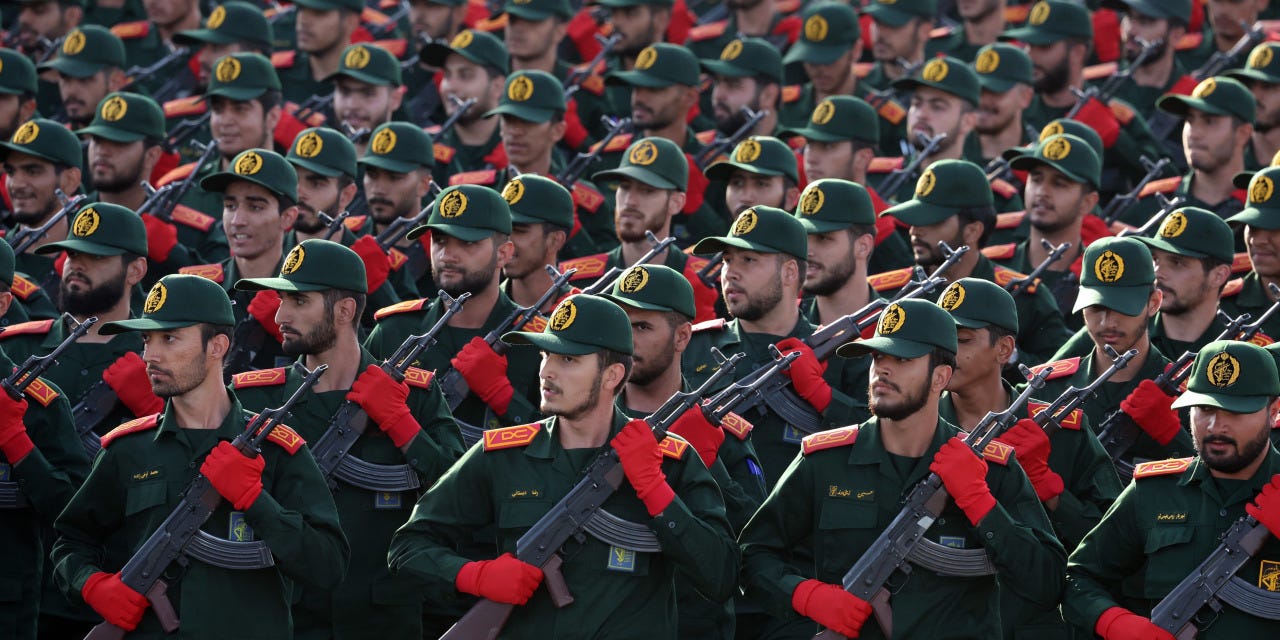
Instead of fragmentation, there was coordination. Instead of institutional confusion, there was procedural activation. Constitutional mechanisms were quickly invoked, key figures appeared in public to project unity, and the security apparatus signalled readiness rather than hesitation. The message from Tehran was deliberate: the system is bigger than one man.
This does not mean the regime emerged unchanged. But the early evidence suggests that external actors misread the nature of the Islamic Republic. It is not merely a personality-driven order; it is a deeply institutionalised security state designed to endure shocks.
The real miscalculation, therefore, was assuming that removing the central authority would automatically weaken the regime. In reality, it may have removed something else — the final internal restraint on those within the system who had long argued for a more aggressive posture.
The Nuclear Question: The Fatwa Is No Longer a Brake
For more than two decades, Khamenei’s religious decree — his fatwa prohibiting the development and use of nuclear weapons — functioned as both a theological and political barrier. Internationally, its credibility was often questioned. Critics viewed it as tactical rather than binding. But inside Iran’s power structure, the fatwa carried real weight. It provided the leadership with a religiously grounded justification for stopping short of weaponisation, even while advancing enrichment and technical capability.
Over the years, however, that restraint was not uncontested. Various military and political figures, including voices aligned with the security establishment, openly and privately argued that Iran should reconsider its position. Some publicly criticised the strategic limitations imposed by the Supreme Leader’s prohibition, urging the cancellation of the fatwa in light of mounting external threats. Khamenei resisted these pressures. His authority — both religious and political — was decisive in preventing the formal crossing of the nuclear threshold.
Within the Islamic Revolutionary Guard Corps (IRGC), elements have long advocated for a stronger deterrence doctrine. From their perspective, the lesson of Iraq, Libya, and other regimes that fell under Western pressure was clear: states without nuclear deterrence are vulnerable. The argument has always been strategic rather than ideological — survival through credible deterrence.
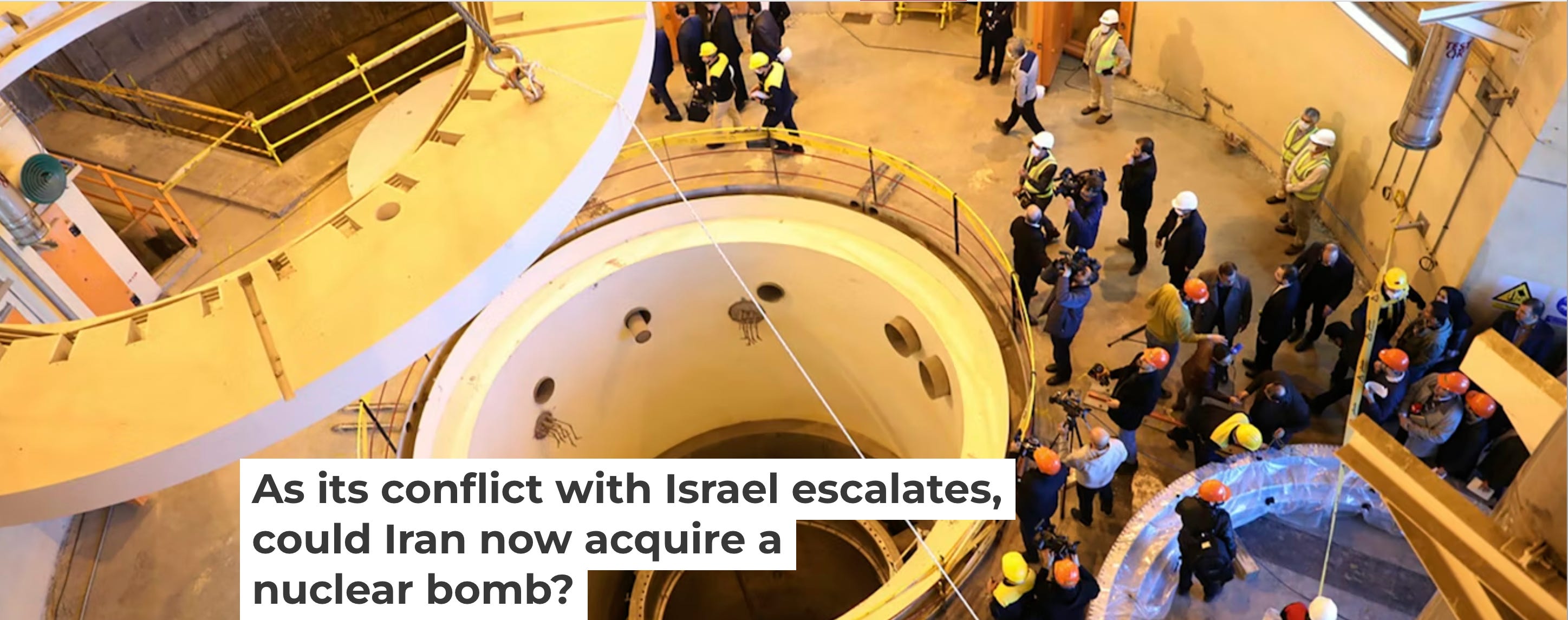
With Khamenei gone, the fatwa is not in effect anymore. The nuclear question may now be revisited not through theological framing but through a strictly strategic calculus. In a climate of open confrontation, the threshold may be reconsidered under a logic of survival rather than restraint.
The key point is this: Iran’s limitation was never technical capacity. It was political will. And that political brake may no longer exist.
Missile Doctrine Without Limits
For years, Iran’s missile doctrine operated within an implicit ceiling. Khamenei has long opposed developing missile ranges above 2,000 kilometers — sufficient to cover regional adversaries, including Israel and U.S. bases in the Middle East, but deliberately stopping short of intercontinental capability. The message was calibrated: Iran sought regional deterrence, not global confrontation.
As Supreme Leader, Khamenei acted as the ultimate arbiter in strategic matters. While the IRGC oversaw development and deployment, the expansion of missile range and doctrine ultimately required his approval. By keeping the program within regional limits, he prevented a dramatic escalation that would have triggered broader international alarm and potentially unified global opposition.
That strategic ceiling now appears far less certain.
With direct confrontation involving not only the United States and Israel but also active participation or alignment from European actors such as the United Kingdom, threat perception inside Tehran is shifting. From the perspective of the security establishment, the battlefield is no longer purely regional. If adversaries extend beyond the Middle East, the logic of deterrence may expand with it.
Within the IRGC, the argument for developing intercontinental ballistic missile (ICBM) capability has existed for years. The case is straightforward: credible deterrence requires the ability to impose costs not just regionally but globally. Without that capacity, Iran remains strategically vulnerable.
Khamenei’s absence removes the figure who had consistently contained that expansion. The shift now becomes plausible: from a doctrine of controlled, regionally focused deterrence to one of maximal deterrence with extended range.
Empowering the Hawks at Home
Beyond the nuclear and missile files, Khamenei played another crucial role: he functioned as the ultimate political balancer within the Islamic Republic. While often portrayed externally as the embodiment of hardline rule, internally he managed a complex ecosystem of factions — conservatives, pragmatists, technocrats, reformists, clerical networks, and the security establishment. His authority allowed limited rotation of power within the system, enabling different political currents to operate under the regime’s umbrella without threatening its core structure.
This controlled pluralism was not democratic in a liberal sense, but it was politically functional. By permitting periodic shifts — reformist presidencies followed by conservative ones — Khamenei helped preserve the regime’s legitimacy and prevent factional competition from spiralling into destabilising conflict. He acted as the final arbiter when tensions rose, disciplining excesses on all sides and containing intra-elite rivalries.
With his death, that equilibrium becomes far more fragile.
In the absence of a figure with comparable religious and political authority, hardline security actors — particularly within the IRGC and affiliated institutions — are likely to gain disproportionate influence. The balance tilts toward those who control coercive power rather than those who command clerical or technocratic legitimacy.
The centre of gravity thus shifts from clerical-political mediation to security-driven governance.
The implication is significant. The Islamic Republic may not collapse, but it may evolve into a more securitised state — internally less plural and externally more risk-tolerant. Without a supreme authority capable of moderating factional competition, decision-making could become narrower, more insulated, and more driven by security logic than political calibration.
The Bottom Line
Khamenei’s death may not weaken the Islamic Republic in the way many external observers anticipated. Instead of collapse, the system has demonstrated continuity. Instead of fragmentation, it has shown consolidation. But stability does not mean moderation. What may have disappeared with Khamenei is not the regime’s coherence, but the final institutional brake that restrained its most hawkish impulses.
Without his balancing authority, escalation becomes easier to justify. Nuclear restraint weakens, missile ceilings become negotiable, and internal political competition tilts decisively toward security actors. The result may be a state that is more centralised, more securitised, and more willing to absorb risk.
Ironically, external pressure designed to weaken Iran could produce the opposite effect: a harder and more aggressive security state. The Islamic Republic may survive — but in a form less constrained, less plural internally, and more confrontational externally.

Excellent - thank you Ali.
The irony you mention in the concluding paragraph recalls what eventually became perceptible to NATO allies 30+ years after the dissolution of the Soviet Union: that claiming Western superiority and spurning negotiation might sooner or later lead to an aggressive nationalist leader emerging, who would reassert regional power with a large nuclear arsenal on hand.
Of course plenty of people could see this prospect at the time, and mentioned it in public and in scholarship.
The irony resides in the fact that, 30 years after the dissolution of the Soviet Union, a supposedly successfully contained Russia has initiated a regional war in Europe, which NATO allies can't (won't) bring to an end because the possibility of nuclear escalation following decisive intervention on behalf of non-member Ukraine is ... bad.
On the other hand, one might say that, after the collapse of the Soviet Union, as now after the bombing of Iran, it's only ironic in the sense that an America which thinks itself invincible finds out that it is not.
Maybe a curious parallel could even be drawn between Clinton and Trump.
If Clinton was the "domestic policy president" who jovially presided over America's glorious unipolar years in international affairs, Trump is a president who unjovially assures us that he is focussed on making America domestically great again, yet is taking his country on another globalist crusade against evil - and (as you pointed out on the ABC) that might have something to do with a few question marks arising at home, about the president's performance in Ukraine and Gaza.
Perhaps this too is ironic - or maybe it's just the "domestic sources of foreign policy" all over again.
Thank you for your fast and clear assessments of what's going on.
Benedict