

Iran is experiencing one of its most intense and consequential moments of domestic unrest in decades. The scale, persistence, and social breadth of the current protests have led many observers to speak openly of regime collapse, a claim rarely made with such confidence in the past. There is little doubt that the Islamic Republic is under unprecedented pressure, facing a convergence of economic exhaustion, political stagnation, and declining public legitimacy.
Yet proximity to collapse is not the same as inevitability. This article does not seek to predict an outcome, nor to declare the end of the Iranian system. Instead, it aims to assess why this moment feels closer than previous crises—while also explaining why the regime remains standing. Understanding the distinction between historical stress and structural rupture is essential to analysing Iran’s current trajectory without exaggeration or false certainty.
Why This Time Matters
Since the Green Movement in 2009, Iran has been rocked by repeated waves of nationwide protest. Each cycle has tested the regime’s ability to absorb social anger, manage elite cohesion, and preserve public compliance. But the pattern has also been cumulative: every crackdown has not only contained dissent in the short term, it has deepened resentment, expanded networks of resistance, and widened the gap between state and society.
The causes of protest have shifted over time—and that shift matters. In 2009, the trigger was political: a contested election and demands tied to representation, legitimacy, and rule-of-law. In 2017 and 2019, the drivers were overwhelmingly economic—rising costs of living, austerity pressures, and a sense that the state could no longer deliver basic welfare. In 2022, the spark was social and cultural: personal freedoms, dignity, and the daily intrusions of ideological policing. In each episode, the regime responded with force, and each response left behind a residue of anger and a broader sense that peaceful reform was either impossible or meaningless.
What makes the current protests distinct is not only their intensity, but their direction. Although they began among merchant networks in Tehran’s bazaar—traditionally a conservative constituency with a long history of pragmatic accommodation with the state—they rapidly escalated toward explicitly political demands, including regime-change language. That transition is significant: when protest moves from “fix the system” to “replace the system,” the regime is no longer dealing with a policy dispute, but with a legitimacy crisis at the level of survival.
This internal crisis is unfolding at a moment of heightened external vulnerability. Iran’s deterrence model has long relied on projecting strength through regional allies and proxies. As that network has been weakened—through setbacks and losses across key arenas—Iran has appeared more exposed, not only strategically but psychologically. The 12-day war with Israel reinforced this perception for many Iranians: regardless of how the state frames the outcome, the fact that Iranian territory was struck and senior figures were targeted fed a public narrative of incompetence and diminished state capacity to protect its own citizens. In societies under strain, perceptions of security failure often accelerate political anger, because they strike at the regime’s core claim to authority: protection in exchange for obedience.
At the same time, renewed “maximum pressure” has intensified economic pain in ways that are socially and politically combustible. Sanctions do not only shrink living standards; they reshape the economy into a survival system—one where access, permits, and smuggling channels become lucrative, and where a sanctions-era elite forms around those mechanisms. The result is a double blow: rising hardship for ordinary people, alongside the visible enrichment of networks tied to the state or protected by it. This dynamic does not just produce poverty; it produces rage, because it turns economic suffering into a moral indictment of the system.
Taken together—protest escalation toward regime-change demands, the accumulation of anger from previous crackdowns, perceptions of external vulnerability, and the suffocating mix of sanctions pressure and entrenched corruption—this protest cycle represents an existential moment for the Islamic Republic. That does not mean collapse is inevitable. But it does mean the regime is facing a rarer and more dangerous kind of challenge: one where the issue is no longer a specific policy, but the legitimacy of the system itself.
Why the Regime Will Not Collapse
Despite the scale and intensity of the current protests, several structural and political factors continue to insulate the Islamic Republic from collapse—at least in the short to medium term.
First, the regime is built around a multilayered power structure rather than a single centre of authority. Power is deliberately distributed across parallel institutions: multiple military and security forces, overlapping intelligence agencies, legislative and supervisory councils, and an executive branch that operates within clearly defined limits. These centres function with relative autonomy, creating redundancy within the system. This design makes it extremely difficult for either domestic challengers or foreign actors to paralyse the state by targeting one institution alone. Even after significant damage caused by Israeli intelligence penetration, the system demonstrated an ability to adapt, regroup, and respond during the 12-day war, followed by internal security “clean-up” operations aimed at sealing vulnerabilities.
While the Supreme Leader remains the ultimate arbiter, power is not fully centralised in his office. This diffusion allows other institutions to absorb shocks, maintain continuity, and, if necessary, replace or compensate for weakened nodes without triggering systemic collapse. Partial failure does not automatically translate into total breakdown.
Second, the coercive apparatus remains intact and cohesive. The Islamic Republic commands well over a million personnel across the IRGC, Basij, police, intelligence units, and auxiliary security bodies. Crucially, there are no credible signs of fragmentation or mass defection within these forces. Historical precedent is instructive: the Shah’s regime only collapsed when the army declared neutrality and key units openly defected. No comparable dynamic exists today. Loyalty within the security establishment—whether ideological, institutional, or material—remains one of the regime’s strongest pillars.
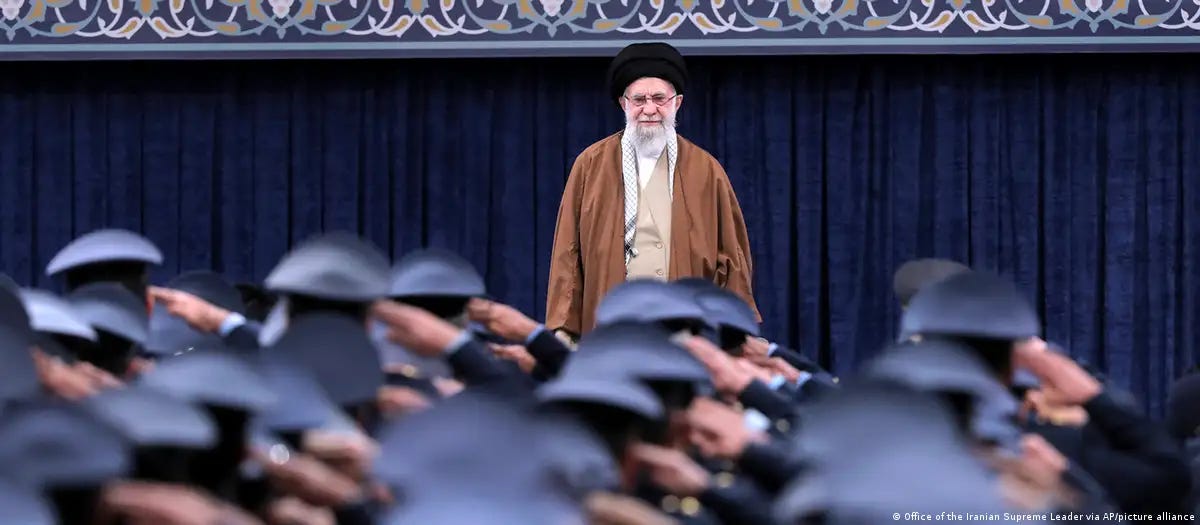
Third, the regime still retains a significant social base. While this constituency is a minority, it is neither marginal nor passive. Many within it express frustration with governance failures, corruption, and economic hardship, yet reject regime change as a solution. In recent days, large pro-regime demonstrations in cities such as Tehran and Isfahan underscored that the state continues to mobilise street power of its own. This base provides the regime with both symbolic legitimacy and practical manpower during moments of crisis.
Fourth, the regime has not been economically strangled to the point of paralysis. Despite severe sanctions and sustained economic pressure, Iran continues to export roughly two million barrels of oil per day, primarily through opaque channels. The state has developed a complex financial survival network that includes barter trade, intermediary markets, front companies, cryptocurrency transactions (including Bitcoin mining and transfers), and informal regional banking mechanisms. These tools have allowed the regime to secure hard currency, sustain government operations, and continue funding strategic priorities—most notably its missile programs and broader military-industrial capabilities. While ordinary citizens face serious economic hardship, inflation, and declining purchasing power, the situation remains far from the levels of collapse seen in countries like Iraq or Syria under comparable pressure. The state has retained enough fiscal capacity to provide basic services, pay salaries, and prevent a full economic breakdown—another key reason the current crisis, though acute, has not yet crossed into systemic failure.
Finally, the opposition remains fragmented and strategically underdeveloped. Despite years of protest, there is still no unified leadership, coherent programme, or credible roadmap for political transition. This absence matters deeply. For many Iranians, the fear of state collapse outweighs anger toward the regime. The experiences of Iraq, Libya, Syria, and other post-authoritarian breakdowns loom large, reinforcing concerns that regime change without a clear alternative could lead to chaos, civil conflict, or foreign intervention. This uncertainty discourages fence-sitters from fully committing to a revolutionary trajectory.
Taken together, these factors do not mean the regime is stable or secure. They do, however, explain why—even at what may be its most vulnerable moment in decades—the Islamic Republic is more likely to absorb and survive this crisis than to collapse outright.
How the Regime Might Collapse
Despite the severity of the current crisis, Iran’s political system is unlikely to collapse through spontaneous protest alone. Historically and structurally, regime change in Iran would most plausibly occur through one of three scenarios—each with significant constraints.
First, a full-scale military invasion.
One possible pathway would be a large external military intervention that fractures the country along ethnic, sectarian, or regional lines, creating multiple fronts of conflict against the central state. Such a scenario could weaken the regime simultaneously from several directions and eventually lead to systemic collapse. However, this option appears highly unlikely. Current U.S. policy shows no appetite for a direct invasion of Iran, given the enormous regional risks, the likelihood of prolonged instability, and the lessons drawn from Iraq, Libya, and Afghanistan.
Second, a coup from within the system.
Another possibility would be an internal coup—either purely domestic or supported covertly from abroad. Yet this scenario also seems improbable. As outlined earlier, the Islamic Republic’s power structure is deliberately fragmented across multiple political, military, intelligence, and institutional centers. This dispersion of authority makes coordinated internal overthrow extremely difficult. Unlike regimes where power is concentrated in a narrow clique, Iran’s system is designed to absorb shocks, neutralize defections, and replace weakened nodes without triggering total collapse.
Third, sustained multidimensional pressure combined with internal unrest.
The most plausible—though still uncertain—scenario involves prolonged and intensified pressure on the regime. This would include the systematic elimination of senior leadership figures far greater than what was seen during the recent 12-day conflict, sustained external pressure from multiple directions, and ongoing large-scale domestic protests that do not dissipate over time. This approach appears closer to the strategy favored by Donald Trump, drawing parallels with Venezuela—where pressure was applied not to trigger immediate regime change, but to force behavioral shifts and weaken elite cohesion. Yet Iran is structurally and geopolitically far more resilient than Venezuela, meaning such pressure would need to be broader, deeper, and longer-lasting to have comparable effects.
Even this third scenario remains a long-term prospect. Its success would depend on several uncertain variables: the direction of U.S. policy under Trump, the likelihood and scale of a potential second Israeli strike, and whether domestic protests can be sustained without fragmentation or exhaustion. Crucially, meaningful regime collapse remains unlikely as long as the current Supreme Leader remains in power. For now, the system may bend, adapt, or recalibrate—but it is not yet on the brink of immediate disintegration.
