

For years, Iran’s regional strategy rested on establishing a wide regional network consisting mostly of non-state actors that contain Israel from all fronts, but with two principles: strategic patience and the separation of fronts. The logic was simple. Each member of the so-called Axis of Resistance would largely manage its own confrontation on a limited rules of engagement with Israel or the United States, while Iran provided political, financial, intelligence, and military support from behind the scenes. Even when Hezbollah, Hamas, Iraqi militias, or the Houthis came under attack, Tehran generally avoided direct involvement, seeking to prevent local conflicts from escalating into a region-wide war.
Recent developments, namely the 7 October event and the direct war on Iran, however, suggest that this era may be coming to an end
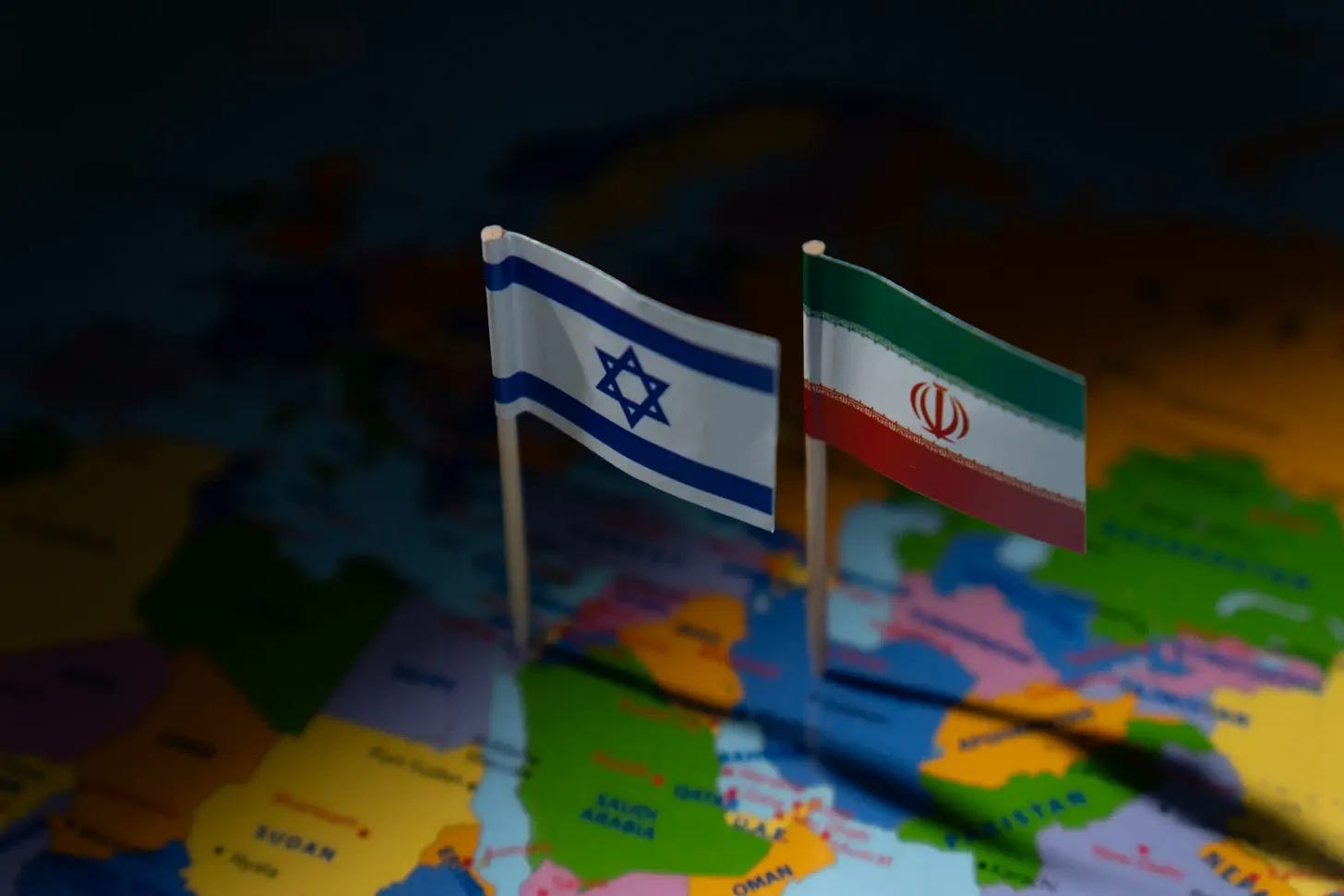
The End of an Era
The first signs emerged during negotiations over a ceasefire following the US-Israeli war on Iran. Tehran insisted that any ceasefire arrangement must extend beyond Iran itself and include Lebanon. Israel refused, arguing that it would not accept an end to hostilities without permanently neutralising what it sees as Iranian and allied threats across the region. In response, Iran suspended negotiations with Washington and restored restrictions in the Strait of Hormuz, signalling that regional files could no longer be treated separately.
The pattern became even clearer in Lebanon. A ceasefire was eventually reached, but it quickly unravelled as Israel resumed military operations. When Israeli leaders sought to escalate further through strikes on Beirut, Tehran reportedly warned that any major attack on Lebanon would trigger retaliation against northern Israel. Following a reportedly tense intervention by President Donald Trump, Israel halted its planned escalation. Yet Prime Minister Benjamin Netanyahu authorised a more limited strike on Beirut, apparently testing both Iranian resolve and American willingness to restrain Israel. This time, Iran followed through on its warning, responding not only against northern Israel but also targeting areas deeper inside the country.
A similar pattern has emerged in the Gulf. Rather than treating attacks on Iranian facilities as isolated incidents, Tehran has increasingly responded by targeting assets linked to the broader American military presence in the region, whether naval deployments, military bases, or commercial shipping associated with the US and its allies. The message is becoming increasingly clear: attacks on one front will no longer remain confined to that front.
Taken together, these developments suggest that Iran is moving away from its longstanding doctrine of strategic patience and separated battlefields. In its place, a new doctrine appears to be emerging—one based on the unity of fronts, where pressure on any member of the alliance can trigger responses from the wider network.
This shift carries profound implications. For years, Iran managed the Axis of Resistance through a strategy that compartmentalised conflicts and limited escalation. The recent war appears to have convinced Tehran that such an approach leaves individual allies vulnerable to being defeated one by one. The emerging alternative is a doctrine of collective deterrence, in which the security of each front becomes tied to the security of all. If this interpretation is correct, it may represent one of the most significant changes in Middle Eastern deterrence since the emergence of the Axis of Resistance itself—and it is likely to shape the future of conflict across the region for years to come.
Israel’s Perspective After 7 October
The 7 October attack represented a profound strategic shock for Israel. Beyond its immediate human and security consequences, it challenged one of the core assumptions underlying Israeli deterrence: that the threats posed by Iran’s regional allies could be contained through limited military operations, intelligence superiority, and periodic rounds of escalation. The scale and sophistication of the Hamas operation convinced many Israeli decision-makers that the existing approach had failed.
As a result, Israel gradually shifted from a strategy of indirect and limited confrontation with individual members of the Axis of Resistance toward a broader and more open campaign aimed at the axis as a whole. What began as a war against Hamas soon expanded into a confrontation with Hezbollah, the Houthis, Iraqi groups, and eventually Iran itself. In this sense, Israel’s strategic transformation contributed directly to the parallel transformation now occurring within Iran’s deterrence doctrine.
From the Israeli perspective, living under the constant threat of a coordinated network stretching from Gaza to Lebanon, Iraq, Yemen, and Iran became increasingly unacceptable after 7 October. Israeli leaders concluded that the vulnerability exposed on that day could not be addressed through containment alone. Instead, they sought to fundamentally degrade the military capabilities of the axis and, if possible, dismantle its most important components.
This explains the scale of the military campaigns that followed. In Gaza and southern Lebanon, Israel pursued operations that went far beyond traditional military engagements. Faced with the prospect of high casualties in ground warfare, Israel increasingly relied on overwhelming air power, large-scale destruction of urban areas, and extensive bombardment of civilian infrastructure. The objective was not merely to punish or deter, but to permanently destroy the social base of Hamas and Hezbollah as military and political actors so they will not be able to rebuild again. The human cost of these campaigns generated intense international criticism, with many experts and observers arguing that aspects of the operations approached or crossed the threshold of genocide.
Yet despite the immense damage inflicted on both Hamas and Hezbollah, neither organization disappeared. Both remained capable of fighting, rebuilding, and maintaining political relevance. As a result, Israeli strategy evolved further. If the peripheral fronts could not be eliminated decisively, attention would inevitably shift toward the center of the network: Iran itself.
This led to the unprecedented direct confrontation between Israel and Iran. For the first time, the two states moved beyond covert operations, proxy warfare, and shadow conflict into open military exchanges. In doing so, both sides entered a new strategic reality. Israel and Iran are now directly exposed to one another in ways that did not previously exist.
Under these conditions, neither side can afford to absorb a major strike without responding. Doing so would establish a new deterrence threshold that could shape future conflicts for years to come. From Israel’s perspective, failing to respond to Iranian attacks would invite further escalation and reinforce the perception that Iran and its allies can act with impunity. From Iran’s perspective, failing to retaliate would weaken its credibility, not only with Israel but also with its regional allies and adversaries.
At the heart of the conflict lies a fundamental strategic dilemma. Israel believes that unless Iran abandons or significantly weakens its regional alliance network, the threat of another 7 October—or a larger coordinated attack—will remain. Iran, meanwhile, sees the axis as its primary line of defence against Israeli and American military pressure, as Iran itself will be next if it allows Israel eliminate them. Neither side can easily compromise on these positions.
This logic helps explain Israel’s insistence on responding to Iranian strikes, including retaliatory operations conducted only hours after Iranian attacks. It also explains why further Iranian responses remain likely. The conflict is no longer only about individual incidents; it is about establishing the rules of engagement that will govern the next phase of the Middle East’s strategic order. As long as those rules remain contested, the cycle of action and reaction is likely to continue.
Trump’s Strategic Dilemma
The strategic dilemma between Iran and Israel now places President Donald Trump at a critical crossroads. The emerging doctrine of the “unity of fronts” means that any future confrontation is increasingly unlikely to remain limited to a single battlefield. An attack on Hezbollah, for example, may trigger a response from Iran; an attack on Iran may provoke actions across Lebanon, Iraq, Yemen, the Gulf, the Strait of Hormuz or even Bab al-Mandab. This leaves Washington with a difficult choice: either distance itself from Israel’s expanding military objectives or become increasingly drawn into another direct confrontation with Iran.
Neither option is attractive.
On one hand, abandoning Israel at a moment of heightened tension would carry significant political costs for Trump, particularly among segments of his traditional support base and within the broader pro-Israel establishment in Washington. On the other hand, deeper military involvement risks dragging the United States into a third round of war with Iran, despite the fact that the previous rounds failed to achieve their core objectives. The Iranian government remains in power, its regional networks remain operational despite the damages, and Tehran has emerged with new sources of leverage, particularly through its ability to disrupt maritime trade and energy flows.
The timing further complicates Trump’s calculations. Domestically, the United States is entering a politically sensitive period. The FIFA World Cup, which Washington hopes to showcase as a symbol of stability and global leadership, requires a relatively calm international environment. At the same time, the midterm elections are approaching, and opposition to another Middle Eastern war is growing within both the House of Representatives and Congress. While the political establishment remains divided on many issues, there is increasing skepticism regarding the costs and benefits of deeper military entanglement in the region.
Internationally, the economic consequences are becoming harder to ignore. Continued disruption in the Strait of Hormuz threatens global energy markets, while the possibility of instability extending to the Bab al-Mandib Strait raises concerns about a broader shock to international trade. Higher energy prices, rising shipping costs, and uncertainty across global markets create pressures not only on American allies but also on the US economy itself.
This leaves Trump facing a strategic reality that many American presidents have confronted in the Middle East: military escalation is often easier to initiate than to conclude. Every additional step toward confrontation increases the risk of a wider regional conflict, yet every step toward restraint risks being portrayed as weakness by allies and domestic critics.
The result is a narrowing set of options. Trump may still seek a diplomatic arrangement that freezes the conflict and restores stability to critical maritime routes. But if Israel continues to pursue a strategy aimed at permanently eliminating Iranian and allied capabilities, and if Iran continues to respond through its new doctrine of interconnected fronts, Washington may find itself increasingly pulled toward a conflict it neither planned nor fully controls.
In that sense, the future of the war may depend less on Tehran or Tel Aviv than on whether Trump decides that preserving regional stability serves American interests better than pursuing an open-ended confrontation whose costs are becoming increasingly difficult to predict.
The Day Iran Abandoned the Separate Fronts Strategy
The Gaza war marked a decisive turning point in Iran’s regional strategy. What began as another round of confrontation between Israel and one member of the Axis of Resistance gradually evolved into a much broader conflict that, from Tehran’s perspective, was no longer about Gaza, Hezbollah, or even Iran’s nuclear program alone. Instead, it came to be seen as a coordinated effort to dismantle the entire axis and ultimately weaken—or even transform—the Iranian state itself.
For decades, Iran had relied on a strategy of strategic patience and separate fronts. The underlying logic was that each member of the axis would largely confront its own challenges while benefiting from varying degrees of Iranian support. This approach allowed Tehran to avoid direct war with Israel or the United States while preserving a network of regional allies that provided strategic depth and deterrence.
The events that followed 7 October fundamentally challenged that logic.
The assassination of key military and political leaders across the region, the expansion of Israeli military operations into multiple countries, and eventually the direct US-Israeli war against Iran all reinforced a growing perception in Tehran that the conflict was no longer directed at individual members of the axis. Rather, it was directed at the entire network as a single strategic entity. From the Iranian perspective, Hamas, Hezbollah, Iraqi groups, the Houthis, and Iran itself were no longer being treated as separate actors, but as different fronts in one war.
This perception intensified as Israeli operations expanded beyond Gaza and Lebanon and increasingly targeted Iranian interests directly. Tehran concluded that the objective was not merely to degrade the capabilities of individual allies, but to create a regional environment in which Iran would be isolated, weakened, and ultimately unable to sustain its network of influence. In the most extreme interpretation within Iranian strategic circles, the war was increasingly viewed as an attempt at regime change—or at least the creation of a weakened and dysfunctional Iranian state incapable of managing itself not to mention projecting power beyond its borders.
Under such circumstances, strategic patience became increasingly difficult to sustain.
Faced with what it perceived as an existential threat, Iran and its allies began to move toward a different strategic framework. Rather than allowing each front to fight independently, they increasingly coordinated their responses and prepared for the possibility of a wider regional confrontation. For the first time, Tehran demonstrated a willingness to employ tools that it had long held in reserve, most notably the disruption of shipping through the Strait of Hormuz. The message was clear: if the conflict expanded, the costs would no longer be confined to a single battlefield.
At the heart of this shift lies a simple but powerful conclusion: separate fronts create separate defeats. Tehran appears to have concluded that allowing Israel and the United States to confront each member of the axis individually enables them to weaken the network piece by piece. The answer, therefore, is collective deterrence. Under this emerging doctrine, pressure on one front is increasingly treated as pressure on all fronts.
This transformation is now reshaping Iran’s broader deterrence strategy. It includes a renewed emphasis on strengthening missile capabilities, preserving and potentially expanding nuclear capabilities, deepening coordination among regional allies, and integrating strategic chokepoints such as the Strait of Hormuz—and potentially the Bab al-Mandab Strait—into the deterrence equation.
Ironically, a war intended to weaken Iran may have accelerated the consolidation of the very forces it sought to dismantle. Instead of fragmenting the Axis of Resistance, the conflict appears to be pushing it toward greater integration, coordination, and collective action. Whether this new doctrine succeeds remains uncertain, but its emergence is already changing the strategic landscape of the Middle East and redefining the rules of future conflict.
The Future of Conflict
The emergence of the unity of fronts doctrine is likely to reshape the future of conflict in the Middle East in profound ways. The most immediate consequence will be the growing interconnection of wars across the region. Conflicts that were once largely contained within national borders are increasingly becoming regional in scope, with developments on one front rapidly affecting multiple others.
Under the old model, a confrontation in Gaza could remain largely confined to Gaza, while clashes in Lebanon or Iraq could be managed separately. The emerging doctrine challenges this assumption. If Iran and its allies increasingly treat attacks on one member of the alliance as attacks on the entire network, the distinction between local and regional conflicts becomes far less meaningful. Future wars are therefore likely to involve multiple fronts from the outset, even when they begin as limited confrontations.
This creates a paradox. On one hand, the risks of escalation become significantly higher. Any military action now carries a greater chance of triggering responses across several theaters simultaneously, raising the possibility of wider regional wars. On the other hand, the very prospect of such escalation may strengthen deterrence. If decision-makers in Tel Aviv, Washington, or elsewhere understand that attacking one front could ignite several others, they may become more cautious about initiating conflict in the first place.
Whether this new doctrine ultimately prevents war or produces larger wars remains uncertain. Much will depend on the role of the United States. If Washington continues to intervene directly, as it did during the recent war with Iran, Tehran is likely to treat the United States as an active participant in any future confrontation and respond accordingly. In that scenario, the risks of regional escalation would increase dramatically.
If, however, the United States chooses to maintain greater distance and avoid direct military involvement, Israel may find itself facing a more complex strategic environment. Iran and its allies would remain intact, while the costs and risks of military action against them would continue to rise. This could force Israel to reconsider whether military solutions alone can provide long-term security.
At its core, the region is entering a period of deterrence reconstruction. Both Israel and Iran are attempting to establish new rules of engagement after the old ones collapsed. Israel seeks a deterrence framework that permanently reduces the threat posed by Iran and its regional allies. Iran seeks a deterrence framework that prevents future attacks by making any confrontation too costly for its adversaries.
The challenge is that these two visions are fundamentally incompatible. Israel’s preferred outcome requires weakening or dismantling the Axis of Resistance, while Iran’s preferred outcome requires preserving and strengthening it. As a result, the two sides are not merely negotiating the boundaries of deterrence; they are competing to define entirely different regional orders.
For this reason, the current confrontation is unlikely to be the last chapter in the conflict. While temporary ceasefires and tactical understandings may emerge, the underlying strategic dispute remains unresolved. Both Israel and Iran are trying to establish a new deterrence equilibrium, yet their respective visions do not appear compatible enough to allow them to comfortably coexist. Until that contradiction is addressed, the region is likely to remain trapped between periods of uneasy calm and recurring confrontation, with each round helping to shape the next.
