

In recent days, much of the public discussion about the current Iran–U.S.–Israel confrontation has focused on whether Iran’s military capabilities have already been neutralised. Some political leaders have suggested that Iran’s strategic capacity has been “destroyed” or severely crippled. But a closer look at the available information suggests a very different picture.
Iran may be damaged, pressured, and strategically constrained—but it is far from finished.
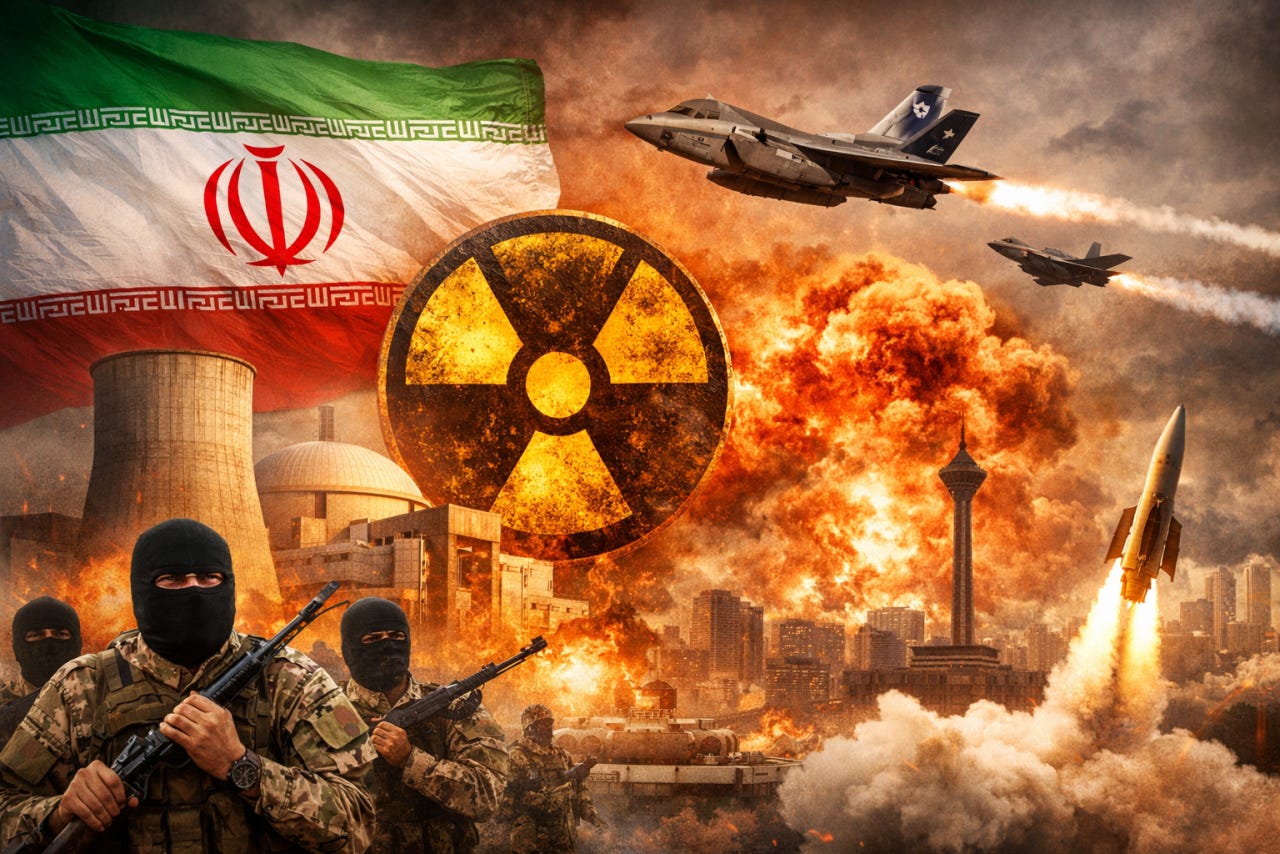
The Missile Arsenal: Iran’s Core Deterrent
Iran still possesses a very large missile arsenal, which remains the backbone of its military deterrence. Estimates from various security assessments suggest that Iran holds between 3,000 and 5,000 ballistic missiles, supported by more than 200 mobile launch platforms.
A significant portion of these missiles includes advanced systems with manoeuvrable re-entry vehicles and hypersonic characteristics, making them extremely difficult to intercept with existing air defence systems.
Furthermore, while missile defence systems such as Israel’s Arrow and David’s Sling, or U.S. regional defence networks, can intercept many incoming missiles, no defence system can guarantee full protection against large-scale saturation attacks.
In other words, even if interception rates are high, the sheer volume of missiles matters.
Iran’s strategy has long been built around this logic: quantity combined with survivability.
Distributed and Hardened Infrastructure
Another key factor is how Iran stores and deploys these weapons. Much of the missile infrastructure is believed to be deeply embedded in underground facilities, tunnels, and mountain bases, developed over decades precisely to survive air strikes.
These facilities are geographically dispersed across the country, making it extremely difficult to neutralise the entire arsenal through aerial bombardment alone. Destroying such infrastructure typically requires either long-term sustained strikes or ground operations, neither of which appear to be underway at the moment.
So far, there are no reliable confirmations that Iran’s primary missile stockpiles have been eliminated. Even if some facilities have been damaged, the distributed nature of the system makes full destruction unlikely.
A War of Endurance
Given the size of the current stockpile, Iran likely has the capacity to continue missile operations for approximately three to six months, depending on the intensity of the conflict.
And this is an important point: the Iranian leadership does not appear to be approaching the current confrontation as a short-term tactical exchange. Instead, it seems to be preparing for a war of endurance.
From Tehran’s perspective, the situation has become existential. If the leadership believes that defeat means regime collapse, then the strategic calculation changes dramatically. In such circumstances, states tend to mobilise all remaining capabilities, even at extremely high cost.
For Iranian decision-makers, the choice increasingly appears binary: fight and survive, or surrender and collapse.
The Hormuz Card: Iran’s Powerful Escalation Tool
Another critical element of Iran’s strategy is the Strait of Hormuz, one of the most important chokepoints in the global energy system.
Roughly 20% of the world’s oil supply passes through this narrow waterway, making it one of the most strategically sensitive maritime corridors on earth. 
In the current crisis, Iran has already begun to signal that it is willing to use this leverage. Iranian naval forces have reportedly warned commercial ships that passage through the strait is not allowed, effectively disrupting maritime traffic and forcing many vessels to anchor or reroute. 
Recent incidents show the seriousness of this move. Tankers have been struck in the Gulf and several vessels damaged as tensions escalated, prompting shipping companies to halt or divert operations. 
A large number of ships have reportedly stopped moving in or around the Gulf while insurers reassess risk and naval forces increase their presence. 
For Iran, the logic is straightforward.
If the conflict becomes existential, Tehran will try to raise the cost of war for everyone, not only its direct adversaries. Closing or disrupting Hormuz threatens:
• global oil flows
• regional economies in the Gulf
• shipping insurance markets
• and energy prices worldwide.
Even partial disruption could cause dramatic spikes in oil prices and severe stress in global supply chains, potentially pushing major powers and regional actors to pressure Washington and Tel Aviv toward de-escalation. 
In other words, Hormuz is not simply a battlefield tactic—it is Iran’s strongest geopolitical leverage.
Tehran understands that while it may not match the United States militarily, it can still weaponise geography and global economic dependence.
This is why the Strait of Hormuz has always been described as Iran’s ultimate escalation card. If Iran believes the survival of the regime is at stake, using that card becomes increasingly likely.
Political Continuity and Succession Planning
At the same time, the Iranian political system is attempting to demonstrate institutional continuity.
Iran’s constitutional structure includes clear mechanisms for leadership succession. In the event that the Supreme Leader is unable to continue in office, a temporary leadership council—composed of the president, the head of the judiciary, and a member of the Guardian Council—can assume responsibilities until the Assembly of Experts selects a new leader.
Reports suggest that the political establishment has already prepared potential succession scenarios, precisely because of the escalating tensions of recent months. The message Tehran is trying to send is clear: even under severe external pressure, the system intends to remain functional and stable.
Whether this stability holds is another question. But the preparation itself is politically significant.
Iran’s Strategic Bet: Time
Ultimately, Iran’s strategy may be less about military victory and more about strategic endurance.
Tehran appears to be betting on time.
The assumption within Iranian strategic thinking is that prolonged conflict imposes costs not only on Iran, but also on its adversaries. The longer the confrontation continues, the more pressure may build inside the United States, Israel, and regional partners—economically, politically, and socially.
Iranian planners are likely hoping that a prolonged conflict could eventually trigger domestic political pressure in Washington or Tel Aviv, forcing leaders to reconsider escalation and look for an exit through negotiation or ceasefire.
In other words, Iran may not need to win the war militarily. It may only need to avoid losing it quickly.
A key difference in this confrontation is affordability of damage. Iran can absorb far higher levels of destruction and casualties and still continue fighting, because its leadership sees the conflict as existential and is prepared to sustain heavy losses if that preserves the regime. By contrast, the United States and Israel operate under far tighter domestic constraints. Even relatively limited casualties, economic disruption, or prolonged military engagement can quickly trigger political pressure at home—especially the midterm elections is coming up soon in the United States. Iran also possesses one of the largest ballistic missile arsenals in the Middle East, estimated at around 3,000 missiles or more, giving it the capacity to sustain prolonged retaliation. In strategic terms, this asymmetry means time tends to favour Iran: the longer the conflict drags on, the more political, economic, and social pressure accumulates on Washington and Tel Aviv to de-escalate.
The Uncertain Road Ahead
None of this means Iran is in a strong position. Its economy remains under severe sanctions. Its regional alliances have been weakened. Its military infrastructure has likely suffered damage.
But the key point is that Iran still retains enough capability to continue fighting.
As long as its missile arsenal remains intact, and as long as the leadership views the confrontation as a matter of survival, the conflict is unlikely to end quickly.
The coming weeks will therefore hinge on a crucial question:
Will this remain a controlled confrontation—or will it evolve into the prolonged war Iran appears prepared for?
A final and decisive factor will be whether Iran is able to inflict meaningful and sustained damage on Israel and U.S. interests in the region. If Iran demonstrates that attacking it carries a high and unpredictable cost, it could restore a level of deterrence that discourages Washington and Tel Aviv from launching another campaign in the near future. The outcome of the conflict may hinge precisely on how much damage Iran can impose in retaliation and whether it can sustain pressure over time.  However, if Iran fails to create that deterrent effect, the opposite scenario becomes likely: a continuing cycle of strikes and counter-strikes, with periodic military campaigns aimed at weakening the regime until it eventually collapses or is replaced—an objective that political leaders in the United States and Israel have openly discussed and planned for.

Thank you Ali for keeping the military facts and strategic possibilities in the foreground.