

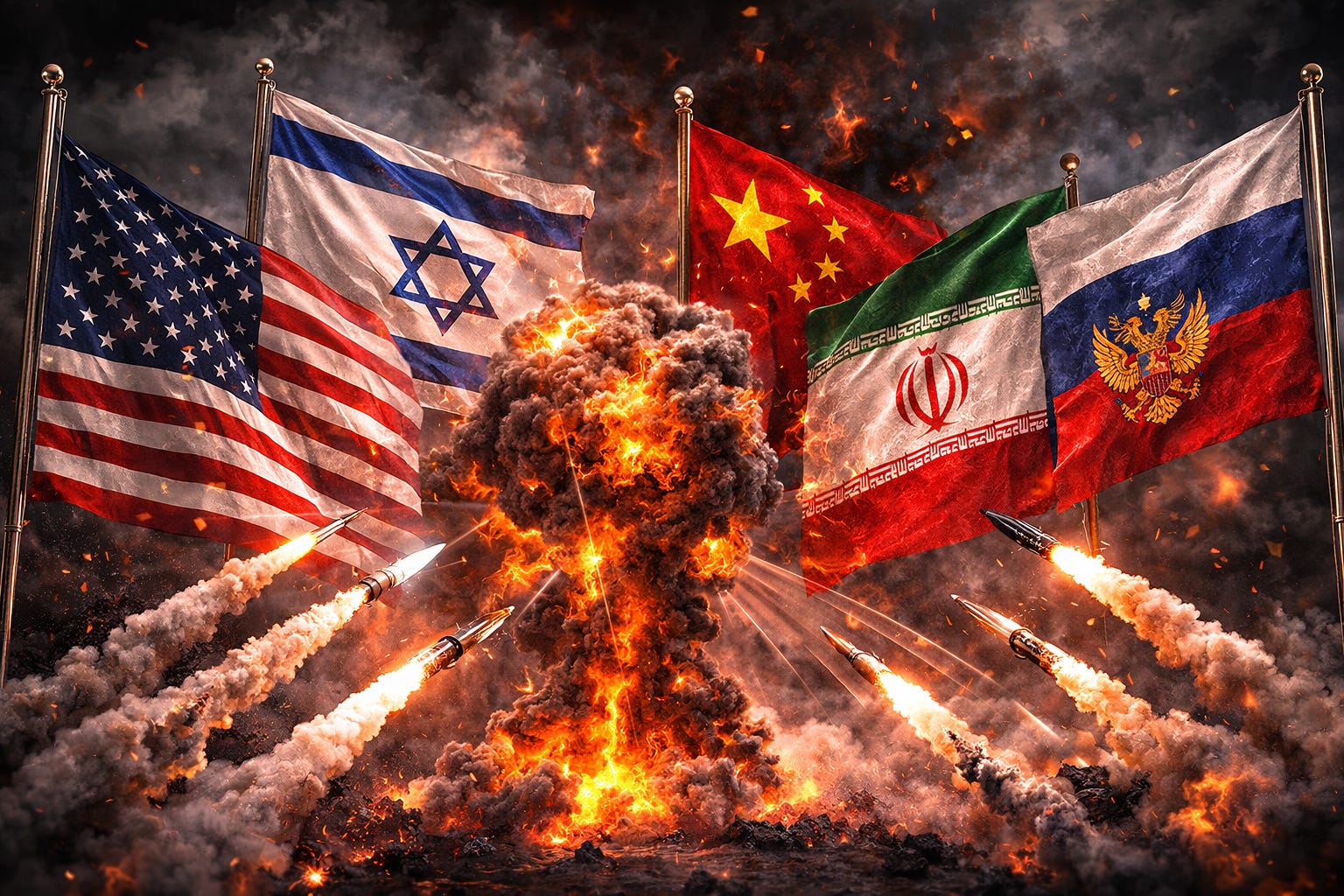
The war between the United States, Israel, and Iran has brought the Gulf states uncomfortably close to the front line of a conflict they did not start but cannot escape. In recent weeks, the region has witnessed missile strikes, attacks on shipping, and threats to energy infrastructure. Gulf governments host some of the largest U.S. military bases in the world—facilities that Iran has openly considered legitimate targets during the war. As a result, countries such as Qatar, Bahrain, Kuwait, and the United Arab Emirates find themselves in a dangerous strategic position: their security alliance with Washington has paradoxically exposed them to greater insecurity, dragging them into a confrontation with Tehran that offers little direct benefit to them.
For decades, Gulf states have pursued a strategy of cautious diplomacy and economic transformation, seeking to insulate themselves from the region’s conflicts while focusing on trade, investment, tourism, and diversification beyond oil. The current war, however, is testing that model.
War does not only destroy buildings, military bases, and infrastructure. It also reshapes strategic visions. The conflict is already forcing Gulf states to rethink their economic strategies, their security arrangements, and their partnerships with global powers.
The central question now facing the region is not only how the Gulf will weather this war, but also what strategic direction it will take once the conflict ends and its lessons become clear.
Gulf at the Heart of the War
Since the beginning of the U.S.–Israel war with Iran, the Gulf has increasingly become a direct theatre of confrontation rather than merely a nearby observer. Iran has launched hundreds of missiles and drones across the region, targeting U.S. military facilities, energy infrastructure, ports, and shipping routes in countries hosting American forces. As a result, the conflict has affected multiple sectors across the Gulf simultaneously—military installations, civilian infrastructure, energy facilities, and maritime trade.
1- Military Infrastructure: A primary target of Iranian strikes has been U.S. and allied military infrastructure across the Gulf. Countries hosting American bases have experienced repeated missile and drone attacks aimed at degrading regional air-defense systems and logistical networks. In the United Arab Emirates, Iran launched approximately 174 ballistic missiles and nearly 689 drones, many aimed at Al Dhafra Air Base, a major U.S. military installation. In Bahrain, home to the U.S. Navy’s Fifth Fleet headquarters, air-defense systems intercepted roughly 70 missiles and 59 drones, though several strikes damaged facilities near Manama. Qatar’s Al Udeid Air Base, the largest U.S. military facility in the Middle East, was also targeted by Iranian missiles and drones. While most projectiles were intercepted by Qatari and U.S. defense systems, several landed near the installation, forcing temporary airspace closures and disrupting aviation operations. Kuwait, a critical logistical hub for U.S. operations, also faced dozens of missile and drone attacks targeting military facilities. One of the most notable incidents involved the loss of three U.S. F-15 fighter jets during defensive engagements, reportedly while responding to incoming missiles. Across the region, several strikes reportedly damaged radar systems and components of missile-defense infrastructure, including Patriot and THAAD interception systems. These systems are essential not only for protecting Gulf states but also for maintaining the broader regional air-defense architecture.
2- Energy Infrastructure: Iranian strikes also targeted energy infrastructure, reflecting the Gulf’s central role in global oil markets. In Saudi Arabia, drones and missiles attempted to strike key energy installations, including the Ras Tanura refinery, one of the largest oil processing facilities in the world. While most attacks were intercepted, some caused damage and casualties. Other Gulf states placed oil fields, refineries, and export terminals on high alert as the threat of further attacks on energy infrastructure increased. Even limited damage to these facilities carries global consequences due to the region’s critical role in supplying international energy markets.
3- Maritime Trade and Ports: The war has also spread to the maritime domain, particularly around the Strait of Hormuz, one of the world’s most important energy chokepoints. Oman has experienced drone attacks on strategic ports such as Duqm and Salalah, while several oil tankers and commercial vessels were targeted near the Strait, resulting in casualties among shipping crews and foreign workers. These attacks have raised concerns about the security of global shipping routes and forced regional ports and maritime authorities to increase security measures.
4- Civilian and Economic Disruptions: In addition to significant damage to military infrastructure, the broader impact on daily life across the Gulf has been significant. Missile and drone barrages have forced temporary airspace closures, disrupted commercial aviation, and increased insurance costs for shipping and trade. Airports, ports, and energy facilities across the region have been placed on heightened alert as governments attempt to shield critical infrastructure from further attacks.
The scale and geographic spread of these strikes illustrate a central reality of the war: the Gulf states are no longer peripheral actors in the conflict. By hosting U.S. bases and serving as the backbone of the global energy system, they have become strategic targets in a widening regional confrontation.
The Future Shock: War and the Gulf’s Economic Model
The war is not only producing immediate security risks for the Gulf states; it is also forcing a deeper reassessment of the economic model that has shaped the region over the past three decades. Gulf economies have been built on three pillars—energy exports, global trade connectivity, and post-oil diversification through tourism and investment. The current conflict is exposing vulnerabilities across all three.
1- Energy Infrastructure and Strategic Vulnerability: Energy infrastructure has always been the backbone of Gulf economies, but the war is highlighting how vulnerable this infrastructure remains. The Gulf produces roughly one fourth of the world’s traded oil, with Saudi Arabia exporting about 7 million barrels per day, the UAE around 3 million, and Kuwait close to 2 million barrels daily. Qatar is also one of the world’s largest exporters of liquefied natural gas (LNG), typically accounting for approximately 20% of global LNG trade. And they all are almost shud down during the last two weeks. These massive volumes depend on highly concentrated infrastructure: oil fields, refineries, export terminals, pipelines, and maritime routes clustered along the Gulf coastline. Past incidents—most notably the 2019 attacks on Saudi Aramco facilities that temporarily disrupted about 5% of global oil supply—demonstrated how quickly targeted strikes can affect global markets. The current war is likely to push Gulf states to rethink the security architecture surrounding their energy sectors. In the future, we may see greater investment in energy redundancy, diversification of export routes, expanded storage capacity, and stronger missile and drone defense systems around critical energy facilities.
2- Trade and Logistics Under Pressure: Over the past two decades, Gulf states—especially the United Arab Emirates, Qatar, and Saudi Arabia—have transformed themselves into global trade and logistics hubs linking Asia, Europe, and Africa. Ports such as Jebel Ali in Dubai, major airports across the region, and new logistics corridors have become central nodes in global supply chains. War in the Gulf threatens this connectivity. Maritime tensions around the Strait of Hormuz, through which about 20% of global oil trade passes, could raise shipping insurance costs, reroute maritime traffic, and disrupt supply chains. Even limited attacks on shipping or port infrastructure could undermine the Gulf’s reputation as a stable global trading platform. If such risks persist, the region may face a long-term challenge: maintaining its status as a reliable global logistics hub in an increasingly militarised environment.
3- Tourism and the Post-Oil Transformation: The Gulf’s long-term economic vision also relies heavily on tourism and international mobility. Initiatives such as Saudi Arabia’s Vision 2030, Dubai’s global tourism industry, and Qatar’s post-World Cup development strategy all depend on the perception of the Gulf as a safe and stable destination. Regional conflict threatens that perception. Missile strikes, airspace closures, and heightened geopolitical tensions can quickly deter visitors, increase insurance costs for airlines, and delay major hospitality investments. If the war continues or becomes a recurring feature of the regional environment, Gulf states may face a difficult balancing act: pursuing ambitious post-oil economic transformations while operating in a neighbourhood defined increasingly by geopolitical confrontation.
Together, these pressures suggest that the war may not only reshape the region’s security landscape but could also force a fundamental rethink of the Gulf’s economic strategy for the decades ahead.
Rethinking Economic and Strategic Partnerships
The war is also accelerating a longer-term shift in the Gulf’s geopolitical and economic partnerships. For decades, Gulf states have relied heavily on the United States for security guarantees while maintaining economic ties with global markets. However, the current conflict—particularly the fact that Gulf territories hosting U.S. military infrastructure have become targets—has revived debates within the region about the costs and benefits of this strategic dependency.
As a result, Gulf states are likely to intensify efforts to diversify their international partnerships. Even before the war, many of these countries had begun pursuing a more multipolar foreign policy, expanding relations with emerging global powers such as China and Russia while maintaining ties with Western allies. The conflict is likely to accelerate this trend.
There are already reports suggesting that some Gulf governments are reconsidering the scale of the multi-trillion-dollar investment commitments made during President Donald Trump’s visit to the region last year, potentially redirecting portions of those funds toward other global partners or domestic strategic sectors.
China is particularly important in this recalibration. It is now the largest buyer of Gulf energy, making it a central economic partner for the region’s oil and gas exporters. Beijing has also demonstrated growing diplomatic ambitions in the Middle East, most notably by facilitating the Saudi–Iran rapprochement agreement, which signaled China’s emerging role as a political mediator in the region.
Russia also plays a significant role in Gulf strategic calculations. Through coordination in the OPEC+ framework, Moscow has developed strong working relationships with major Gulf oil producers, particularly Saudi Arabia and the United Arab Emirates. Beyond energy markets, Russia offers Gulf states an additional geopolitical partner in an increasingly multipolar global system.
Taken together, these dynamics suggest that the war may accelerate a broader transformation in the Gulf’s external relations. Rather than relying predominantly on a single patron, Gulf states may increasingly pursue a balancing strategy—maintaining ties with the United States while deepening economic and strategic cooperation with China, Russia, and other emerging powers.
Such a shift would also have wider geopolitical consequences. If Gulf states gradually rebalance their economic and strategic partnerships away from Washington, it could tilt regional influence in favour of China and Russia. China’s role as the largest buyer of Gulf energy already gives Beijing significant leverage, while Russia’s coordination with Gulf producers in OPEC+ strengthens its strategic presence in global energy markets. A sustained perception that U.S. alliances expose Gulf states to security risks without guaranteeing stability may encourage regional leaders to hedge further toward these alternative powers. Over time, this could weaken the United States’ traditional dominance in the Gulf and accelerate the emergence of a more multipolar regional order, where China and Russia gain greater diplomatic and economic influence at Washington’s expense.
Strategic Security Reassessment
The war is also forcing Gulf states to reconsider one of the core foundations of their modern security architecture: their reliance on U.S. security guarantees. For decades, Washington has been the primary military protector of the region, maintaining large bases, naval fleets, and missile-defense systems across the Gulf. This partnership was designed to deter external threats and ensure regional stability.
However, the current war has raised uncomfortable questions across Gulf capitals. Rather than providing security, the presence of U.S. military infrastructure has effectively turned several Gulf states into frontline targets in a conflict they neither initiated nor control. Iranian strikes on bases and military installations hosting American forces have exposed the vulnerability of this arrangement and triggered debate about whether the U.S. security umbrella still serves Gulf interests.
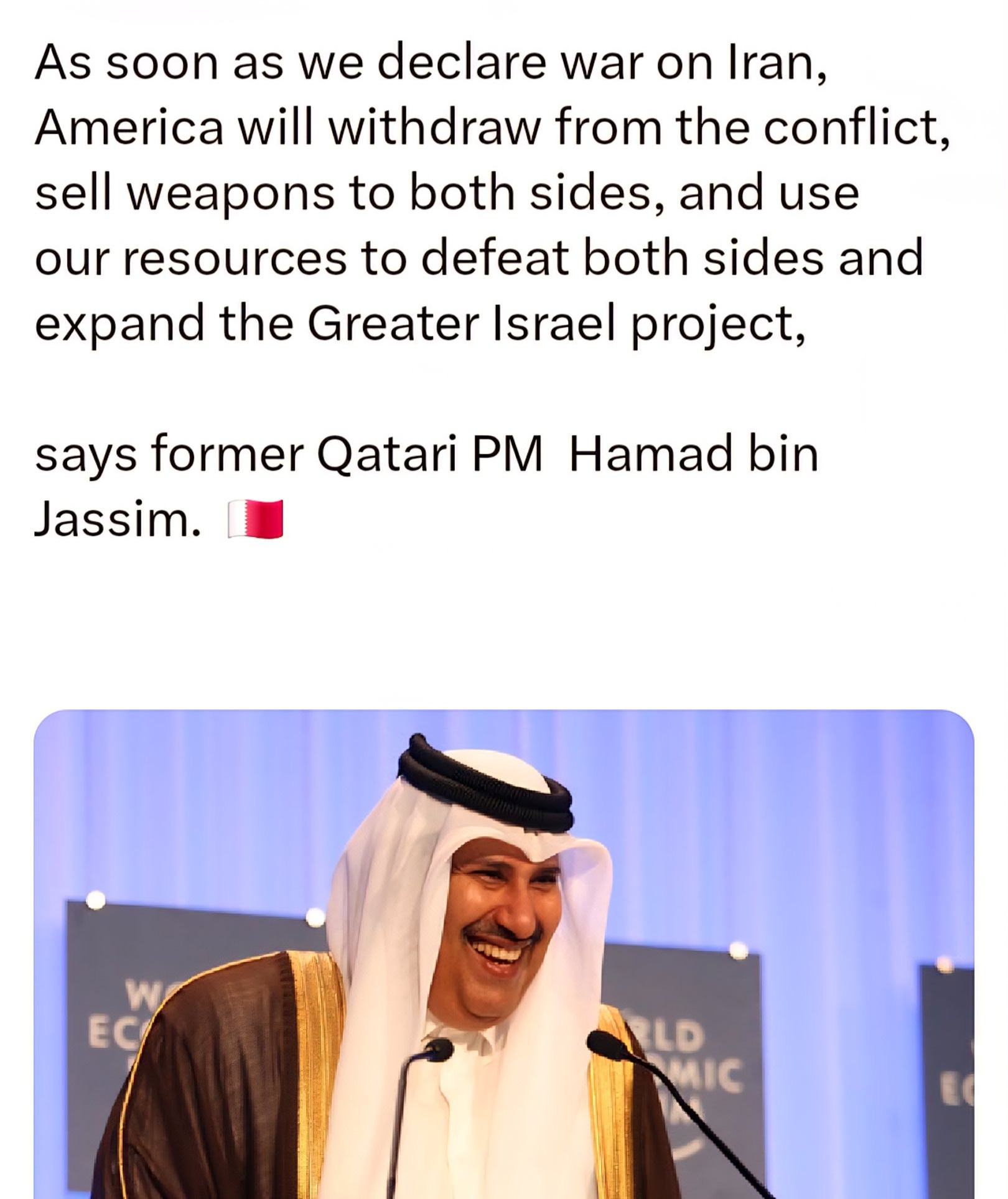
As a result, Gulf governments are likely to accelerate efforts to diversify their security partnerships and strengthen their own defensive capabilities. This includes expanding missile-defense systems, improving early warning networks, and deepening regional security coordination among Gulf states themselves.
At the same time, new security alignments are already emerging. Saudi Arabia has expanded defense cooperation with countries such as Pakistan and Türkiye, and other Gulf states may follow, raising the possibility of a broader Muslim security framework sometimes described as a potential “Muslim NATO.” Parallel to this, several Gulf countries have already deepened security and strategic cooperation with China and Russia, which some regional leaders view as potentially more balanced partners given their relations with Iran.
Iran itself has repeatedly proposed the creation of a regional security framework excluding external powers, and during the current war Tehran has escalated its calls for Gulf states to remove U.S. military bases from their territory. Given the significant damage some of these bases have already suffered and the political costs associated with hosting them, the future of the U.S. military footprint in the region may increasingly come under question.
If these trends continue, the war may mark the beginning of a new regional security order, one in which Gulf states pursue a more autonomous strategy and where external influence gradually shifts toward a broader set of global actors—including China and Russia—rather than relying overwhelmingly on the United States.
Bottom Line: A Region Being Reshaped by War
The war between the United States, Israel, and Iran is doing more than altering the military balance in the Middle East. It is reshaping the strategic environment of the Gulf states in ways that will likely endure long after the fighting ends. The conflict has exposed the vulnerability of the Gulf’s economic model, which relies on stable energy production, secure trade routes, global connectivity, and international investment. At the same time, it has triggered a deeper reassessment of security partnerships, regional alliances, and the geopolitical orientation of Gulf governments.
Across multiple sectors—energy infrastructure, maritime trade, tourism, and strategic security—Gulf states are being forced to reconsider assumptions that have guided their policies for decades. Questions about the reliability of external security guarantees, the risks of hosting foreign military bases, and the need for diversified economic and geopolitical partnerships are now at the center of regional decision-making.
These shifts suggest that the consequences of the war will extend far beyond the battlefield. The conflict is accelerating trends toward economic diversification, multipolar diplomacy, and new regional security arrangements. Gulf states are increasingly seeking to balance relations between global powers while strengthening their own strategic autonomy.
In this sense, the war represents not only a military confrontation but also a transformative moment for the Middle East’s political and economic order. The Gulf that emerges after the war is unlikely to resemble the one that existed before it. As regional powers adjust to new realities and external alliances evolve, the post-war Middle East may look fundamentally different—strategically, economically, and geopolitically—from the region that entered the conflict.

Thank you for including detailed estimated numbers in your summary of strikes on the Gulf countries - keeps the larger and longer unknowables in proportion with what's actually happening across the region.
This mix of informing in detail in the present, and suggesting broader future developments across the various spheres (energy, alliances, tourism etc) is the opposite of what we get when we see dramatic images of one ship on fire in Gulf waters (present catastrophe, future catastrophe, the long and short of middle-east conflict being collapsed into an image which symbolises inconvenience for Western consumers etc).
Your mix of information and moderation is appreciated.