

In my previous article, I explored five possible strategic objectives Washington may be pursuing in the renewed war against Iran. Understanding a conflict, however, requires looking at both sides. This article turns to Tehran’s perspective, examining how Iranian decision-makers interpret the war, the strategic logic shaping their response, and the principles likely guiding their military and political calculations. Whether one agrees with those calculations or not, they provide an essential framework for understanding where this conflict may be heading.
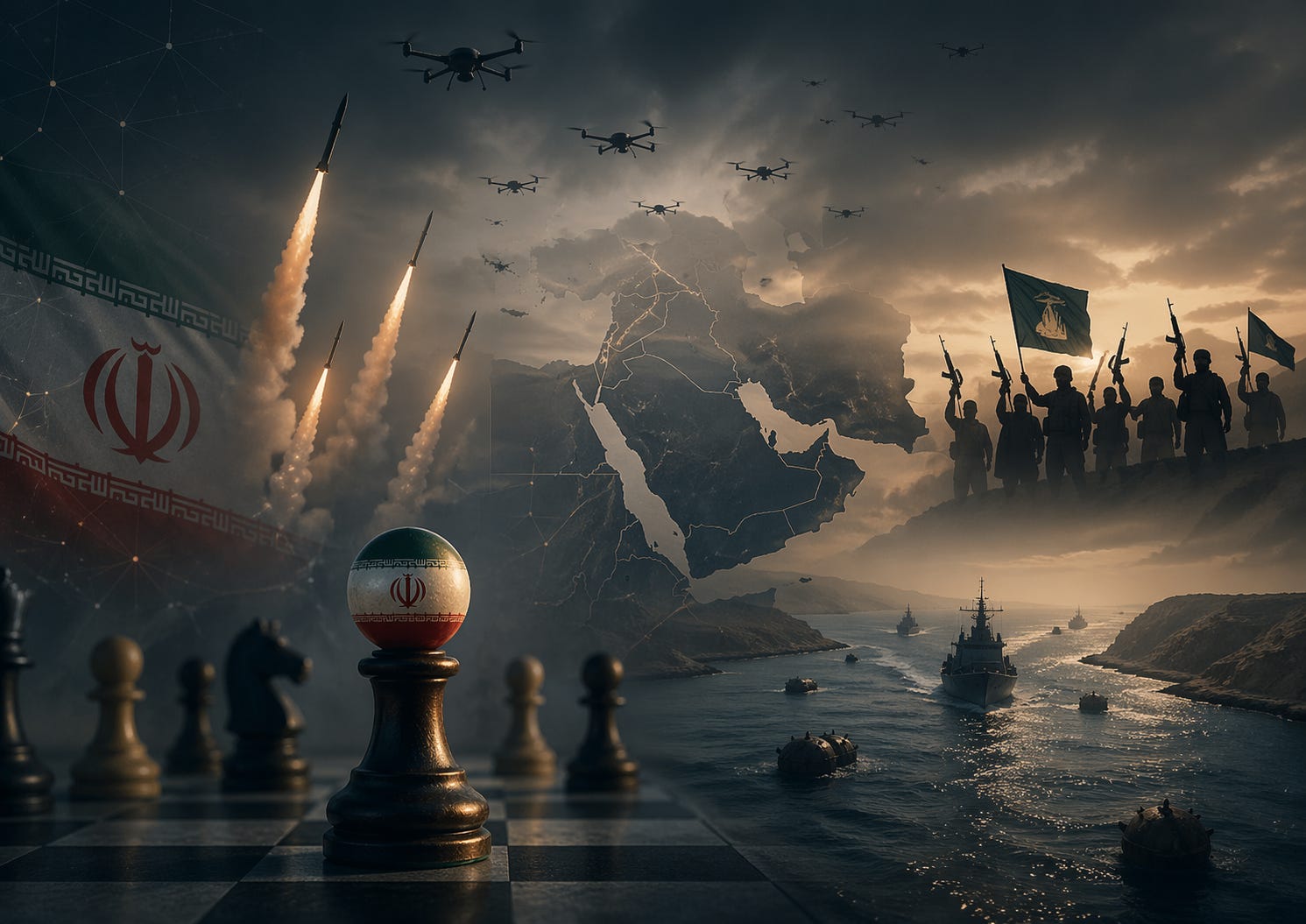
When War Becomes Cheaper Than Negotiation
In a recent interview, Iranian Foreign Minister Abbas Araghchi summarized Tehran’s strategic thinking in a single sentence: **”We do not fight unless the cost of not fighting is greater.”** Whether intended as deterrence or explanation, the statement captures a central principle shaping Iran’s current approach to the conflict.
From Tehran’s perspective, the renewed war did not emerge in isolation but followed months of growing doubts about the viability of the ceasefire and the Memorandum of Understanding (MoU) reached with Washington. Although the agreement appeared to offer Iran important gains—including sanctions relief and the unfreezing of assets—many within the Iranian leadership reportedly viewed it with deep suspicion. To them, the deal seemed unusually favourable for Iran and therefore difficult to reconcile with President Donald Trump’s previous approach toward Tehran.
That skepticism was reinforced by a broader strategic reading of recent developments. Iranian decision-makers increasingly appear to believe that Washington is pursuing a gradual strategy of dismantling Tehran’s regional leverage piece by piece. Pressure around the Strait of Hormuz, continued military operations in Lebanon and Yemen, financial restrictions, and efforts to weaken Iran’s regional partners are interpreted not as isolated events but as successive steps designed to reduce Iran’s bargaining power before any future negotiations.
From this perspective, accepting negotiations while these sources of leverage are steadily eroded would place Iran in an increasingly weaker position. Each concession would invite additional demands, while commitments favourable to Tehran could remain delayed, conditional or only partially implemented. Iranian leaders often draw lessons from cases such as Libya and Iraq, where they believe concessions to Western powers ultimately failed to preserve the existing political order. Whether those comparisons are accurate is less important than the fact that they appear to shape Tehran’s strategic mindset.
Within this framework, continuing military resistance may be viewed as the less costly option. War undoubtedly imposes enormous economic hardship and military losses, but negotiating under sustained military pressure is seen as carrying an even greater long-term risk: the progressive erosion of deterrence, the loss of regional influence, and ultimately the survival of the Islamic Republic itself.
For Tehran, therefore, the central question is not whether war is costly—it clearly is. The question is whether the political cost of negotiating from a position of weakness would be even greater. Seen through that lens, continuing the war may appear less dangerous than negotiating from weakness.
Meeting the Madman with a Madman
One of the defining features of Donald Trump’s approach to foreign policy has been what political scientists describe as the “Madman Theory”—the deliberate cultivation of unpredictability to convince adversaries that the United States is willing to take actions they cannot anticipate or control. The objective is psychological as much as military: by making escalation appear limitless, opponents are expected to back down before reaching the point of direct confrontation.
Iran increasingly appears to be responding with a version of the same strategy.
For decades, Tehran’s regional doctrine was built on what its leaders described as **strategic patience**—avoiding direct confrontation while relying on gradual, calibrated responses through diplomacy, regional partners, and asymmetric deterrence. The current conflict, however, suggests a significant shift. Rather than exercising restraint to prevent escalation, Iran now appears willing to signal that almost every previous red line is open to revision if the United States continues expanding the conflict.
This shift is reflected in the logic of Iran’s responses. Strikes on critical infrastructure have increasingly been met with reciprocal attacks against comparable infrastructure linked to US partners in the Gulf. Military operations against Iranian facilities have been followed by attacks targeting American military positions or those of its regional allies. As discussions emerged about possible ground operations, Iranian officials and allied groups signalled that any such move could widen the conflict beyond Iran’s borders, potentially opening new fronts across the region. Whether every threat is ultimately carried out is almost secondary; the strategic purpose is to convince Washington that escalation will always produce a broader and more painful response than anticipated.
The message appears to be straightforward: if Washington abandons predictability and restraint, Tehran will do the same. Rather than allowing the United States to monopolize uncertainty, Iran seeks to demonstrate that it, too, is prepared to behave in ways that complicate American planning and increase the risks of every additional military step.
This represents more than retaliation. It is an attempt to restore deterrence through uncertainty. By convincing Washington that each new strike could trigger a wider regional response, Iran hopes to raise the political and military costs of continued escalation. In this sense, Tehran is not simply responding to Trump’s “Madman Theory”; it is attempting to neutralize it by adopting a version of its own.
Ultimately, deterrence in this conflict no longer depends solely on military capability. It depends on convincing the other side that one is both willing to absorb greater pain and prepared to impose even greater costs in return. From Tehran’s perspective, strategic ambiguity has become as important a weapon as missiles or drones.
Who Can Endure More Pain?
Tehran appears increasingly confident that it can outlast Washington. Its calculation is not necessarily that Iran is militarily stronger, but that it possesses greater tolerance for prolonged pressure. Iranian leaders seem to believe that President Trump will eventually seek an exit, as they argue he did in previous confrontations, once the political, economic, and military costs begin to outweigh the benefits of continued escalation.
The United States faces several constraints in any prolonged conflict. Rising oil prices can quickly affect the domestic economy, military casualties can erode public support, and approaching elections increase pressure on the administration to demonstrate either decisive success or a credible pathway out of war. Washington must also preserve the cohesion of a regional coalition whose members may support containing Iran while remaining reluctant to absorb retaliation against their own territory, infrastructure, and economies.
Iran operates under a different political logic. Decades of sanctions have forced the state and society to adapt to chronic economic pressure, even at considerable human cost. Centralized decision-making enables the leadership to sustain policies without facing the same electoral constraints as an American administration. The state can also draw on nationalist and ideological mobilization, especially after Ayatollah Khamenei’s funeral ceremonies reinforced collective identity and allowed the political order to display continuity and resilience after the loss of its leader.
None of this means that Iran can absorb unlimited pain. Its economy is vulnerable, public frustration is substantial, and prolonged damage to infrastructure and livelihoods could eventually weaken domestic cohesion. Yet Tehran may calculate that the Islamic Republic’s survival is directly at stake, making it more willing than Washington to tolerate economic hardship, casualties, and a long period of instability.
The conflict therefore becomes less a contest over who can inflict greater immediate damage than over who can sustain the resulting costs for longer. Washington may possess overwhelming conventional power, but Iran is betting that political endurance—not battlefield superiority—will ultimately determine the outcome. In this classic contest of wills, Tehran’s strategy rests on the belief that it does not need to defeat the United States; it only needs to remain standing after Washington decides the war has become too costly.
Iran’s Escalation Ladder
Iran’s escalation is neither impulsive nor indiscriminate. Rather, it appears to follow a carefully calibrated strategy in which every response is intended to restore deterrence while preserving room for further escalation if necessary. Tehran is responding according to the principle of reciprocity, but it is choosing both the timing and the targets strategically, seeking to avoid actions that could unnecessarily unite the region into a broad anti-Iran coalition or prematurely exhaust its own leverage.
This reflects a clear understanding of the escalation ladder. Instead of moving immediately to its most destructive options, Iran appears to be climbing the ladder gradually, matching American actions while signalling that each additional step by Washington will be met with a broader and more painful response.
That process is already underway. As American strikes expanded beyond military targets, Iran widened both the geography and nature of its retaliation. The campaign has moved beyond attacks on military facilities to targeting critical infrastructure and American personnel. Tehran has already begun hunting US military personnel, with several reportedly killed in attacks on the US base in Jordan and at King Hussein Airport. It has also struck an oil refinery, electricity facilities, and a water desalination plant in Kuwait, signalling that the conflict is no longer confined to conventional military targets. These attacks carry a broader message: if the war continues, the economic infrastructure sustaining America’s regional partners will increasingly become part of the battlefield.
At the same time, Iran has deliberately held back some of its most consequential options. Three major escalation cards remain available.
The first is Bab al-Mandab. Expanding military pressure from the Strait of Hormuz to the Red Sea would threaten the world’s two most important maritime energy corridors simultaneously, dramatically increasing the economic consequences for international trade and global energy markets.
The second is a much broader campaign against vital Gulf energy infrastructure. While Tehran has already demonstrated both capability and intent, a sustained campaign against oil production, export terminals, electricity networks and desalination facilities across the Gulf would impose costs far beyond the immediate region.
The third is directly expanding the conflict with Israel. Tehran still retains significant capacity to increase both the scale and intensity of attacks, potentially opening another major front in the conflict and forcing Washington to divert additional military resources.
The logic behind this strategy is straightforward. Iran does not seek maximum escalation immediately because doing so would leave it with few credible options if the conflict continues. By climbing the escalation ladder step by step, Tehran preserves strategic flexibility while continuously increasing the costs for its adversaries. Each rung serves as both retaliation for previous attacks and a warning of what remains possible.
From Tehran’s perspective, deterrence is sustained not by demonstrating all of its capabilities at once, but by ensuring that every American escalation can be answered with an even more costly response. The objective is therefore not simply to retaliate, but to convince Washington that there is always another rung on Iran’s escalation ladder—and that the price of continuing the war will keep rising.
Washington’s Escalation Trap
From Tehran’s perspective, the conflict is gradually moving in its favour—not because Iran is winning militarily, but because Washington appears to be entering an increasingly narrow strategic corridor. The United States seeks to coerce Iran into accepting a less favourable political settlement by steadily increasing military pressure. Iran, by contrast, seeks to convince Washington that every additional step up the escalation ladder will impose disproportionately higher costs on the United States and its regional partners.
This dynamic creates what may become Washington’s own escalation trap. Every successful American strike generates pressure to sustain momentum, yet each new round of attacks also invites broader Iranian retaliation. The result is a cycle in which military success creates new strategic problems rather than resolving existing ones.
Iran appears to understand this dilemma and has deliberately preserved several of its most consequential options for future escalation. By contrast, Washington’s choices are becoming increasingly difficult. Expanding attacks against Iranian civilian infrastructure would almost certainly invite reciprocal strikes against critical infrastructure in the Gulf, including oil facilities, electricity networks and desalination plants. Such an exchange would extend the conflict beyond Iran itself, placing America’s regional allies under growing pressure while carrying potentially severe consequences for global energy markets, international shipping and the wider world economy.
The alternatives are equally problematic. A prolonged air campaign may continue degrading Iranian capabilities without fundamentally changing Tehran’s strategic calculations. A ground operation would involve enormous military and political risks. Even more extreme options, such as the use of nuclear weapons, would cross an unprecedented threshold in the post-1945 international order. Beyond the humanitarian catastrophe, such a decision could fundamentally reshape global non-proliferation norms and reinforce Tehran’s conviction that only a nuclear deterrent can guarantee the survival of the Islamic Republic.
This helps explain why Washington’s room for manoeuvre may be narrowing even as its military superiority remains overwhelming. Tactical success does not automatically translate into strategic success if every escalation leaves the opponent with both the willingness and the capacity to raise the costs further.
Bottom Line
Much of the debate surrounding the current conflict focuses on what Washington is trying to achieve. That is only half of the strategic equation. Wars are not shaped solely by one side’s objectives, but by how each side interprets the other’s intentions, assesses risks, and calculates the costs of fighting versus compromise.
Whether one agrees with Tehran’s worldview or not, its decisions are unlikely to make sense unless viewed through its own strategic logic. Iran appears to believe that negotiating under pressure invites greater pressure, that deterrence can only be restored through reciprocal escalation, and that endurance—not battlefield superiority—will ultimately determine the outcome. These assumptions explain much of its behaviour more effectively than portraying it as acting irrationally or simply seeking confrontation.
History shows that many Western policy failures in the Middle East have stemmed not from a lack of military capability, but from a failure to understand how regional actors perceive threats, opportunities and survival. Misreading an adversary’s strategic calculus often produces policies that achieve the opposite of their intended objectives.
Understanding Tehran’s logic is therefore not an exercise in sympathy or justification. It is an analytical necessity. Whether Iran’s assumptions prove correct or disastrously mistaken, they are shaping the decisions that will determine the next phase of this war. Ignoring that reality will not change it—it will only make the conflict harder to predict and even harder to end.
