

After two costly wars, years of maximum pressure, assassinations, sanctions, escalating military confrontations and destabilisation of the region, Washington finds itself back where it started: negotiating with Iran.
Recent reports suggest that the two sides are closer than they have been in years to reaching an agreement, although what is currently on the table appears to be little more than a memorandum of understanding rather than a comprehensive settlement. More strikingly, the leaked details indicate that Iran has not offered major concessions beyond those it had already accepted under the 2015 Joint Comprehensive Plan of Action (JCPOA) negotiated by the Obama administration. If anything, Tehran enters these negotiations with additional leverage, most notably its demonstrated ability to influence global trade and energy flows through the Strait of Hormuz—an asset it appears unwilling to relinquish.
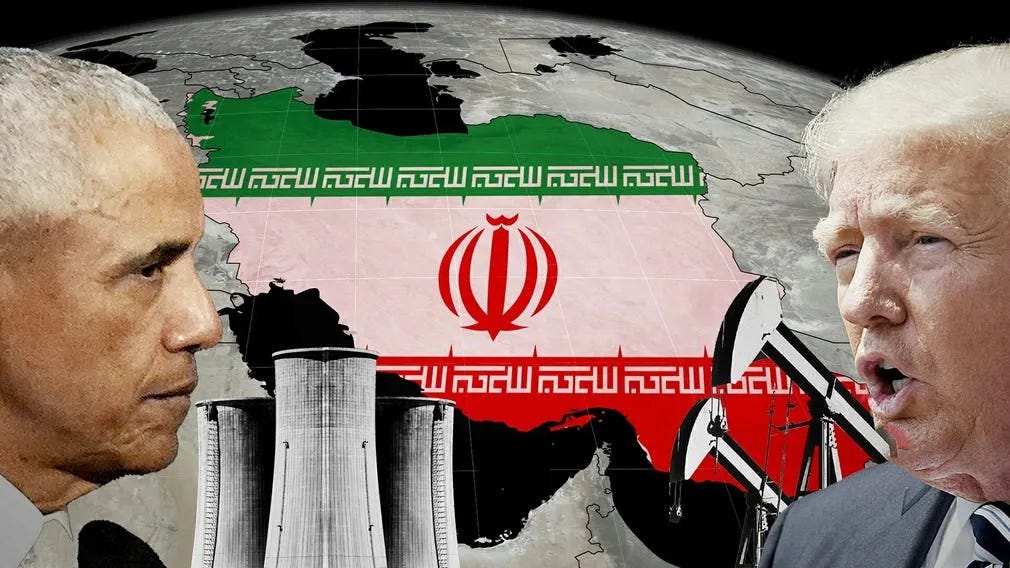
This raises an uncomfortable question: if the United States has ultimately returned to the negotiating table after a decade of sanctions, maximum pressure, military escalation, and war, what exactly did that decade achieve?
The answer requires revisiting a debate that has shaped American policy toward Iran for more than a decade. At its core were two competing assumptions. Barack Obama believed that Iran could be constrained, deterred, and gradually integrated into a more stable regional order, but not coerced into surrender. Donald Trump and his supporters believed that sufficient pressure could force Tehran into accepting a fundamentally better deal and potentially transform its behaviour altogether.
The events of the past decade—and especially the recent wars—suggest that Obama may have understood Iran better than his successors.
The Deal That Is Not Yet a Deal
One of the most striking aspects of the emerging US-Iran agreement is that it is being widely portrayed as a diplomatic breakthrough when, in reality, it appears to be little more than a framework for future negotiations.
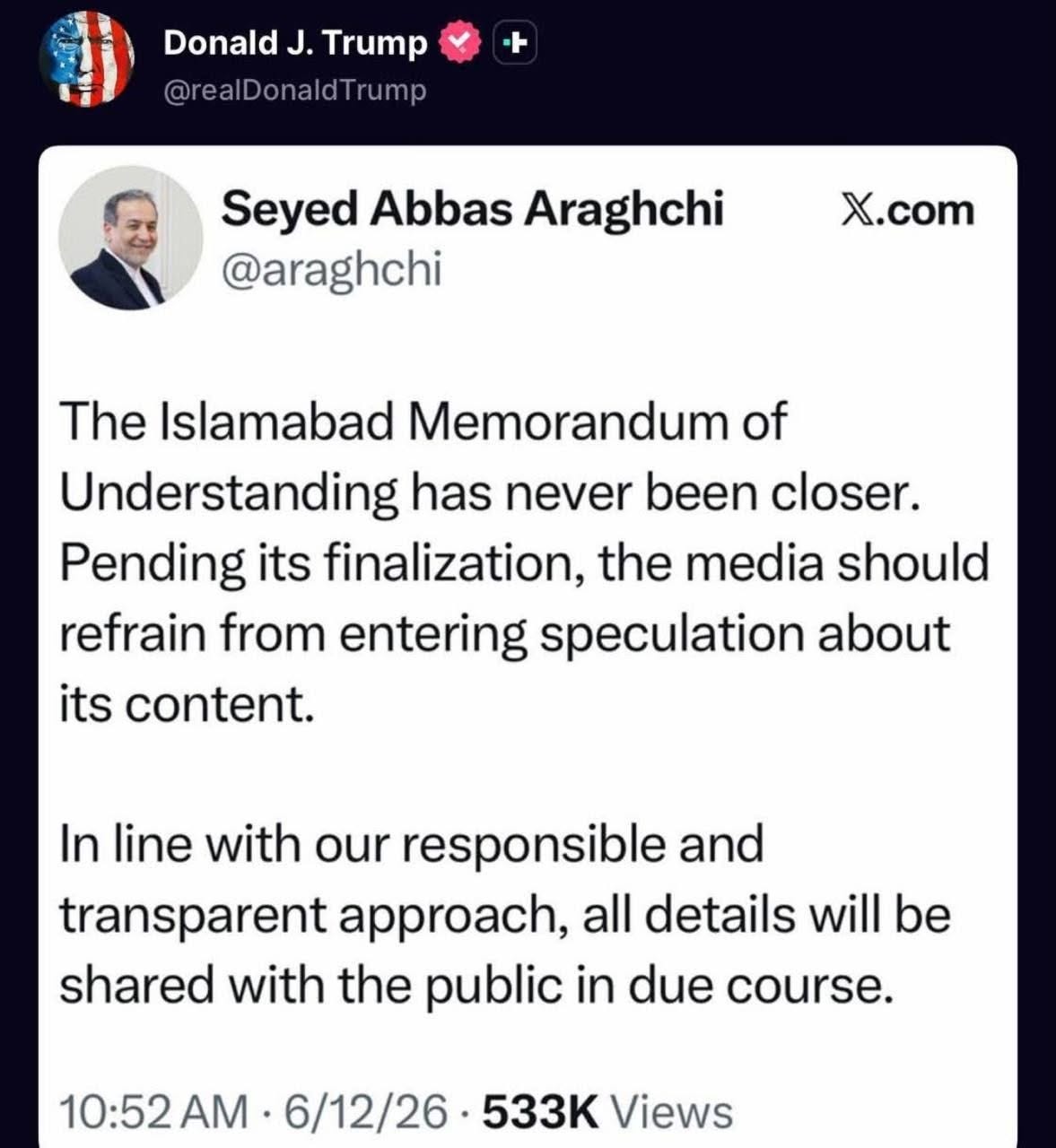
Based on the information available so far, the two sides are not approaching a comprehensive settlement but rather a memorandum of understanding designed to halt further escalation and create political space for diplomacy. The proposed arrangement focuses on reopening the Strait of Hormuz, easing aspects of the economic confrontation, extending the ceasefire, and establishing a timetable—likely between 30 and 60 days—for negotiations on the core disputes that remain unresolved.
What is particularly revealing is that the most contentious issue—the future of Iran’s nuclear program—has effectively been postponed rather than resolved. While Washington continues to speak about limiting or dismantling key elements of Iran’s nuclear capabilities, Tehran insists that questions related to enrichment, stockpiles, and long-term restrictions remain subject to future negotiations. In other words, the agreement does not solve the nuclear dispute; it merely creates a process through which the dispute can continue to be managed.
The same applies to sanctions. Iran seeks the gradual lifting of sanctions and the release of frozen assets, while the United States continues to link economic relief to future compliance and verification measures. Both sides therefore remain committed to different visions of what a final agreement should look like.
Perhaps the most important difference between today’s negotiations and the 2015 JCPOA is the Strait of Hormuz. Unlike a decade ago, the current talks are taking place after Iran demonstrated its ability to disrupt one of the world’s most important maritime chokepoints. As a result, Hormuz has become a central bargaining chip rather than a peripheral issue. While the emerging framework reportedly envisages the reopening of shipping routes, Tehran appears determined to preserve its role as the primary regulator of maritime traffic through its territorial waters and is unlikely to surrender the leverage it acquired during the war.
This is why describing the current understanding as a breakthrough may be premature. The agreement does not resolve the fundamental disputes between the two countries. It merely postpones them. The central questions—uranium enrichment, sanctions relief, missile capabilities, regional influence, and long-term security guarantees—remain largely unanswered.
More importantly, the broad outlines of the emerging framework do not appear dramatically different from what Iran had already accepted under the 2015 nuclear agreement. If anything, Tehran now enters negotiations with additional leverage that it did not possess a decade ago. This raises an uncomfortable question for advocates of maximum pressure: after years of sanctions, assassinations, economic warfare, and two major military confrontations, is Washington ultimately returning to a negotiating position not fundamentally different from the one it abandoned in 2018?
In that sense, the emerging document is less a peace agreement than a recognition by both sides that neither achieved enough on the battlefield to impose its preferred outcome. The war may be over, but the negotiation over its meaning and consequences has only just begun.
Obama’s Iran Doctrine: Managing Reality, Not Chasing Fantasy
At the heart of Barack Obama’s Iran policy was a simple but often misunderstood assumption: Iran was not a problem that could be eliminated. It was a reality that had to be managed.
For decades, American policy toward Iran oscillated between containment and confrontation, often driven by the hope that sufficient pressure would either transform the regime’s behavior or eventually bring about its collapse. Obama rejected both assumptions. He understood that Iran was not a temporary challenge but a permanent regional power with deep historical roots, a large population, significant military capabilities, and extensive political and security networks across the Middle East.
This did not mean that the Obama administration viewed Iran as benign. On the contrary, his administration remained deeply critical of Iran’s regional activities, missile program, and support for armed groups across the region. But he also recognized the limits of American power. Regime change was unrealistic, military confrontation was costly and unpredictable, and efforts to force Iran into surrender were more likely to produce escalation than compliance.
Obama’s central insight was that diplomacy is not built on trust. It is built on interests, incentives, and verification. The purpose of negotiations was not to turn Iran into an ally, but to constrain its most destabilizing activities and reduce the risk of war. In this sense, diplomacy was not an alternative to containment; it was a tool of containment.
This logic was most clearly reflected in the JCPOA. The agreement did not seek to resolve every dispute between Washington and Tehran. It focused on a specific objective: preventing Iran from obtaining a nuclear weapon while creating a more stable environment in which other regional disputes could be managed. The agreement accepted the reality of the Iranian state while attempting to shape its behavior through a combination of restrictions, inspections, incentives, and deterrence.
The same logic extended to Obama’s broader regional vision. He repeatedly argued that Iran and its regional rivals, particularly Saudi Arabia, would eventually have to find a way to coexist and “share the neighborhood.” The alternative was an endless cycle of proxy wars, sectarian competition, and regional instability. While this idea was heavily criticized at the time, later developments—including the Chinese-brokered rapprochement between Iran and Saudi Arabia in 2023—suggested that some form of regional accommodation was not only possible but perhaps inevitable.
Obama did not negotiate because he trusted Iran. He negotiated because he understood Iran. He understood that sustainable policy begins with reality rather than wishful thinking. The objective was never to make Iran disappear. It was to limit its capacity to threaten regional stability while avoiding another costly war in the Middle East.
The central question explored in the rest of this article is whether the decade that followed proved him right.
What the JCPOA Actually Achieved
Much of the debate surrounding the Joint Comprehensive Plan of Action (JCPOA) has been driven by politics rather than outcomes. Supporters often portrayed it as a pathway toward a broader transformation of US-Iran relations, while critics condemned it as a dangerous concession to Tehran. Lost in this political battle was a simpler question: did the agreement achieve the objectives it was designed to achieve? And is the United States in a better position now, a decade after withdrawing from it?
The answer is largely yes to the first and no to the second.
The JCPOA significantly reduced Iran’s uranium enrichment activities, dramatically cut its stockpile of enriched uranium, imposed strict limits on key elements of the nuclear program, and established one of the most intrusive inspection regimes ever negotiated. As a result, Iran’s nuclear breakout time—the period required to produce sufficient fissile material for a nuclear weapon—was extended substantially, reducing the immediate risk of a nuclear crisis.
Just as importantly, the agreement lowered the likelihood of a military confrontation. Before the JCPOA, discussions of preventive strikes against Iran’s nuclear facilities had become increasingly common in Washington and Tel Aviv. The agreement did not eliminate tensions between Iran and its adversaries, but it created a mechanism for managing one of the most dangerous dimensions of the conflict through diplomacy rather than war.
This is where many critics misunderstood the purpose of the deal. The JCPOA was never intended to solve every problem between Iran and the West. It was not designed to address Iran’s missile program, regional alliances, domestic politics, or ideological disputes with the United States. Its objective was narrower but strategically important: to remove the nuclear issue as an immediate source of confrontation and create space for addressing other disputes through political and diplomatic means.
In effect, the agreement sought to compartmentalize the most urgent threat while preventing it from consuming the entire relationship. It recognized that solving every disagreement simultaneously was impossible, but that managing the most dangerous one was both achievable and necessary.
The irony is that many of the concessions currently being discussed between Washington and Tehran closely resemble arrangements that Iran had already accepted under the JCPOA. After years of maximum pressure, sanctions, assassinations, and war, the United States appears to be seeking limitations on Iran’s nuclear activities that are not fundamentally different from those negotiated by the Obama administration more than a decade ago.
The JCPOA did not create peace, nor did it transform Iran. But it accomplished what it was designed to accomplish: it constrained Iran’s nuclear program, increased transparency, reduced the risk of war, and created diplomatic space for managing a difficult relationship. Judged by those objectives rather than by ambitions it never claimed to fulfil, the agreement was far more successful than many of its critics were willing to acknowledge.
From Engagement to Confrontation: The War That Already Tested
The fundamental difference between Obama’s approach and Trump’s approach to Iran was not merely tactical; it reflected two competing visions of how the United States should manage a rising regional power.
Obama’s strategy was based on engagement, containment, and gradual accommodation. He believed that Iran was a permanent feature of the Middle Eastern landscape and that regional stability would ultimately require a framework in which Iran and its rivals could coexist. This logic was reflected in his controversial argument that Iran and Saudi Arabia would eventually have to “share the neighborhood” rather than pursue endless proxy wars across the region.
At the time, critics dismissed this vision as naïve. Yet developments in the years that followed suggested otherwise. The Chinese-brokered rapprochement between Iran and Saudi Arabia in 2023 demonstrated that regional powers themselves increasingly recognized the unsustainability of permanent confrontation. Ironically, the regional accommodation that Obama had envisioned eventually emerged, but under Chinese rather than American sponsorship.
By abandoning diplomacy, Washington not only lost the nuclear agreement; it also surrendered the opportunity to shape the region’s evolving balance of power. The vacuum was gradually filled by others, particularly China, which positioned itself as a mediator while the United States increasingly defined its policy through pressure and confrontation.
Trump’s alternative was built on a different assumption: that sufficient pressure could force Iran into accepting a fundamentally better deal. The objectives were ambitious. Washington sought to end uranium enrichment, restrict Iran’s missile program, roll back its regional influence, weaken its alliance network, and potentially transform the behavior of the regime itself. Economic sanctions, diplomatic isolation, targeted assassinations, military strikes, and eventually direct military confrontation became the primary instruments for achieving these goals.
The central question, however, is not whether pressure was applied. It undoubtedly was. The question is whether it worked.
The answer was ultimately provided not by diplomats or analysts but by war itself.
The recent wars became the ultimate test of the maximum-pressure strategy. For years, advocates argued that increasing economic and military pressure would eventually force Iran to capitulate or fundamentally alter its behavior. Yet despite unprecedented sanctions, the assassination of senior military leaders, repeated military strikes, diplomatic isolation, and two major military confrontations, Iran proved far more resilient than many in Washington anticipated.
The regime survived. The missile program survived. Iran’s nuclear capabilities expanded far beyond the limitations imposed by the JCPOA. Its regional networks remained largely intact. It developed new strategic leverage through its demonstrated ability to disrupt maritime traffic in the Strait of Hormuz. Most importantly, rather than abandoning its allies, Iran emerged from the conflict with a stronger commitment to coordinating and integrating its regional network.
In many respects, the war produced outcomes directly opposite to those envisioned by advocates of maximum pressure. Instead of isolating Iran, it reinforced Tehran’s perception that its security depended on stronger deterrence, closer coordination with its allies, and the preservation of capabilities that it had previously been willing to limit through negotiations.
War tested the assumptions of maximum pressure in a way no academic debate could. The results suggest that while pressure was capable of inflicting significant costs on Iran, it was far less successful in compelling surrender or producing the strategic transformation that its advocates promised.
The irony is difficult to ignore. The strategy designed to obtain a better agreement than Obama’s ultimately led Washington back to negotiations, but now with an Iran that is more experienced, more suspicious, more resilient, less flexible and in possession of leverage that it did not have a decade earlier.
The Strategic Costs of Proving Obama Wrong
The greatest irony of the past decade is not simply that Trump ended up validating Obama’s approach to Iran. It is that, in trying to disprove it, he may have made the challenge facing future American administrations significantly more difficult.
Obama’s central argument was that Iran could be constrained but not coerced into surrender. Trump rejected that premise. By withdrawing from the JCPOA, launching the maximum-pressure campaign, pursuing economic warfare, and eventually engaging in direct military confrontation, he sought to prove that sufficient pressure could force Tehran into accepting a fundamentally better deal and perhaps even transform the strategic balance of the region.
Yet after years of sanctions, assassinations, diplomatic isolation, and two wars, Washington has found itself returning to the same place Obama began: negotiations with Iran.
The difference is that the circumstances have changed dramatically.
Iran today is much closer to nuclear weapons capability than it was under the JCPOA. It possesses larger stockpiles of enriched uranium, more advanced nuclear expertise, and stronger incentives to preserve and expand those capabilities. The argument inside Tehran that nuclear latency provides the ultimate guarantee against future attacks has become far more persuasive than it was a decade ago.
At the same time, Iran is less trusting of American commitments. From Tehran’s perspective, it complied with an internationally verified agreement only to watch Washington abandon it unilaterally. Any future negotiation will therefore face a profound credibility deficit that did not exist in 2015.
The regional environment has also shifted. Instead of weakening Iran’s position, years of confrontation accelerated the emergence of a more multipolar Middle East. Traditional American partners have increasingly diversified their relationships with China, Russia, and regional powers. Washington no longer enjoys the uncontested influence it once possessed, while Beijing has demonstrated an ability to play diplomatic roles that were once considered exclusively American.
The costs are not limited to diplomacy. American influence in the region has become more contested, its military presence more vulnerable, and its network of regional partnerships less cohesive than during the Obama years. Meanwhile, Iran has demonstrated new forms of leverage, most notably through the Strait of Hormuz and its ability to impose costs on regional and global actors during periods of crisis.
This is what makes the outcome so paradoxical. The strategy designed to strengthen America’s bargaining position may have weakened it. The policy intended to isolate Iran may have encouraged Tehran to become more self-reliant, more resilient, and more determined to preserve the very capabilities Washington sought to eliminate.
Most importantly, Trump may have narrowed the range of options available to his successors. Future administrations will likely face a more capable Iran, a more fragmented regional order, and a United States with fewer sources of leverage than it possessed when the JCPOA was first signed.
Obama’s insight was that reality imposes limits on power. The past decade suggests that those limits were far more enduring than Trump’s strategy assumed.
The destination was the same negotiating table. The difference is that Washington returned with fewer allies, less influence, and a more challenging Iran than the one it left behind.
