

Hamas has elected Khalil al-Hayya as the new head of its Political Bureau, nearly twenty months after the assassination of Yahya Sinwar. The timing is significant. The movement is navigating one of the most challenging periods in its history, grappling with the devastating consequences of the Gaza war, mounting regional pressures, and an uncertain political future. Leadership transitions under such circumstances are rarely administrative decisions; they are strategic statements about how an organisation intends to navigate the next phase of conflict.
While al-Hayya is one of Hamas’s most experienced political figures—having served as deputy head of the Political Bureau and led the movement’s ceasefire negotiations—his election is significant less because of who he is than because of what Hamas chose. Rather than signalling a post-war strategic reset, the movement has opted for continuity in leadership, priorities, and its broader resistance strategy.
His victory over Khaled Meshaal suggests that Hamas remains committed to a leadership rooted in the realities of Gaza and shaped by the experience of war, rather than shifting towards an externally driven political approach. The election therefore offers an important window into how Hamas interprets the lessons of the past two years and the direction it intends to pursue in the years ahead.
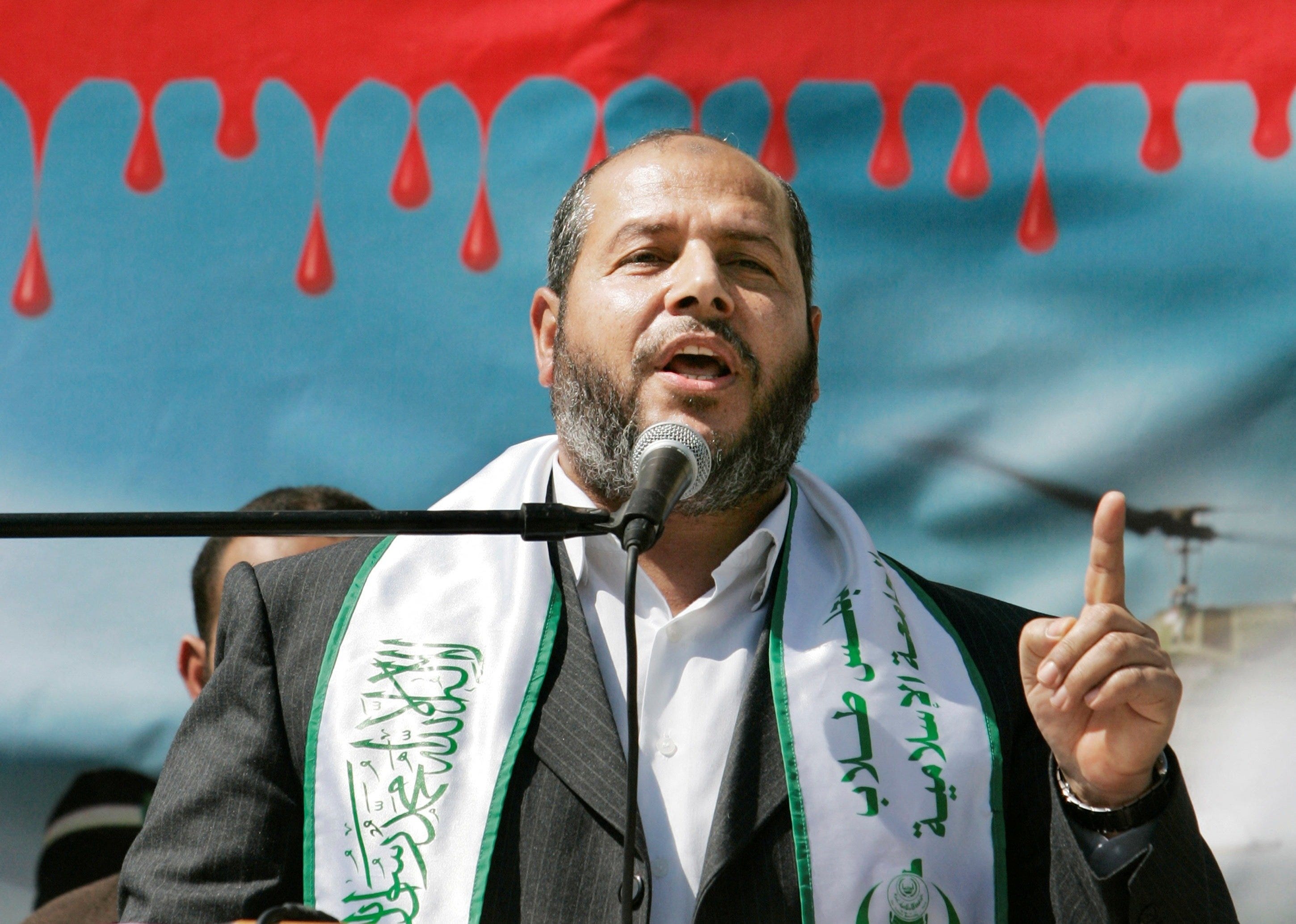
Why Khalil al-Hayya?
Khalil al-Hayya’s election is the culmination of decades of involvement in Hamas’s political and organisational leadership. A member of the movement’s founding generation in Gaza, he has been part of Hamas since its formative years and has witnessed its transformation from a local Islamist movement into one of the central actors in the Palestinian-Israeli conflict. This long institutional experience has made him one of the movement’s most influential decision-makers.
Like many senior Hamas leaders, al-Hayya’s political identity was shaped by imprisonment. He spent three years in Israeli prisons in the early 1990s, an experience that reinforced his standing within the movement and deepened his credentials among its rank and file. Over the following decades, he rose steadily through Hamas’s leadership, eventually becoming deputy head of its Political Bureau and one of its most trusted strategists.
His prominence increased further after the Gaza war. As head of Hamas’s ceasefire negotiation team, al-Hayya became the movement’s principal political interlocutor with regional mediators, particularly Egypt and Qatar. This role required balancing military realities on the ground with political negotiations, giving him first-hand experience in managing one of the most difficult phases in Hamas’s history.
Al-Hayya also maintained a close political relationship with Yahya Sinwar. While Sinwar embodied Hamas’s wartime leadership inside Gaza, al-Hayya increasingly emerged as the movement’s political voice during the conflict, helping translate battlefield developments into diplomatic and political strategy. His elevation therefore represents not a break from the Sinwar era but its institutional continuation.
His personal experience has further strengthened his legitimacy within Hamas. He has survived several Israeli assassination attempts, while seven members of his family, including four of his children, were killed during the war. Like many of Hamas’s senior leaders, his political authority is therefore intertwined with personal sacrifice, reinforcing his standing among supporters who view such losses as evidence of commitment rather than merely personal tragedy.
Taken together, these experiences give al-Hayya a rare combination of political leadership, wartime legitimacy, and negotiation expertise. Unlike figures identified primarily with either diplomacy or military operations, he has accumulated credibility across both spheres. This broad acceptance helps explain why he emerged as a consensus candidate, capable of commanding support from Hamas’s political leadership while maintaining the confidence of its military wing during one of the most critical periods in the movement’s history.
Continuity Over Change
The most important message conveyed by al-Hayya’s election is not about personalities but about strategy. His victory over Khaled Meshaal reflects a choice between two different visions for Hamas’s future rather than a simple contest between two senior leaders. At a time when many observers expected the movement to reassess its direction after the devastating war in Gaza, Hamas instead chose continuity over transformation.
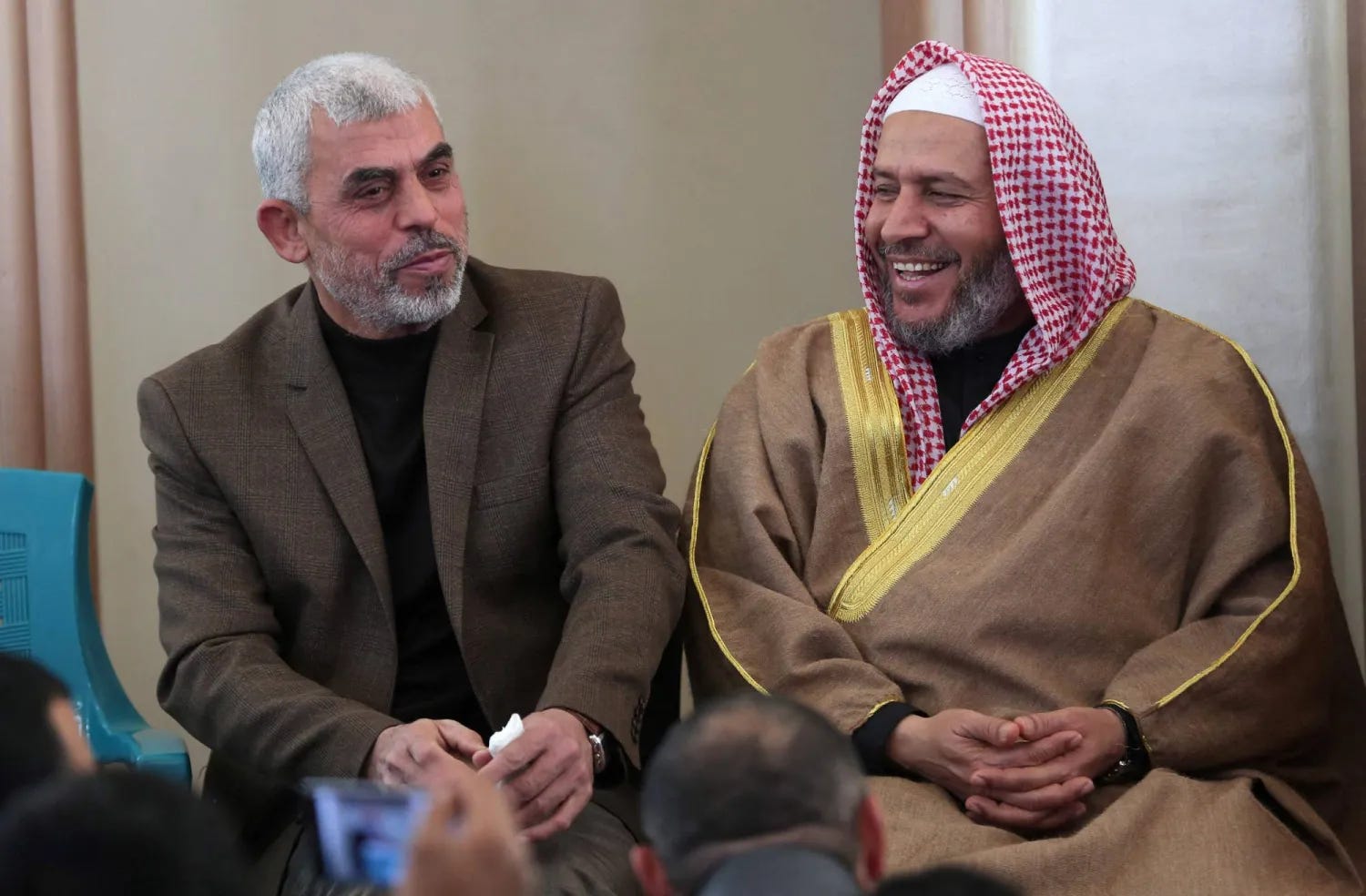
Meshaal represented a leadership model shaped largely from outside Gaza. Having spent years leading the movement from exile, he became closely associated with regional diplomacy, broad political engagement, and efforts to expand Hamas’s international relationships. His experience positioned him as the face of Hamas’s external leadership, emphasising political manoeuvrability and engagement with regional actors.
Al-Hayya, by contrast, embodies the leadership that emerged from within Gaza itself. His political legitimacy has been forged through years of organisational work inside the Strip, close coordination with Yahya Sinwar, and direct involvement in managing the war and its aftermath. Unlike Meshaal, whose authority stems largely from his long-standing regional and international role, al-Hayya derives his legitimacy from the battlefield experience of Gaza and the movement’s internal institutions.
His election therefore reinforces the dominance of the Gaza-based leadership over the external leadership. Since the outbreak of the war, decision-making has increasingly shifted toward leaders directly involved in the conflict, whose credibility rests on their ability to manage both military confrontation and the political consequences of war. Choosing al-Hayya signals that Hamas continues to prioritise leaders shaped by these realities over those whose influence has been built primarily through regional diplomacy.
This does not mean Hamas is abandoning diplomacy. Al-Hayya himself led the movement’s ceasefire negotiations and maintains close relations with regional mediators, particularly Egypt. Rather, the election suggests that diplomacy will continue to serve the movement’s broader resistance strategy, not replace it. Political negotiations remain an important instrument, but they are viewed as complementary to, rather than a substitute for, armed resistance.
Ultimately, Hamas’s decision reflects a deliberate rejection of a post-war strategic reset. Faced with unprecedented military losses and immense humanitarian devastation, the movement had an opportunity to signal a fundamental change in direction. Instead, it chose a leader who represents organisational continuity, wartime legitimacy, and the conviction that the core strategic principles guiding Hamas before the war remain valid after it. The message is clear: while tactics may evolve to accommodate new realities, Hamas does not believe the war requires abandoning the strategic identity on which the movement has been built.
Hamas’s Immediate Priorities
Al-Hayya’s first public statements following his election suggest that Hamas’s immediate priorities remain focused on managing the consequences of the Gaza war rather than redefining the movement’s long-term strategy. His agenda combines military, humanitarian, political, and diplomatic objectives, reflecting an effort to secure the movement’s survival while positioning it for the post-war phase.
1. Ending the War
The movement’s foremost priority remains bringing the Israeli military campaign to an end. Al-Hayya has reaffirmed Hamas’s insistence on a comprehensive ceasefire that includes a complete withdrawal of Israeli forces from the Gaza Strip, rather than temporary pauses or limited humanitarian arrangements. This position indicates that Hamas continues to view any political process as contingent upon ending the war and restoring a degree of Palestinian territorial control.
2. Relief, Reconstruction, and Humanitarian Recovery
Alongside ending the fighting, Hamas has placed significant emphasis on addressing Gaza’s humanitarian catastrophe. Al-Hayya has identified reconstruction, restoring basic services, and facilitating the return of normal civilian life as immediate priorities. He has also stressed preventing any plans for the permanent displacement of Gaza’s population, an issue that has become central to Palestinian political discourse throughout the war. The movement likewise continues to include the release of Palestinian prisoners in any future negociations, treating prisoner exchanges as both a humanitarian objective and a political priority.
3. Rebuilding the Palestinian Political System
Beyond Gaza, al-Hayya has called for a comprehensive national dialogue among Palestinian factions to rebuild political unity after years of internal division. This includes reforming and restructuring the Palestine Liberation Organization to make it more representative and rebuilding Palestinian political institutions on democratic foundations. Although the prospects for new elections remain uncertain, Hamas continues to frame political legitimacy and institutional reform as essential components of the post-war period.
4. Revitalising Regional Diplomacy
Al-Hayya’s early diplomatic outreach also highlights the importance Hamas places on rebuilding and maintaining regional relationships. His reported contact with the head of Egyptian intelligence shortly after assuming office underscores Cairo’s central role as both mediator and regional interlocutor. Beyond Egypt, Hamas seeks to strengthen its engagement with Arab and Islamic states, encouraging them to exert greater political and diplomatic pressure to halt the war, support Palestinian rights, and contribute to Gaza’s reconstruction.
5. Expanding International Pressure
At the international level, Hamas is expected to continue pursuing legal and diplomatic efforts aimed at increasing pressure on Israel. Al-Hayya has called on the United Nations and the broader international community to provide protection for Palestinian civilians, support humanitarian relief, and hold Israeli leaders accountable under international law. While Hamas remains diplomatically isolated in much of the West, the movement appears determined to capitalise on growing international criticism of the humanitarian consequences of the war and ongoing legal proceedings in international courts.
Taken together, these priorities suggest that Hamas is attempting to balance immediate humanitarian needs with longer-term political objectives. The emphasis is not on redefining the movement’s strategic identity, but on securing an end to the war, preserving its political relevance, and creating conditions under which it can remain a central actor in Palestinian politics once the fighting subsides.
The Loud Silence on Weapons
Leadership transitions often reveal as much through omission as through declaration. In al-Hayya’s case, one of the most striking features of his early political agenda is what it does not contain. While he has articulated Hamas’s priorities on ending the war, reconstruction, Palestinian unity, and regional and international diplomacy, there has been no indication of a willingness to reconsider the movement’s military doctrine.
There has been no reference to disarmament, restructuring Hamas’s armed wing, or transforming the movement into a purely political organisation. Nor has al-Hayya suggested that the experience of the Gaza war requires abandoning armed resistance as Hamas’s central strategy. Given the scale of the destruction, such omissions are unlikely to be accidental. They reflect a deliberate effort to reassure the movement’s internal constituency that political engagement will not come at the expense of its military identity.
This silence is particularly significant because many external observers have argued that the post-war environment would force Hamas to fundamentally rethink its approach. Yet al-Hayya’s rhetoric points in a different direction. The movement appears prepared to adjust its political tactics, expand its diplomatic engagement, and participate in discussions on Gaza’s future governance, but without revising the strategic principles that have defined it for decades.
In this sense, Hamas distinguishes between political adaptation and strategic transformation. The movement acknowledges that the political and military landscape has changed dramatically and that new diplomatic and humanitarian realities must be addressed. However, it does not appear to believe that these changes require abandoning what it regards as the cornerstone of its identity: armed resistance against Israel.
For Hamas, therefore, the post-war phase is not about replacing resistance with politics. Rather, it is about using politics, diplomacy, and reconstruction alongside resistance as complementary instruments for advancing its objectives. The message conveyed by al-Hayya’s leadership is one of continuity: the political environment may have changed, but the movement’s underlying strategic doctrine has not.
This continuity is further reinforced by Hamas’s own post-war narrative. In its January 2024 document, “Our Narrative... Operation Al-Aqsa Flood”, the movement defended the decision to launch the October 7 attack and reaffirmed what it described as the legitimacy of “all forms of resistance,” including armed resistance, against Israeli occupation. Rather than presenting the war as a reason to reconsider its military doctrine, the document portrayed military resistance as an indispensable pillar of the Palestinian struggle and sought to justify its continuation despite the immense costs of the conflict.
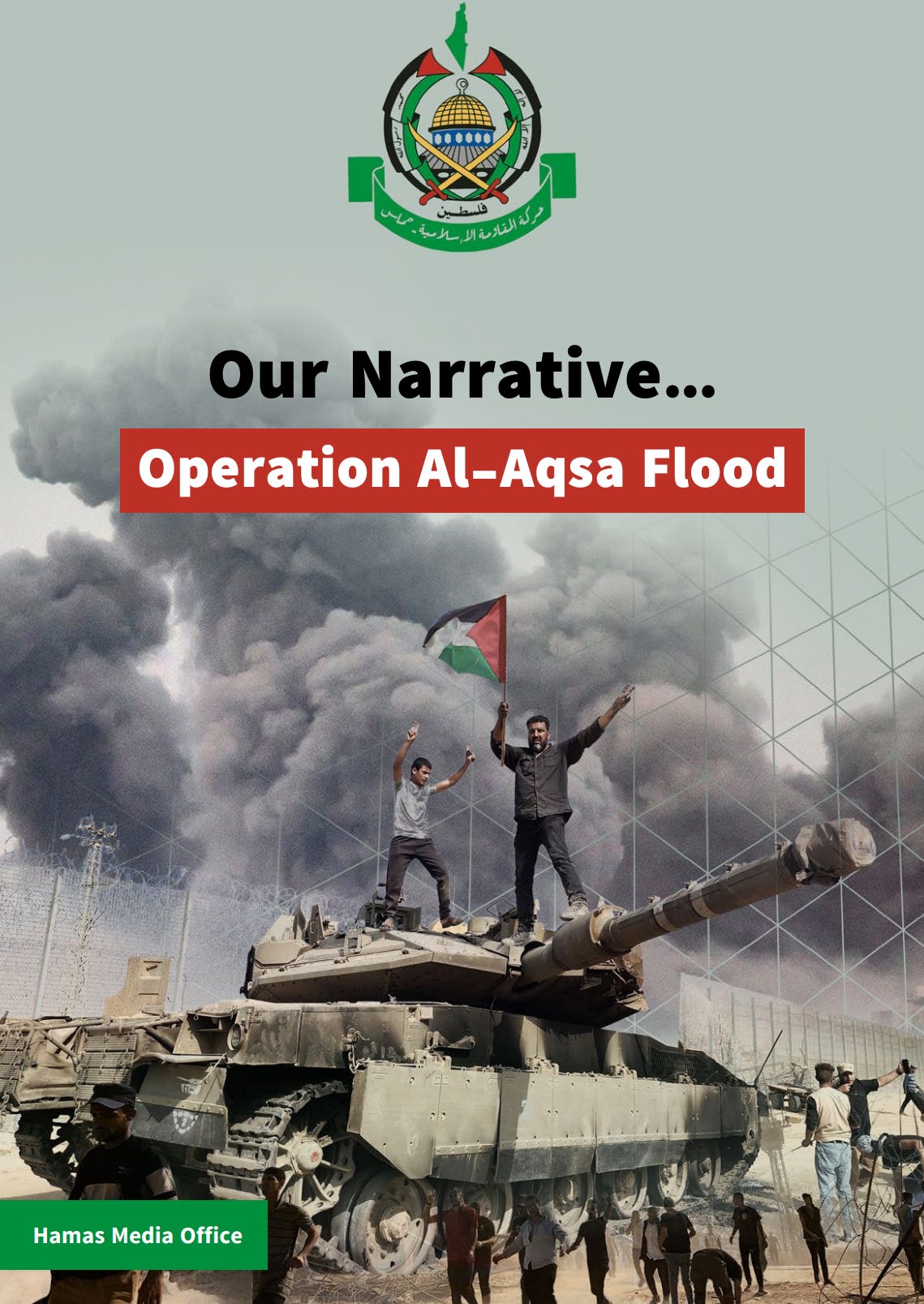
This omission in al-Hayya’s agenda, therefore, should not be interpreted as ambiguity. Instead, it is consistent with Hamas’s broader strategic narrative since the outbreak of the war: while the movement is prepared to adjust its political tactics and diplomatic engagement to the changing regional environment, it has given no indication that it intends to abandon or fundamentally revise armed resistance as a core component of its long-term strategy.
New Regional Balance: Why Iran and Egypt Matter More Than Turkey and Qatar
Khalil al-Hayya’s election also reflects a broader shift in Hamas’s regional relationships. The Gaza war has not only transformed the movement internally; it has also reordered the relative importance of its external partners. While Hamas continues to maintain relations with all four countries, the balance of influence appears to be moving towards Iran and Egypt.
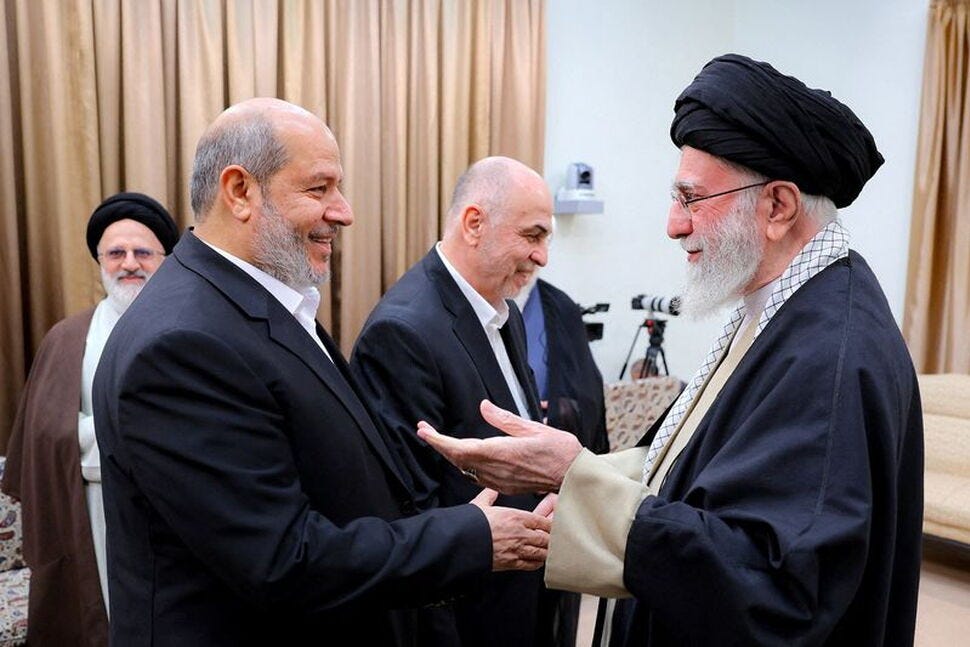
Iran’s position has been reinforced by the war. Despite suffering setbacks across the wider “Axis of Resistance”—including the weakening of Hezbollah, the fall of the Assad regime in Syria, and its own confrontation with the United States—Iran remains Hamas’s principal military and strategic backer. More importantly, there is little indication that Tehran has reduced its commitment to supporting the movement. For Hamas, maintaining close relations with Iran remains essential for preserving its military capabilities and sustaining its long-term strategy of armed resistance.
At the same time, Egypt’s importance has grown considerably. Cairo occupies a unique position that no other regional actor can easily replace. It controls the Rafah crossing, plays a central role in ceasefire negotiations, facilitates prisoner exchanges, and will be indispensable to any meaningful reconstruction effort in Gaza. Al-Hayya’s early contact with the head of Egyptian intelligence was therefore more than a diplomatic courtesy; it reflected Hamas’s recognition that Egypt will remain the primary regional mediator in shaping Gaza’s post-war future.
By contrast, Qatar and Turkey continue to provide Hamas with valuable political support, but their room for influence has been always narrowed due to alliance with the United States and relationship with Israel. Qatar remains an important diplomatic intermediary and humanitarian donor, hosting Hamas’s political office and maintaining channels with both Western governments and the movement. However, its role depends largely on mediation rather than strategic leverage over developments inside Gaza. Turkey likewise continues to offer political backing and diplomatic advocacy for the Palestinian cause, yet Ankara’s broader regional priorities and efforts to manage its relations with Israel and Western partners have limited its ability to shape Hamas’s immediate strategic environment.
The distinction is therefore not one of allies versus adversaries, but of changing functions. Iran provides strategic depth and military support, while Egypt has become indispensable for diplomacy, humanitarian access, and any future political arrangements in Gaza. Qatar and Turkey remain important political partners, but neither currently possesses the same capacity to influence Hamas’s operational choices or the trajectory of the conflict.
Al-Hayya’s leadership appears well suited to this evolving regional landscape. Having led Hamas’s ceasefire negotiations and maintained close relations with Egyptian mediators while remaining firmly aligned with the movement’s resistance strategy and its partnership with Iran, he embodies the balance Hamas now seeks to strike. The movement is not replacing one regional axis with another; rather, it is adapting to a new geopolitical environment in which Tehran and Cairo have become the two indispensable pillars of its external strategy—one sustaining its capacity for resistance, the other shaping the political conditions under which that resistance can continue.
The growing importance of Iran is also reflected in al-Hayya’s own political background. According to Israeli intelligence assessments based on documents reportedly recovered from Gaza, al-Hayya played a central role in coordinating Hamas’s relations with Iran and Hezbollah in the period leading up to the October 7 attack. The documents reportedly describe his participation in a confidential meeting in Beirut in 2021 alongside Ismail Haniyeh, Hezbollah Secretary-General Hassan Nasrallah, and Iranian officials, during which preparations for closer strategic coordination were discussed. Whether every detail of these reports can be independently verified or not, they reinforce the widely held perception that al-Hayya has long been one of Hamas’s principal interlocutors with Tehran and the broader Axis of Resistance.
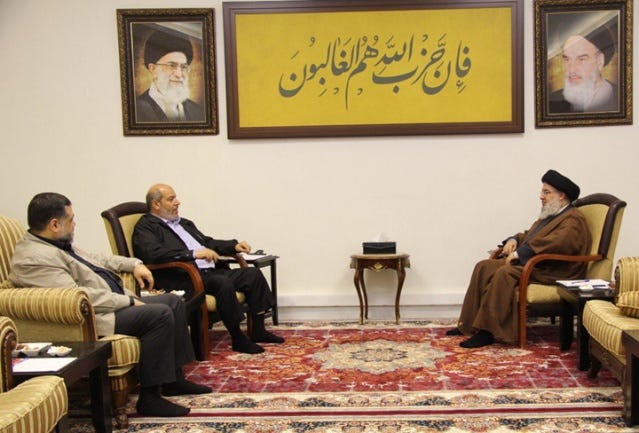
At the same time, some regional observers argue that al-Hayya’s leadership could gradually reduce Doha’s centrality within Hamas’s external leadership structure. Given his extensive engagement with both Tehran and Ankara in recent years, the movement’s political centre of gravity may become more dispersed than under Ismail Haniyeh. Even so, the immediate post-war environment suggests that the most consequential external relationships for Hamas are likely to remain those with Iran, as its principal strategic backer, and Egypt, as the indispensable mediator in Gaza’s future.
The Challenges Facing al-Hayya
While al-Hayya’s election signals continuity in Hamas’s strategic direction, the environment in which he assumes leadership is fundamentally different from that faced by his predecessors. He inherits a movement that has preserved its organisational cohesion but faces unprecedented political, military, and humanitarian challenges. His success will depend not only on maintaining Hamas’s internal unity but also on navigating a rapidly changing regional and international landscape.
Internal Challenges: Rebuilding a Movement and Its Legitimacy
The immediate challenge is rebuilding both Gaza and Hamas itself. Years of war have severely disrupted the movement’s political, administrative, and military structures, requiring a major organisational effort to restore its capacity to govern and operate. At the same time, Hamas must redefine its role in Gaza’s future governance while responding to the immense humanitarian needs of a devastated population.
The movement also faces growing political pressures. Calls for renewed Palestinian elections, long delayed by the division between Gaza and the West Bank, are likely to intensify as discussions over the post-war political order continue. Equally important will be managing public expectations. While Hamas continues to portray the war as a strategic confrontation with Israel, many Palestinians will inevitably judge the movement by its ability to improve living conditions, secure reconstruction, and provide effective governance.
Perhaps the most sensitive internal challenge will be assessing the legacy of the October 7 attack. Although Hamas has publicly defended the operation and reaffirmed its strategic rationale, debates over its long-term political and humanitarian consequences are unlikely to disappear. Balancing organisational unity with lessons drawn from the war will remain one of al-Hayya’s most delicate tasks.
Regional Challenges: A Changing Strategic Environment
The regional environment has become considerably less favourable for Hamas. Hezbollah has emerged from the conflict significantly weakened, reducing its ability to deter Israel or provide strategic support. The collapse of the Assad government has effectively removed Syria as a central pillar of the so-called Axis of Resistance, depriving Hamas and its allies of an important geographical and logistical link.
Iran remains Hamas’s principal strategic partner, but Tehran is also navigating its own security challenges following its confrontation with the United States and Israel. Although Iranian support is unlikely to disappear, its ability to devote the same level of attention and resources to the Palestinian file may become more constrained than in previous years.
At the same time, the broader regional trend towards Arab-Israeli normalisation has not entirely disappeared despite the war. Several Arab governments continue to balance domestic sympathy for the Palestinian cause with broader strategic and economic interests, limiting Hamas’s ability to translate public support into sustained regional political pressure.
International Challenges: Isolation, Reconstruction, and Accountability
Internationally, Hamas continues to face profound diplomatic constraints. Despite growing criticism of Israel’s military campaign in Gaza and increased international attention to the humanitarian crisis, Hamas remains politically isolated across much of the Western world. This limits its ability to participate directly in international discussions over Gaza’s future or secure broad diplomatic recognition.
Reconstruction presents an equally formidable challenge. Gaza will require enormous financial resources and long-term international assistance, yet many potential donors are reluctant to support reconstruction without new political and security arrangements. Hamas will therefore need to reconcile its determination to retain its military capabilities with the conditions many international actors are likely to attach to reconstruction funding.
Finally, the movement must operate within an increasingly legalised international environment. International investigations into alleged violations of humanitarian law, growing calls for accountability, and continuing scrutiny by the United Nations and international courts will shape the diplomatic context in which Hamas seeks to rebuild its political position.
Taken together, these challenges illustrate that al-Hayya’s task extends well beyond preserving Hamas’s organisational continuity. He must guide the movement through a post-war environment that is more fragmented, more constrained, and more complex than at any point in its history, while convincing both supporters and regional partners that Hamas remains capable of shaping the future of the Palestinian national movement.
Bottom Line
Khalil al-Hayya’s election should not be interpreted as the emergence of a new Hamas. Rather, it reflects the movement’s determination to preserve its strategic identity while adapting to a profoundly altered political and regional environment. Hamas appears to believe that the October 7 attack and the ensuing war have transformed the context in which it operates, but not the fundamental principles that define it. In the movement’s assessment, the environment has changed; its core strategy has not.
This explains why al-Hayya’s leadership combines continuity with adaptation. Hamas is seeking to expand its diplomatic engagement, strengthen its regional relationships, pursue reconstruction, and participate in discussions over Gaza’s political future. At the same time, it has given no indication that these political adjustments will come at the expense of armed resistance, which it continues to regard as a central pillar of its national strategy. Rather than replacing resistance with politics, Hamas appears intent on integrating military, political, and diplomatic instruments into a single, coherent approach.
Whether this strategy proves sustainable will depend on factors that extend well beyond Hamas itself. The pace of Gaza’s reconstruction, the future of Palestinian political institutions, Israel’s post-war strategy, the willingness of regional actors to engage with Hamas, and the evolving balance of power following the recent Iran–US confrontation will all shape the movement’s room for manoeuvre. Hamas may have settled the question of leadership, but the strategic environment in which that leadership must operate remains deeply uncertain.
Ultimately, al-Hayya’s election is best understood as a vote for continuity rather than transformation. The movement has chosen a leader whose credentials bridge the battlefield, political leadership, and regional diplomacy, but whose strategic outlook remains firmly rooted in Hamas’s long-standing doctrine. The faces at the top may have changed, yet the movement’s central calculation remains largely intact: armed resistance, political negotiation, and regional alliances are not viewed as competing alternatives, but as complementary instruments in the pursuit of the same long-term objectives.
