

As Iran and the United States exchange messages through Pakistan to explore a possible end to the war, Tehran has repeatedly demanded credible guarantees as a condition for any agreement. In response, Pakistan convened regional consultations with Saudi Arabia, Türkiye, and Egypt, and shortly after, its Foreign Minister travelled to Beijing to explore China’s potential role. China has signalled readiness to support mediation efforts and work with regional actors to de-escalate tensions, an indication that such a move likely carries at least tacit acceptance from all sides.
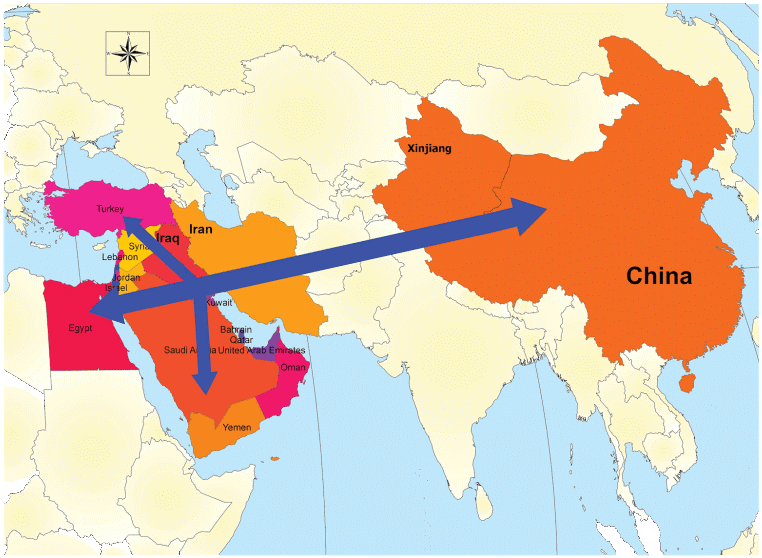
For years, Beijing maintained a cautious distance from direct involvement in regional conflicts, focusing instead on trade, energy, and economic partnerships. Yet this moment suggests a potential shift. The question is no longer whether China has the capacity to engage, but whether it is willing to move beyond economics and play a central role in shaping the security architecture of major international conflicts.
If so, the implications are significant. It would mark a gradual relocation of diplomatic authority away from Western-led frameworks toward a more multipolar order. For the Global South, this presents an alternative model of conflict resolution, less tied to traditional power centres and ideological conditions. For the United States, it signals the erosion of its long-standing dominance over high-stakes diplomacy. And for China, it represents both an opportunity to expand its influence and a test of its ability to manage the risks that come with it.
This may therefore be more than a tactical diplomatic development. It could represent an early stage in a broader reordering of global power, one in which mediation, guarantees, and conflict resolution are no longer defined primarily in Washington, but increasingly negotiated in Beijing.
From Non-Interference to Strategic Engagement
China’s evolving role in international conflicts did not emerge overnight. It reflects a gradual shift from strict adherence to non-interference toward a more flexible model of selective, interest-driven engagement.
Phase 1: Passive Economic Power
For decades, Beijing’s foreign policy was anchored in the principle of non-interference. China prioritised trade, investment, and energy security, particularly across the Global South, while deliberately avoiding entanglement in political disputes or security crises. Stability mattered, but primarily as a condition for economic continuity, not as a domain for active intervention.
Phase 2: Selective Political Engagement
Over time, however, China began to recognise that protecting its expanding global interests required a more proactive approach. In Sudan and Darfur during the 2000s, Beijing used its leverage to encourage Khartoum to accept UN peacekeeping forces, an early sign that it was willing to engage politically when its economic stakes were threatened. Similarly, during the Rohingya crisis, China played a mediating role between Myanmar and Bangladesh, aiming to contain regional instability without imposing political conditions.
Phase 3: Diplomatic Breakthrough
This gradual evolution culminated in the 2023 Saudi–Iran agreement, brokered by Beijing. The deal marked a significant diplomatic milestone, demonstrating China’s ability to mediate between major regional rivals and deliver tangible outcomes. It was, in effect, a proof of concept: China could translate economic influence into geopolitical leverage.


The underlying shift is subtle but important. China is not abandoning its non-interference doctrine; it is redefining it. What emerges is a model of influence without intrusion: engaging strategically where interests are at stake, while avoiding ideological pressure or direct involvement in domestic political systems.
This approach is closely tied to China’s broader self-perception as a distinct civilisational power, often framed as a “world unto itself.” Rather than disengaging from the international system, Beijing is increasingly seeking to reshape it in ways that align with its interests and security priorities. What may appear as restraint is, in practice, a form of selective engagement, one that expands China’s role globally while preserving the core principles that define its foreign policy.
China’s Mediation Model: Pragmatism Over Ideology
China’s growing role in conflict mediation is shaped by a distinct approach that differs markedly from Western diplomatic frameworks. Rather than grounding its engagement in normative agendas, Beijing operates through a pragmatic model designed to reduce friction and maximise acceptance among conflicting parties.
1. State-Centric Diplomacy
China’s diplomacy prioritises engagement with state actors and ruling authorities rather than societies or opposition movements. This approach reflects a clear preference for working with existing power structures, treating sovereignty and regime stability as the primary entry points for negotiation. By focusing on governments rather than internal political dynamics, Beijing avoids becoming entangled in domestic legitimacy debates.
2. Economics as Leverage
Economic interdependence is central to China’s mediation strategy. Through trade, investment, and infrastructure projects—particularly under the Belt and Road Initiative—Beijing builds long-term relationships that can later be leveraged in times of crisis. Stability, in this context, is not just a political goal but an economic necessity, making mediation a natural extension of China’s global economic footprint.
3. Non-Ideological Engagement
Unlike Western approaches that often link diplomacy to democracy, governance reforms, or human rights, China deliberately avoids attaching political conditions to its mediation efforts. This non-ideological stance makes it more acceptable to a wide range of regimes, particularly those wary of external pressure on internal affairs.
4. Non-Hegemonic Approach
China presents itself not as a dominant power imposing outcomes, but as a facilitator of dialogue. Its engagement is framed as cooperative rather than coercive, allowing parties to retain agency in negotiations. This reduces resistance and creates space for compromise, particularly in conflicts where external pressure has historically hardened positions.
What is often criticised as a normative weakness may, in practice, be China’s greatest diplomatic strength. By lowering ideological barriers and minimising political intrusion, Beijing is able to build trust with regimes and enable agreements in contexts where Western frameworks—often perceived as intrusive or prescriptive—tend to stall.
Why China Can Mediate This War
China’s potential role in mediating the current conflict is not accidental; it is rooted in a unique strategic position that few global powers currently possess. Its advantage lies not only in having interests across all sides of the conflict, but in being perceived as less politically intrusive and less ideologically threatening, allowing it to engage actors that would otherwise resist external involvement.
1. Cross-Camp Connectivity
China maintains deep and functional relationships across all major parties involved in the conflict.
With Iran, Beijing has developed a comprehensive strategic partnership that serves as a crucial economic lifeline for Tehran under sanctions. China remains Iran’s largest trading partner, reportedly purchasing the vast majority of its oil exports through formal and informal channels, while advancing long-term infrastructure cooperation under the 25-year strategic agreement signed in 2021. Beyond economics, both countries share an interest in limiting U.S. dominance in the region.
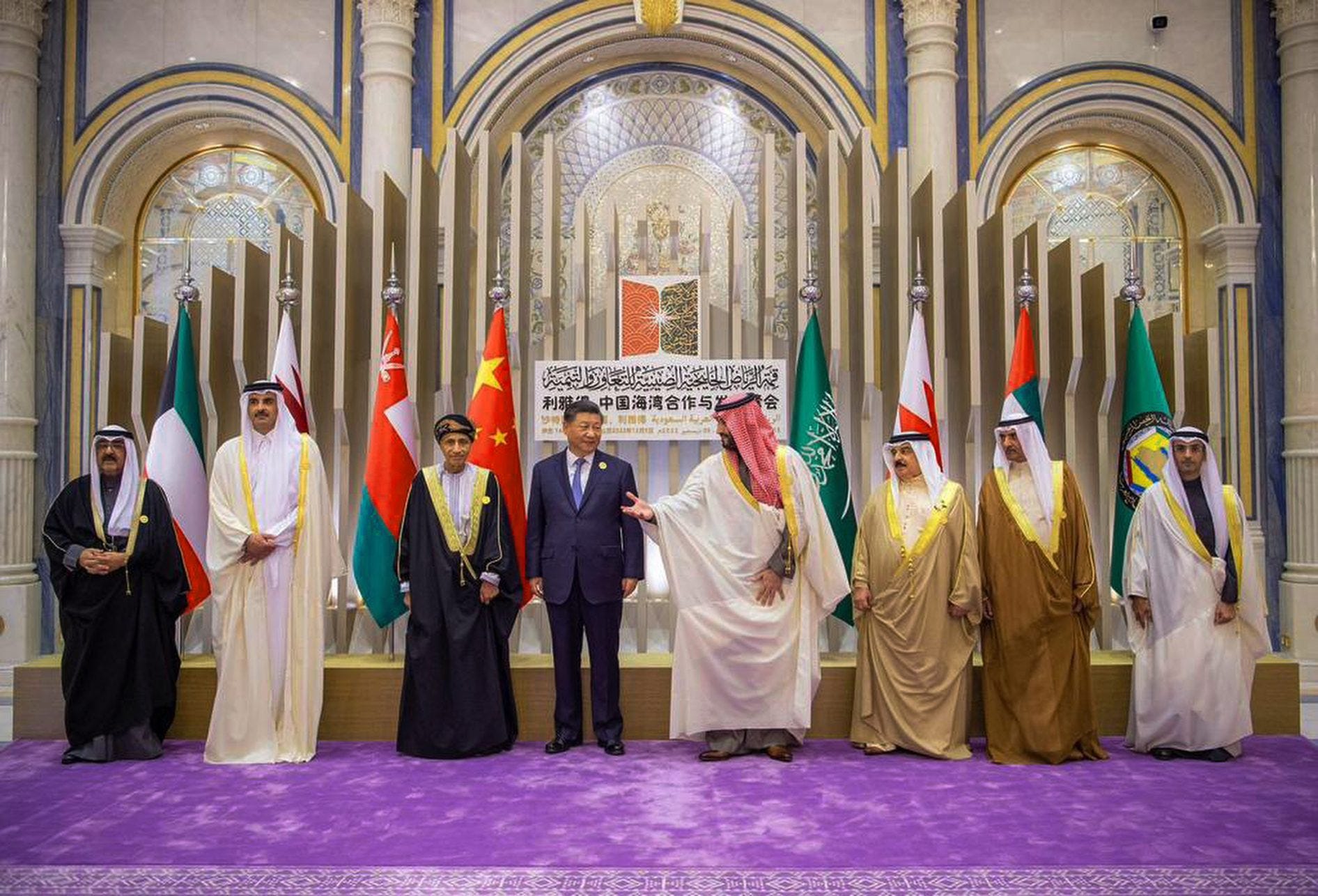
At the same time, China has built extensive ties with Gulf states. Saudi Arabia is its largest oil supplier and a central partner in energy, petrochemicals, and infrastructure, with tens of billions of dollars invested in projects linked to economic diversification. The United Arab Emirates plays a complementary role as a logistical and commercial hub for Chinese trade, while broader engagement across the Gulf Cooperation Council reflects a deepening economic and technological presence.
China also maintains significant economic relations with Israel, where it is among the country’s largest trading partners, with bilateral trade exceeding $20 billion annually. Chinese investment spans infrastructure, technology, and innovation sectors, including major projects in transport and high-tech industries. Although these ties face increasing geopolitical constraints, they nonetheless position China as a stakeholder with interests on all sides.
Taken together, this cross-camp connectivity places China in a rare position: it is one of the few actors not widely perceived as an existential threat by any party in the conflict.
2. Stability as Strategic Necessity
For China, mediation is not simply a diplomatic ambition; it is an economic imperative. The Middle East sits at the heart of China’s energy security, supplying a significant share of its oil imports. At the same time, the region is a critical corridor for the Belt and Road Initiative, linking Asia to Europe and Africa through maritime and land-based trade routes.
Prolonged instability—whether through disruption of energy flows, threats to shipping lanes, or damage to infrastructure—directly undermines China’s economic architecture. In this sense, promoting stability is not optional; it is essential to safeguarding China’s global economic model.
3. A Vacuum in Global Leadership
China’s opportunity also stems from a broader shift in global power dynamics. The United States is widely seen in this conflict not as a neutral broker but as a direct party, limiting its credibility as a mediator. Meanwhile, Europe remains politically fragmented and strategically marginalised, unable to play a decisive role.
This creates a diplomatic vacuum, one that China is increasingly positioned to fill. Its engagement is driven not only by ambition, but by the absence of credible alternatives.
In this context, China’s advantage is not simply that it has interests with all sides. It is that it combines those interests with a diplomatic posture that is perceived as less intrusive, less ideological, and more adaptable, allowing it to operate in spaces where other powers face resistance.
Implications: Toward a Multipolar Diplomatic Order
China’s potential role in mediating the Iran war carries implications that extend far beyond the immediate conflict. It points to a broader transformation in how diplomacy is conducted, who holds authority, and where legitimacy is increasingly located.
First, it signals the gradual decline of the United States’ monopoly over high-stakes diplomacy. For decades, Washington has positioned itself as the primary broker of major international agreements. Yet its deep involvement in this conflict has constrained its ability to act as a neutral mediator, opening space for alternative actors to step in.
Second, the emergence of China as a potential security guarantor introduces a new model of diplomatic engagement. Unlike traditional Western frameworks that rely on alliances and political conditionality, China’s approach emphasises economic leverage, political flexibility, and negotiated stability. This raises the prospect of multiple guarantors operating within the same international system, rather than a single dominant power shaping outcomes.
Third, this shift has important consequences for the Global South. Many states that have long operated on the margins of Western-led diplomacy may now find greater room to manoeuvre, engaging with alternative centres of power that offer different terms of cooperation. This could strengthen efforts toward strategic autonomy and diversify diplomatic options in times of crisis.
Finally, the conflict highlights a deeper shift in legitimacy: the question is no longer simply who has power, but who is trusted to broker peace. If China can deliver tangible outcomes without imposing ideological conditions, it may increasingly be seen as a credible mediator in regions where Western interventions have struggled to produce lasting stability.
If China succeeds, future conflicts may no longer look first to Washington—but to Beijing.
