

The Big Picture | War Looms as the US Midterms Draw Closer
My reading of today’s developments is that the approaching US elections are narrowing the room for manoeuvre without creating a clear path towards ending the war. Washington wants pressure on Tehran to produce results. Iran’s threats against shipping suggest it still sees maritime disruption as a source of leverage.
The central risk is miscalculation: each side may believe additional pressure will force the other to compromise. For Gulf states, shipping companies and civilians across the region, that could mean another escalation before either side has defined an achievable political settlement.
My Top 5
1. Washington prepares options for strikes before the midterms
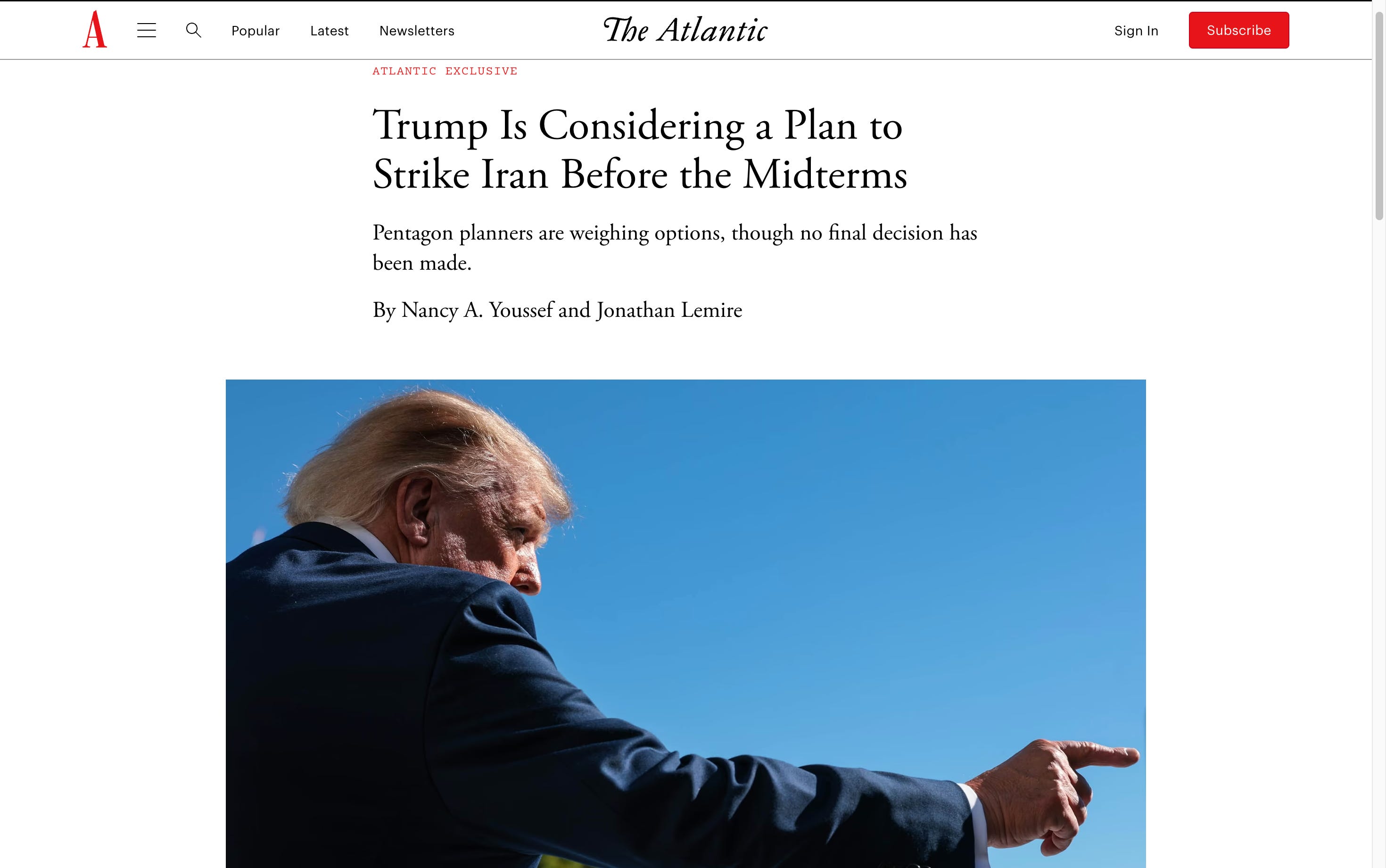
The White House has asked the Pentagon to prepare options for strikes on Iran before the November 3 elections, according to two administration officials cited by The Atlantic. Targets, scale and whether to proceed remain undecided. Even advocates acknowledge that limited strikes alone would not secure Hormuz or quickly reduce fuel prices.
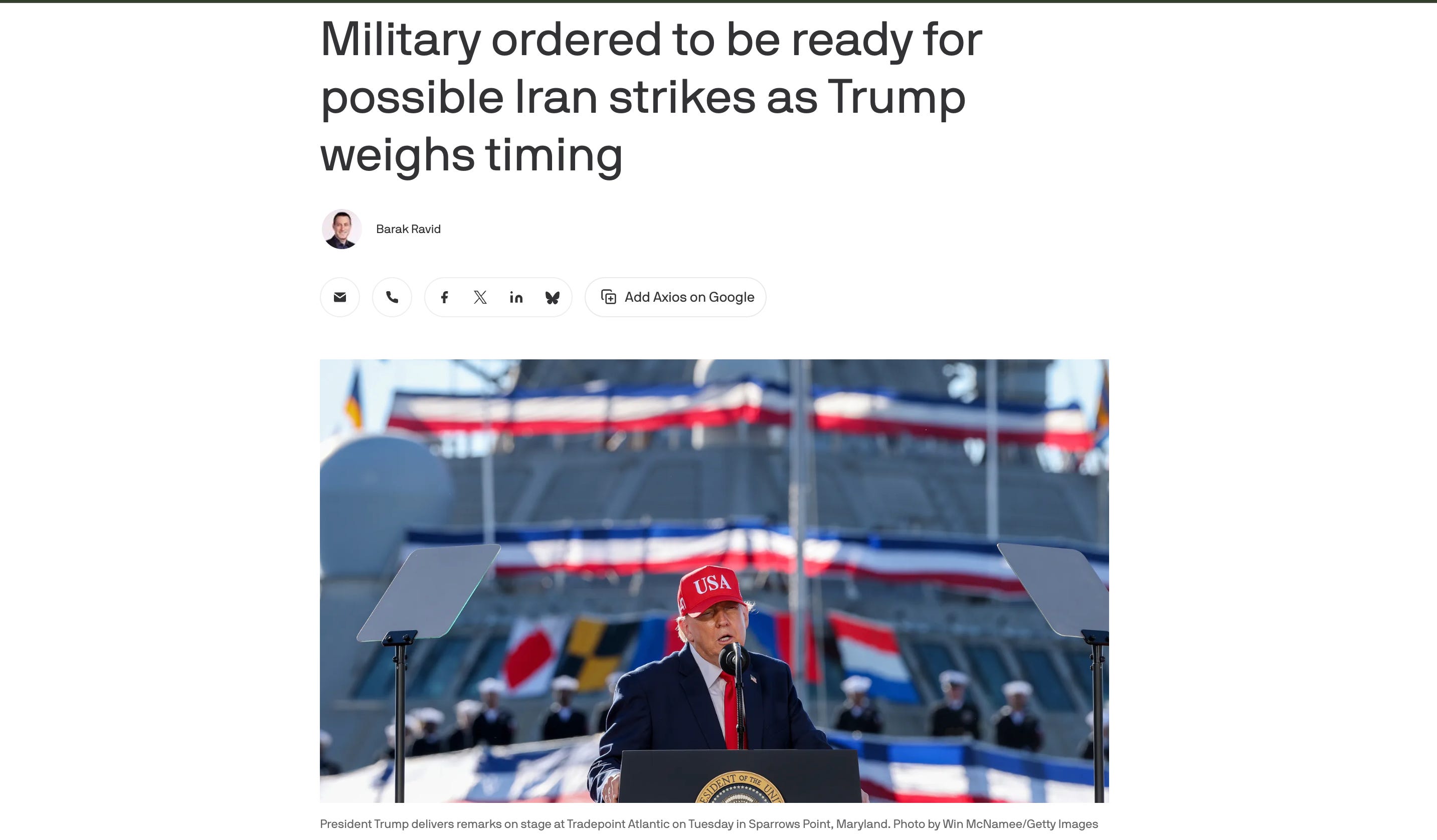
Separately, Barak Ravid reports that the Pentagon ordered CENTCOM to prepare for possible renewed operations. Preparation does not establish a presidential decision.
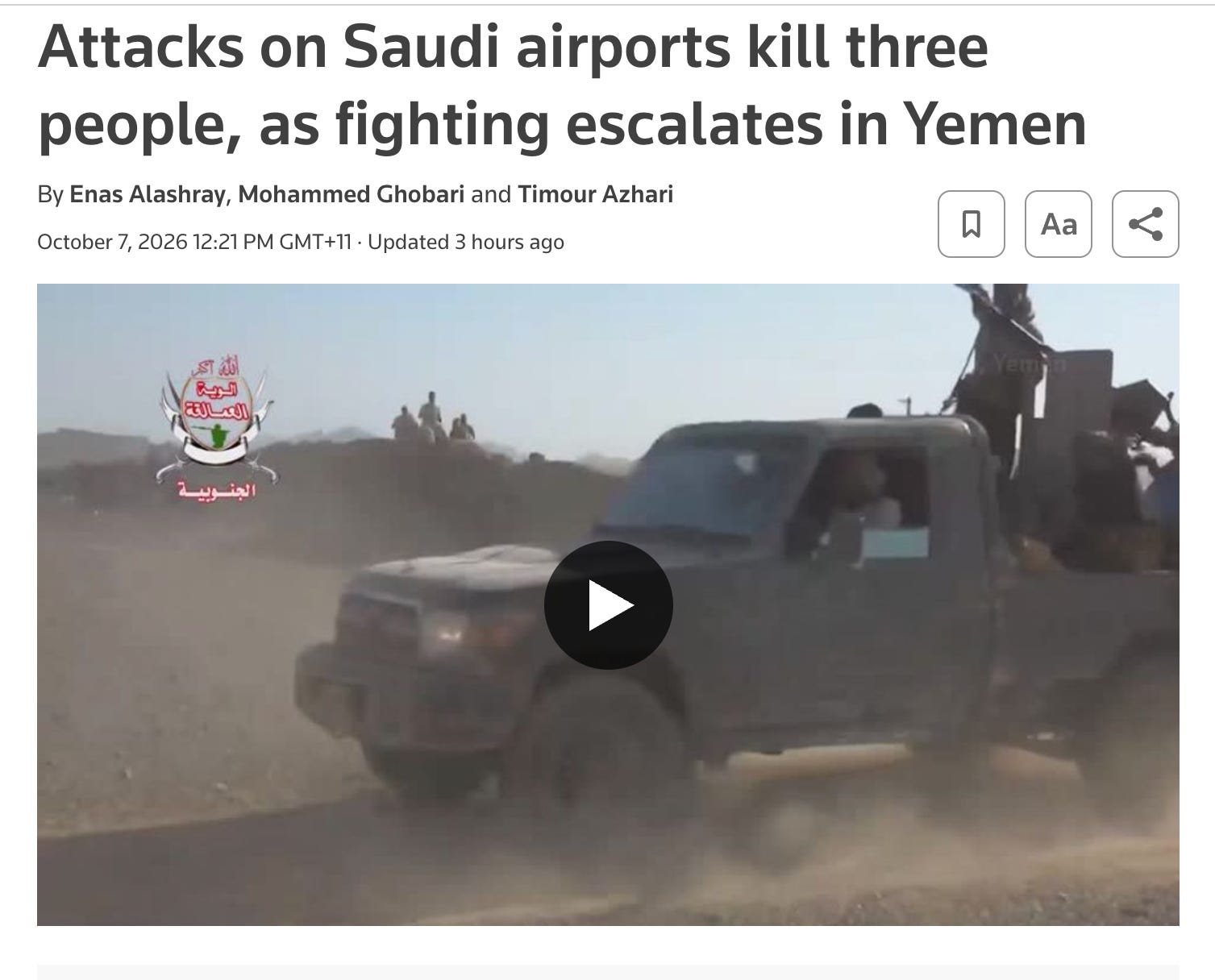
2. Yemen’s escalation reaches Aden airport as claims of Saudi-backed forces advance prove premature
Yemen’s Transport Ministry says Houthi missiles and explosive drones targeted Aden’s international airport as fighting intensified against Saudi-backed government forces. The escalation follows a government offensive aimed at recovering territory around Bab al-Mandab and Mocha. Reuters also reports that an earlier government claim to have reached Mocha was premature, according to military sources and analysts. Battlefield announcements need careful scrutiny as the fighting develops.
3. Iran threatens coastal routes as tanker attacks rise
Revolutionary Guards adviser Mohammadreza Naqdi says Iran will close routes near Oman’s coast that he describes as illegal and used to transfer oil from smaller vessels to tankers. This is an Iranian threat, not confirmation that those routes have been closed.
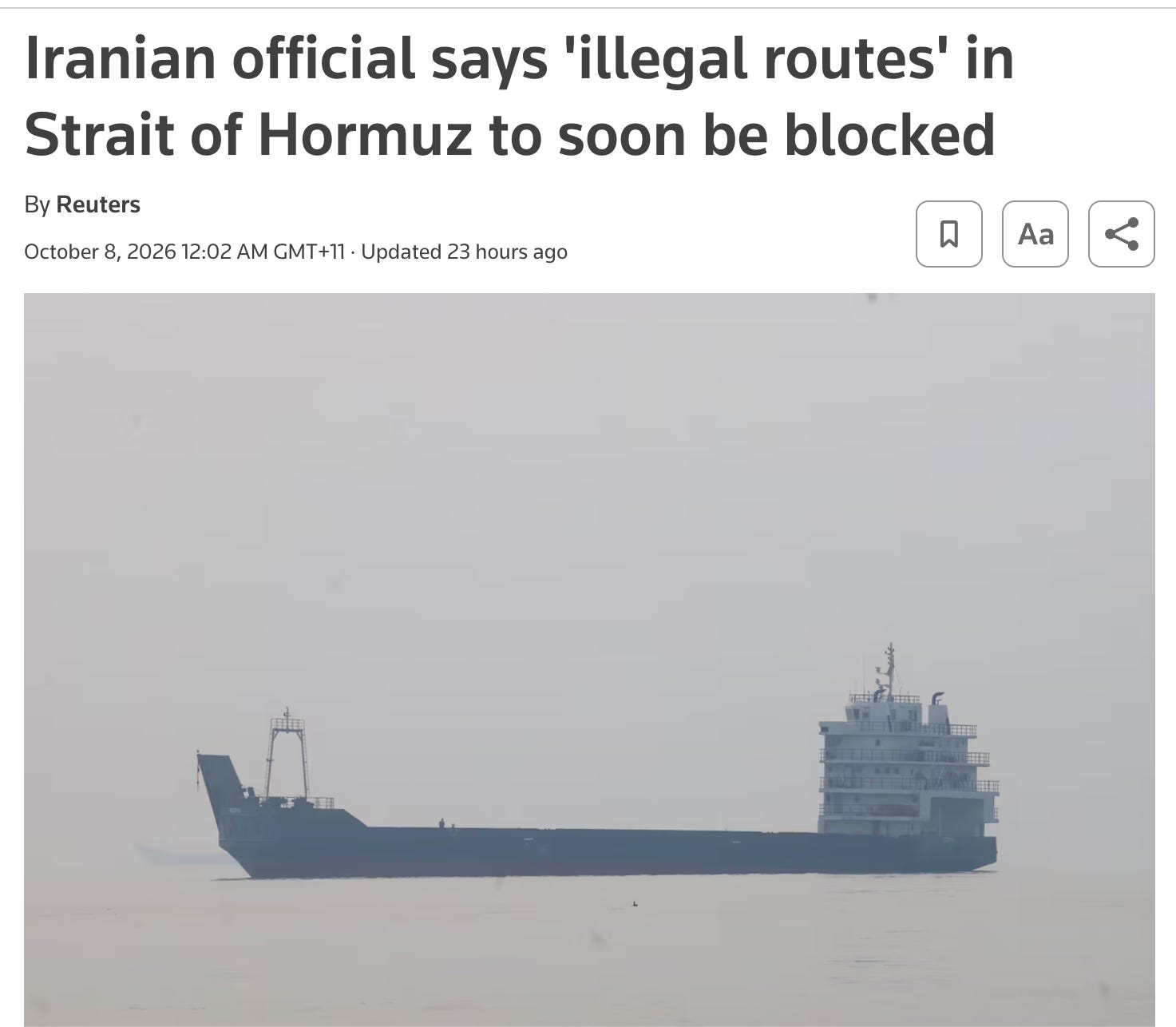
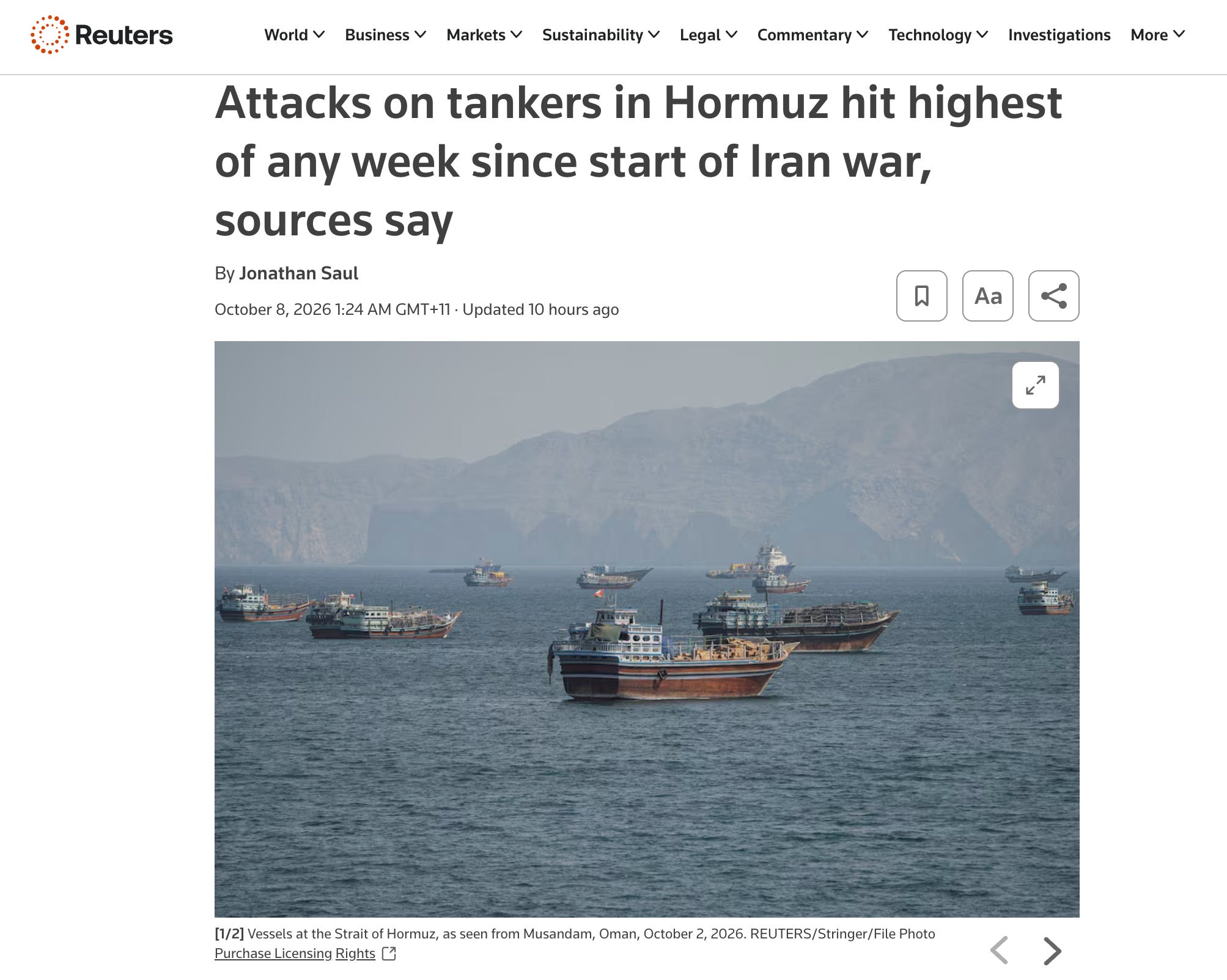
A separate Reuters report cites maritime security sources recording at least 12 attacks on oil and gas tankers around Hormuz between September 28 and October 5—the highest weekly total they have tracked since the war began. The International Maritime Organization had recorded nine incidents for the same period, reflecting a different verification process.
4. The service economy behind Iran’s oil exports
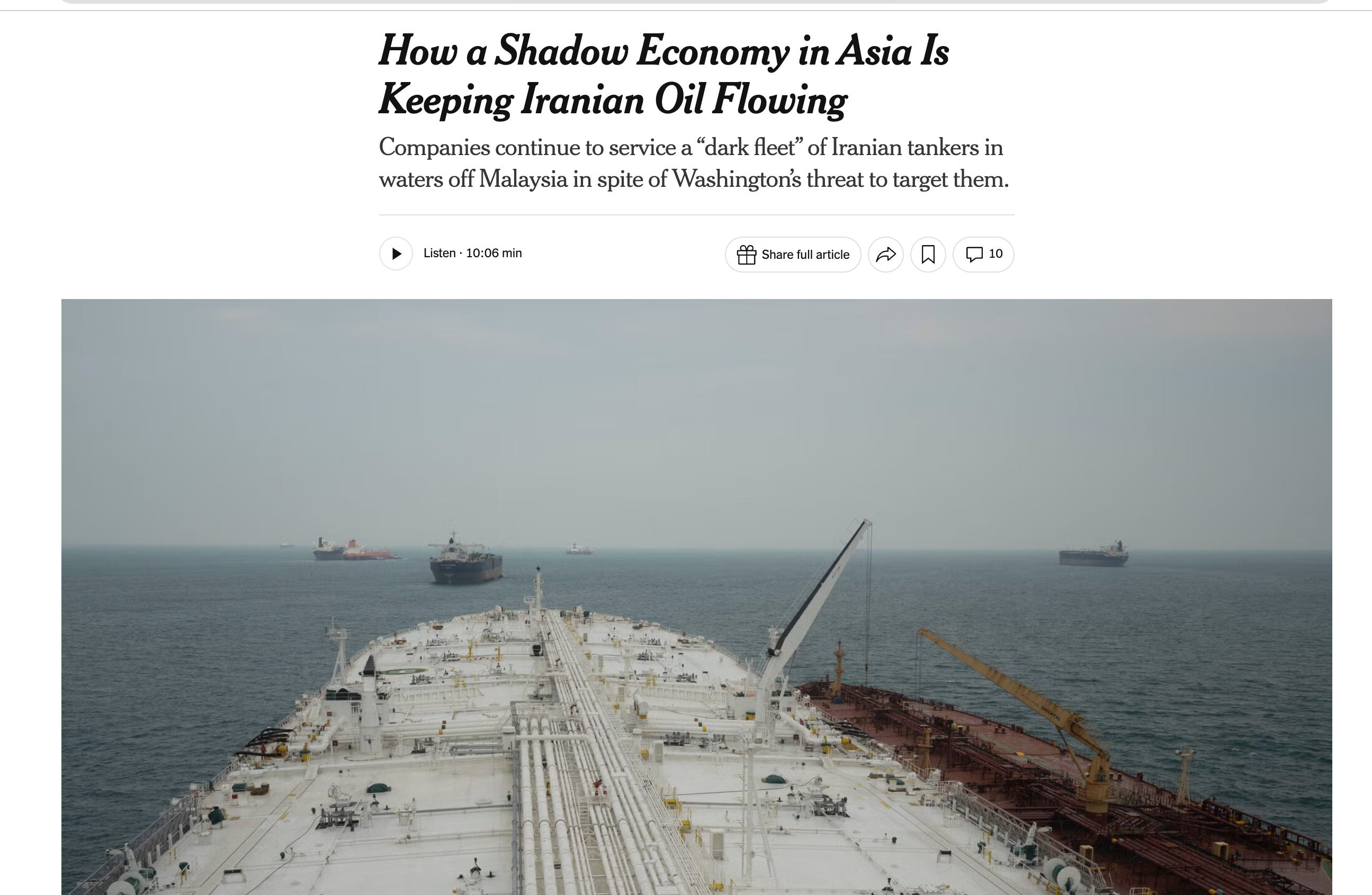
The New York Times examines the commercial networks supporting Iranian oil shipments off Malaysia. Ship-to-ship transfers are sustained by businesses providing fuel, repairs, provisions and other maritime services, helping cargoes continue towards China despite US sanctions pressure.
The significance extends beyond the tankers themselves: disrupting this trade requires confronting a dispersed network of service providers with strong commercial incentives to keep it operating.
5. Renewed activity at a suspected Iranian weaponisation site
The Institute for Science and International Security reports increased vehicle traffic, debris clearance, repairs and earthmoving at Minzadayi, northeast of Tehran, following Israeli strikes in March.
The institute associates the compound with nuclear-warhead research, drawing partly on Israeli statements and public reporting. It assesses that the activity could indicate an effort to restore weapons-development capabilities. The satellite imagery establishes renewed activity; it does not, by itself, demonstrate that nuclear-weapons work has resumed.
Beyond the Headlines
Oil exports can recover while shipping remains unsafe
One detail deserves more attention: figures cited by Reuters showed Gulf crude exports exceeding pre-war levels on 14 days in September. But those totals included shipments through Hormuz, the Red Sea and terminals or offshore transfers in the Gulf of Oman. They do not establish that normal passage through Hormuz has been restored.
My takeaway: export volumes measure how much oil producers manage to move; they do not fully capture the danger, expense or fragility of moving it. A recovery built on alternative routes and improvised transfers could remain vulnerable to relatively small disruptions. That distinction matters when assessing claims that the energy crisis is easing.
What I’m Watching
US–Iran preparations before November 3: Whether military planning is followed by observable deployments, force-protection measures or changes in diplomacy. I’m also watching for verifiable Iranian preparations, rather than relying on outside assessments of Tehran’s intentions.
Yemen’s shifting front lines: Independently confirmed changes around Taiz, Mocha and Bab al-Mandab, alongside the security of Aden’s airport and the cohesion of the anti-Houthi coalition.
The pattern of attacks around Hormuz: Whether attacks become more frequent, spread towards alternative routes near Oman, or prompt more operators to suspend passage. Incident totals matter, but so do their location and commercial consequences.
From MENA Nuance | Latest Analysis
10 Ways October 7 Changed the Middle East
Three years on, October 7 has accelerated changes in deterrence, regional alliances and the geography of conflict. My latest analysis examines ten transformations—and why greater military power has yet to produce a stable regional order.
Video / Podcast
China’s Military Modernisation in 2026: What Matters Now and What’s Next
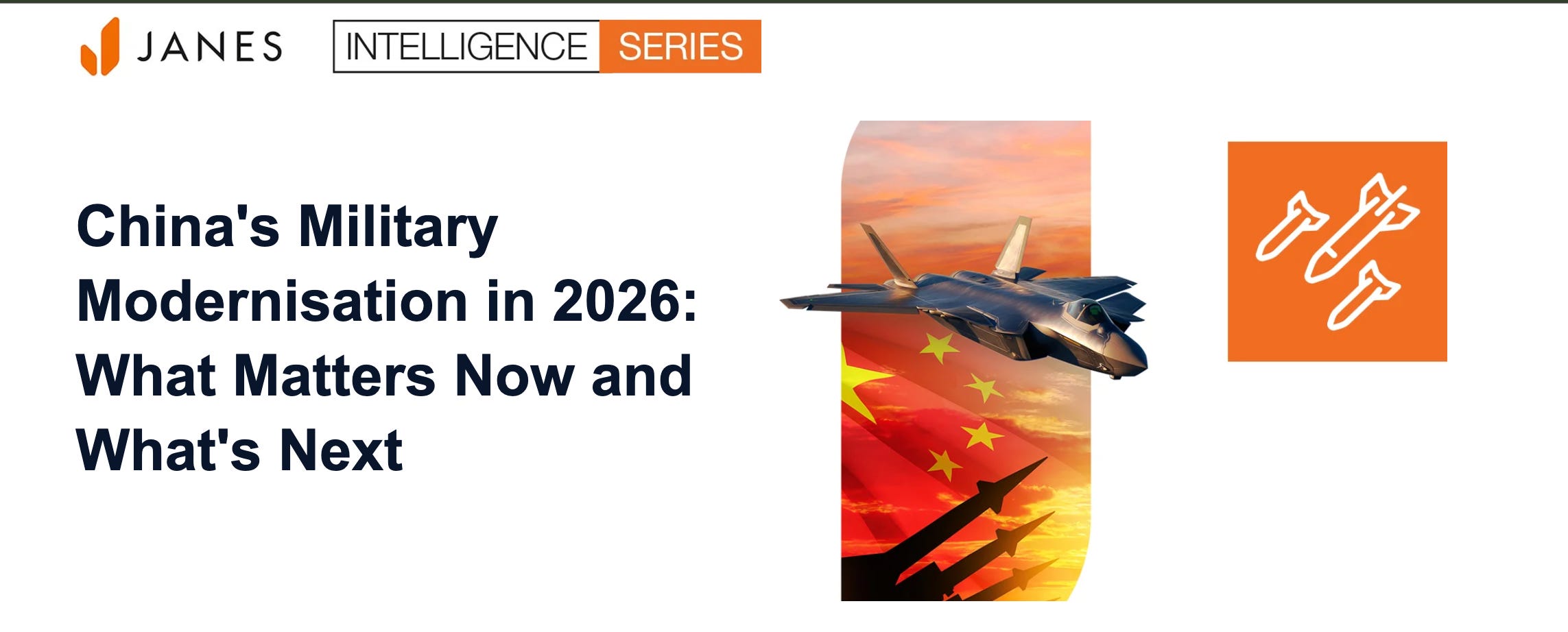
This Janes webinar explores a military transformation whose ambitions extend well beyond Taiwan: sustaining distant operations, protecting maritime supply routes, strengthening nuclear deterrence and challenging American military advantages.
The discussion covers China’s expanding carrier fleet, quieter submarines, growing stealth-fighter force and mobile strategic missiles. It also examines the integration of crewed aircraft and drones, including the potential for two-seat fighters to coordinate unmanned platforms in reconnaissance, targeting and electronic warfare.
For readers focused on the Middle East, a particularly relevant theme is how China studies the region’s wars: the performance of air and missile defences, the challenge of countering drones, and the ability to maintain operations when communications are disrupted. Alongside lessons from Ukraine and India–Pakistan clashes, these experiences inform China’s military development.
The broader question is how China’s growing maritime reach—and its dependence on overseas supplies—will shape its interests in the Gulf and Indian Ocean, while the United States faces competing demands on its forces.
Webinar details · On-demand listing at Carahsoft, listed as “China’s Military Modernisation: Key Trends Reshaping the PLA.”